 Fossil Deck
Duck-Billed & Crested Dinosaurs
Crested herds. The hadrosaurs — hollow crests and grazing herds of the Cretaceous.
Twelve cards in the Giants & Oddities expedition. In the app the deck is a one-time purchase, and its first card is a free find.
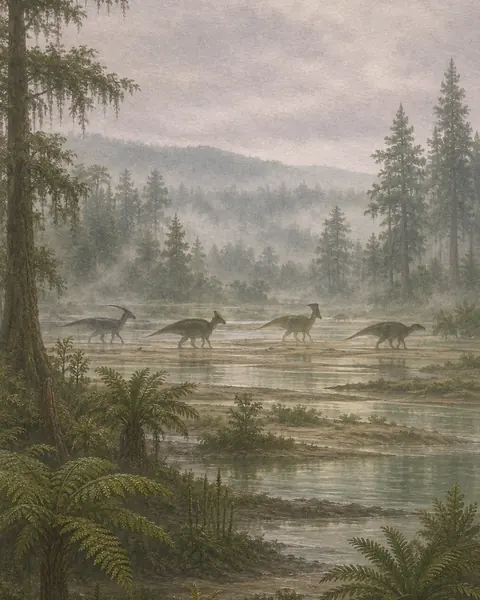
The 12 cards
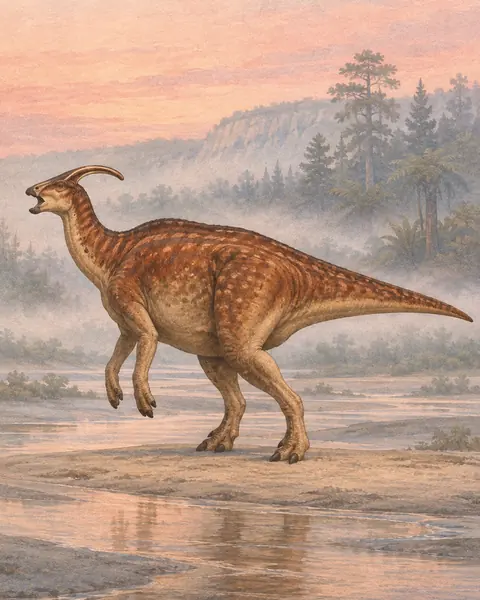
Parasaurolophus carried the most extravagant crest of any duck-billed dinosaur: a long, curved, hollow tube that may have worked like a natural trumpet, channeling air through looping nasal passages to produce deep, resonating calls.
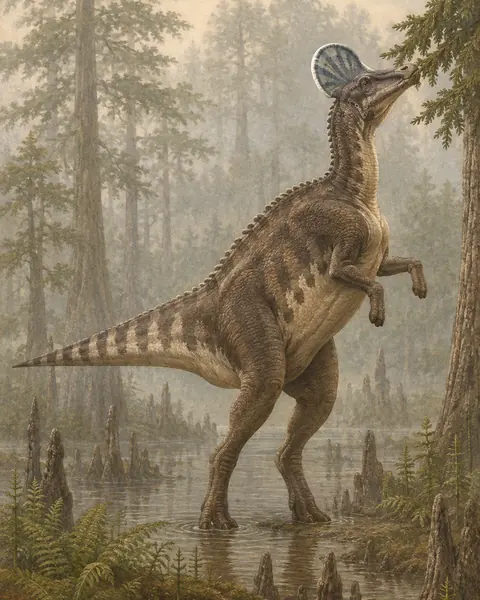
Corythosaurus wore a tall, rounded, hollow crest shaped like a helmet, and the name means exactly that: 'helmeted lizard.' Inside, the crest held looping air passages that probably amplified its calls like a trombone, and the first skeleton found even preserved the animal's last meal of conifer needles, seeds and fruit.
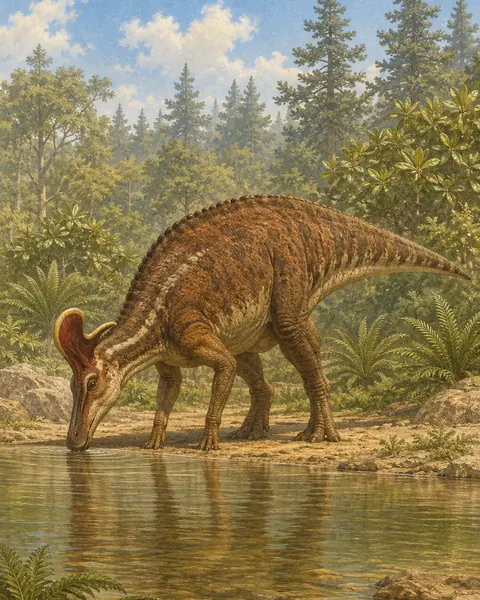
Lambeosaurus wore a hollow crest shaped like a hatchet, with a tall blade above the eye and a short spike pointing backward.
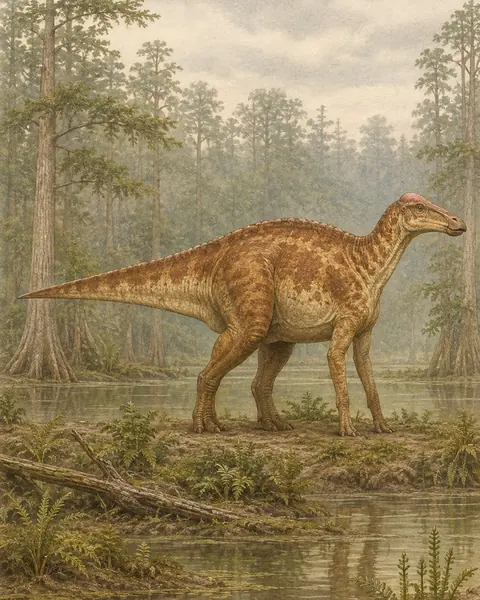
Edmontosaurus is known from so many fossils that it is one of the best-understood dinosaurs: skulls with the beak preserved, mummified skin, and a Wyoming bone bed spreading across more than a square kilometre.
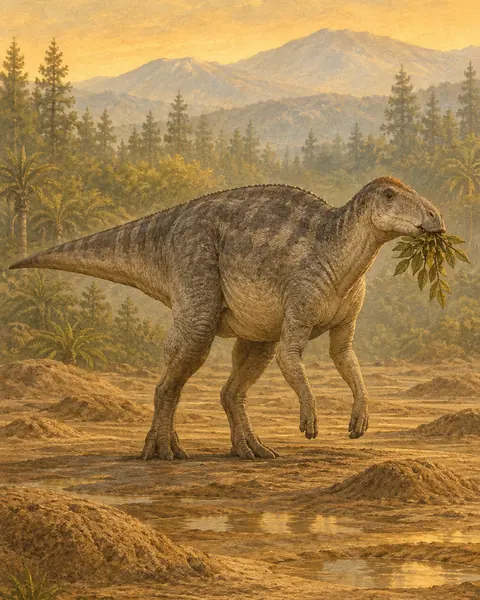
The name Maiasaura means 'good mother lizard.' Nests packed together like a seabird colony, hatchlings with worn teeth that had been fed in the nest, and more than 200 specimens of every age from a single region made it one of the key discoveries in dinosaur research, and overturned the idea that dinosaurs abandoned their eggs.
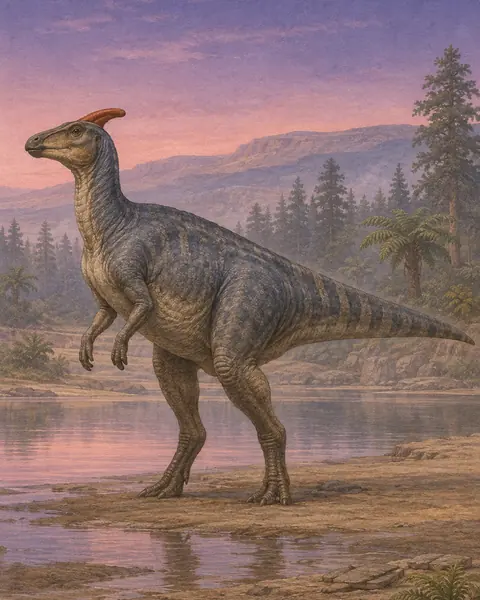
Saurolophus carried a solid spike of bone sloping up and back from its eyes, and it is one of the few dinosaur genera known from two continents.
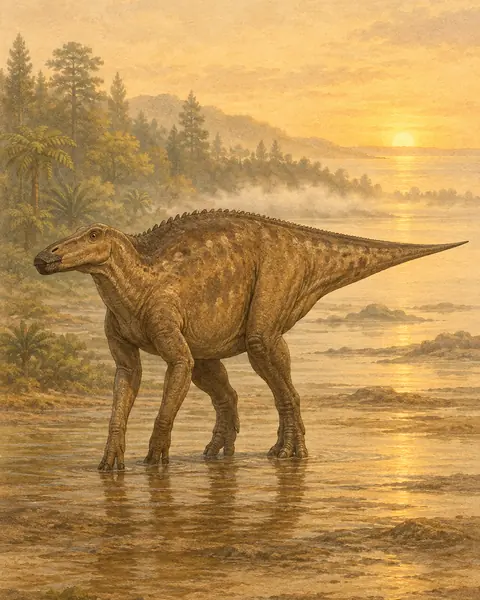
Shantungosaurus is the largest duck-billed dinosaur known, with estimates of 15 to 17 meters long and 13 to 16 tonnes, in the range of a big sauropod.
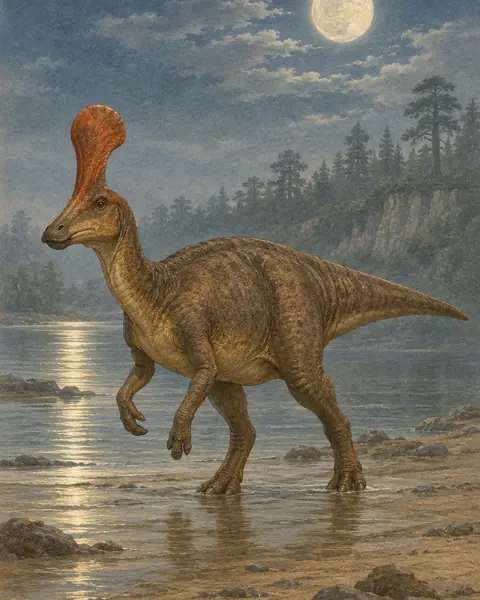
Tsintaosaurus was first pictured with a single thin, upright horn rising from its forehead like a unicorn.
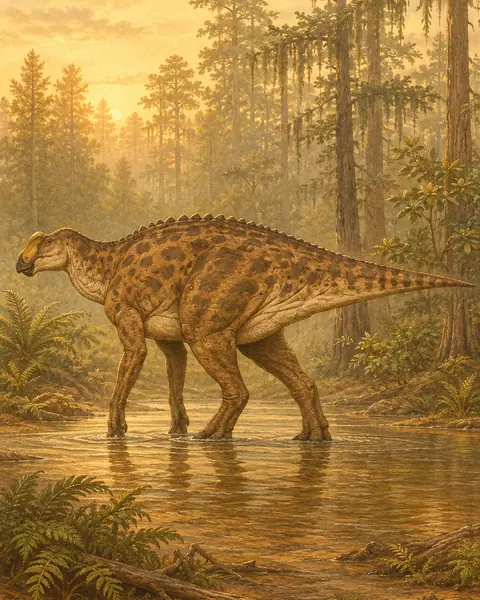
Gryposaurus is the duckbill with the 'Roman nose': a narrow, arched hump of bone along the top of the snout gives the genus its name, 'hooked-nosed lizard.' The hump may have helped individuals recognise their own species or each other, and a row of flattened pyramid-shaped scales ran down the middle of its back.
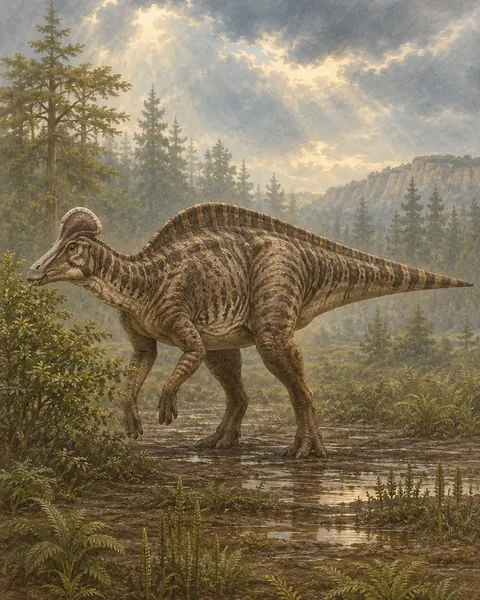
Hypacrosaurus was the last of the hollow-crested duckbills in North America known from good remains, and it was almost the size of Tyrannosaurus.
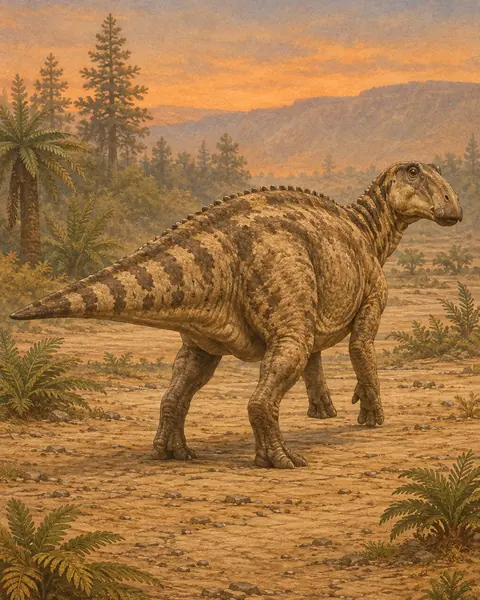
Bactrosaurus sits near the beginning of the duck-billed family tree, an early relative that kept iguanodont-like features: three stacked teeth for each visible tooth and a sturdy build.
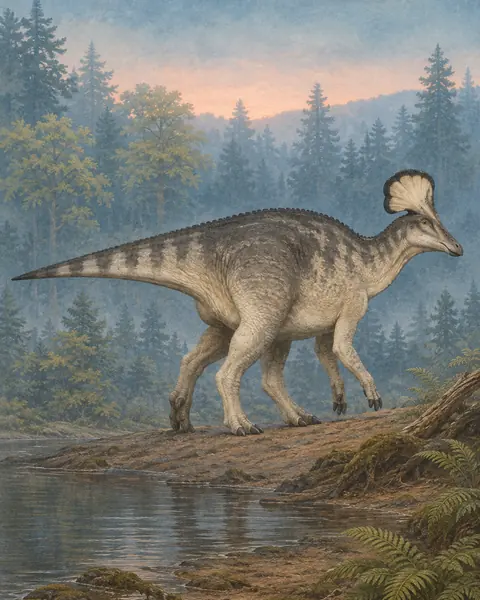
Olorotitan means 'titanic swan,' for a neck longer than any other hadrosaur's, with eighteen neck vertebrae against the previous record of fifteen.