 Fossil Deck
Dunkleosteus
Dunkleosteus terrelli
Dunkleosteus was an armoured fish (placoderm, arthrodire) that lived in the seas about 382–358 million years ago, in the Late Devonian. It was 3.4–4.1 m (11–13 ft) long and weighed about 1 tonne (1.1 tons). It was not a dinosaur.
Dunkleosteus was an armoured fish, not a dinosaur and not a reptile, that lived about 360 million years before the dinosaurs. Its head and chest were covered in thick bony plates, and its jaws were sharp bony blades rather than teeth. Only the armour fossilised, so its body length is an estimate, probably about 3.4 to 4.1 meters.
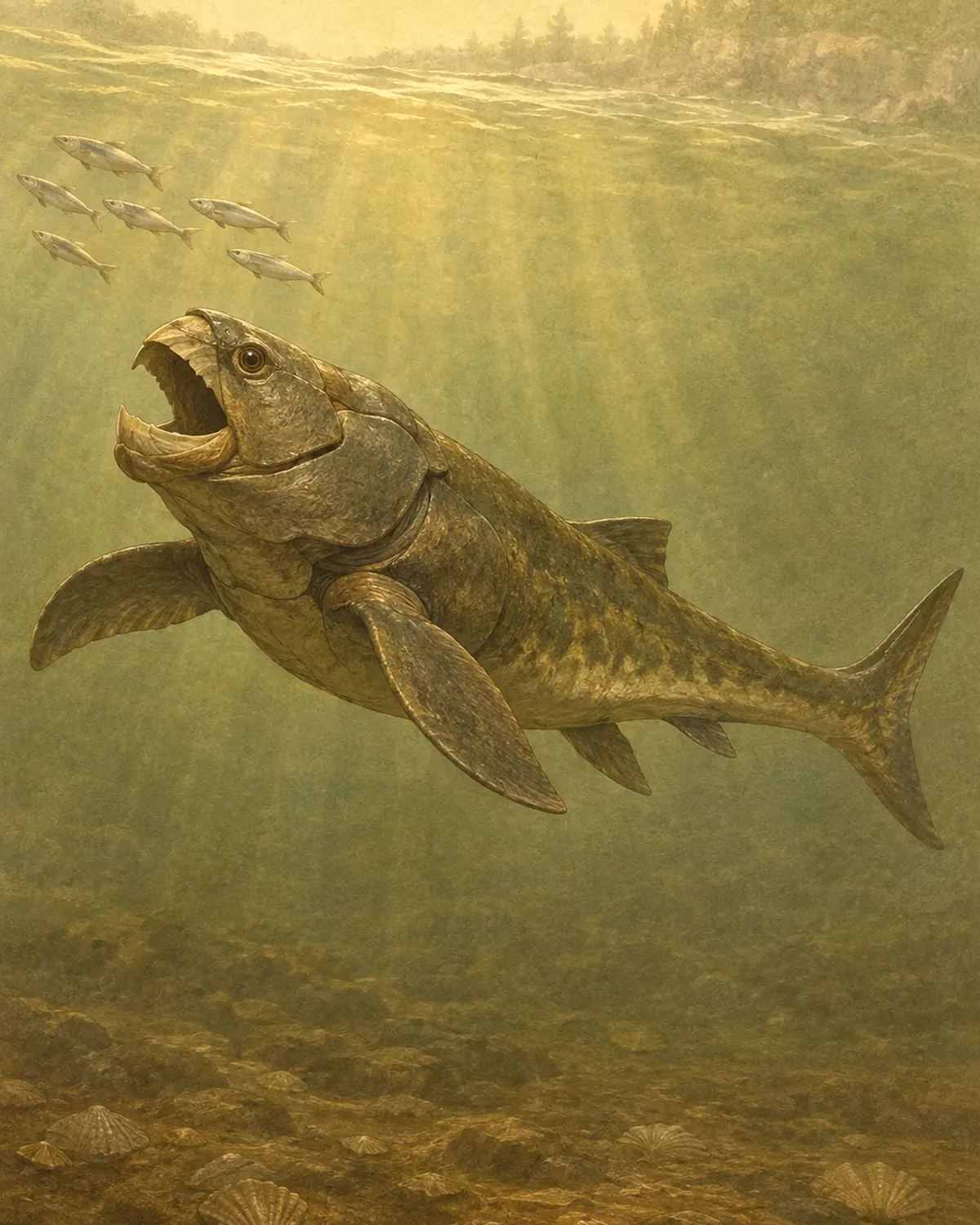
Quick facts about Dunkleosteus
- Scientific name
- Dunkleosteus terrelli, named in 1956
- Group
- Armoured fish (placoderm, arthrodire), not a dinosaur
- Lived
- About 382–358 million years ago (Late Devonian)
- Diet
- Piscivore
- Length
- 3.4–4.1 m (11–13 ft)
- Weight
- About 1 tonne (1.1 tons)
- Fossils found in
- Oceans (shallow seas over what is now Ohio, the United States; related fossils in Canada, Europe and Morocco)
- Fossil record
- Rare: known from partial remains
Was Dunkleosteus a dinosaur?
No. Dunkleosteus was a prehistoric fish, not a dinosaur. It lived long before the first dinosaurs, but it belonged to a different group of animals.
What was Dunkleosteus like?
Dunkleosteus was an arthrodire, a type of armoured placoderm fish, and one of the first top predators in vertebrate history. It lived in the Late Devonian, long before any dinosaur. Its head and front of the body were encased in thick bony plates, while its jaws carried sharp, self-sharpening bony blades instead of true teeth. Because the rest of the body was soft, nobody has found it; length is reconstructed. Older guesses reached 10 meters, but the most extensive recent studies suggest about 3.4 meters for typical adults and about 4.1 meters for the very largest. Claims of an extreme bite force and very fast jaw action have recently been questioned.
How big was Dunkleosteus?
Adult Dunkleosteus estimates: length 3.4–4.1 m (11–13 ft), weight about 1 tonne (1.1 tons). Where a range is given, it spans the published estimates for adults.
When did Dunkleosteus live?
Dunkleosteus lived about 382–358 million years ago, in the Late Devonian.
Where have Dunkleosteus fossils been found?
Its fossils come from ancient seabed rocks (shallow seas over what is now Ohio, the United States; related fossils in Canada, Europe and Morocco).
Who discovered Dunkleosteus?
Jay Terrell, a hotel owner and amateur fossil collector at Sheffield Lake, Ohio, found the first fossils in 1867 in the cliffs by Lake Erie. He gave them to John Strong Newberry of the Ohio Geological Survey, who studied the plates in the following years. The genus name, honours the palaeontologist David Dunkle and was given later, in 1956, by Jean-Pierre Lehman. Ten species have been named, though not all are certainly valid, and fossils appear in North America, Europe and North Africa.
How complete are the fossils of Dunkleosteus?
Heavy armour plates and jaws fossilised well and are common, but the body behind the armour was cartilage and is unknown, so its overall shape and length are estimates.
Dunkleosteus in Fossil Deck
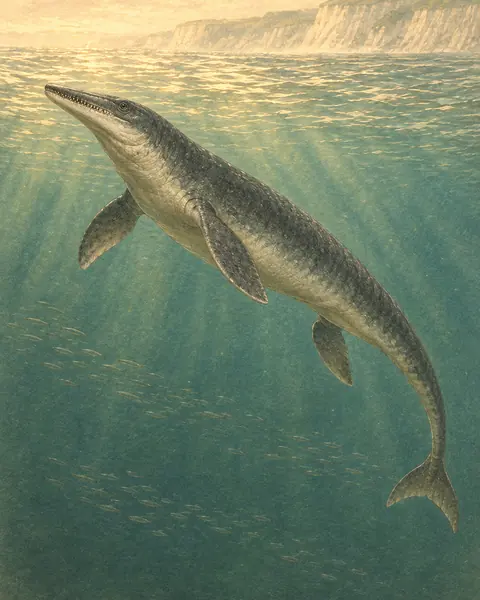
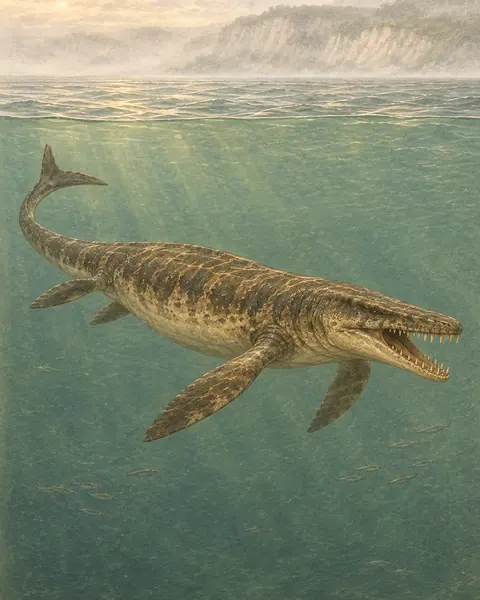
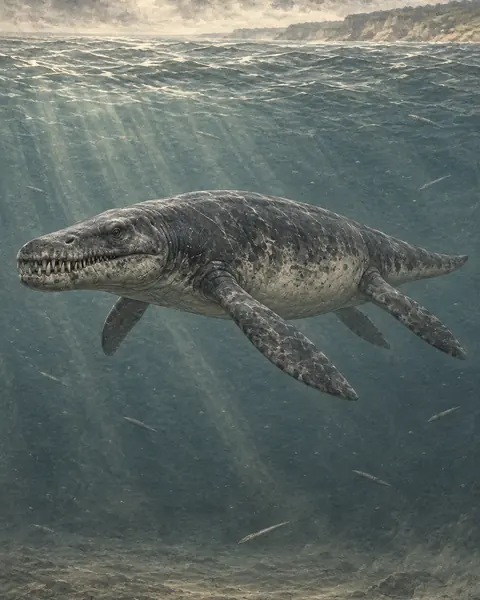
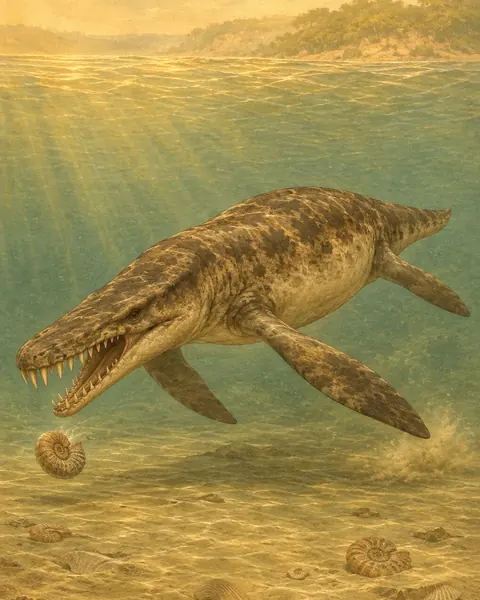
Dunkleosteus appears on one card, each painted for its deck.
Facts and sizes last checked November 24, 2026. How we check them.