 Fossil Deck
Pteranodon
Pteranodon longiceps
Pteranodon was a pterosaur (pteranodontid) that lived in the seas about 86–84 million years ago, in the Late Cretaceous. It was 5.6–7.6 m (18–25 ft) wingspan long and weighed 20–35 kg (44–77 lb). It was not a dinosaur.
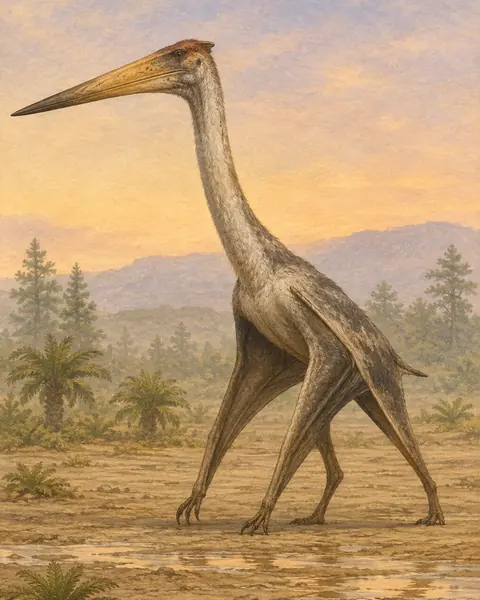
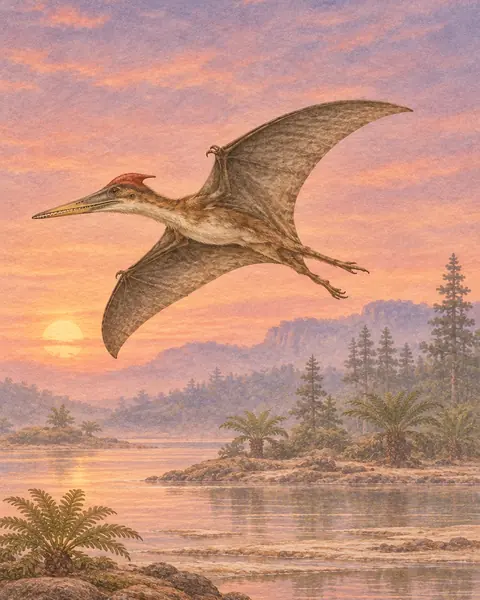
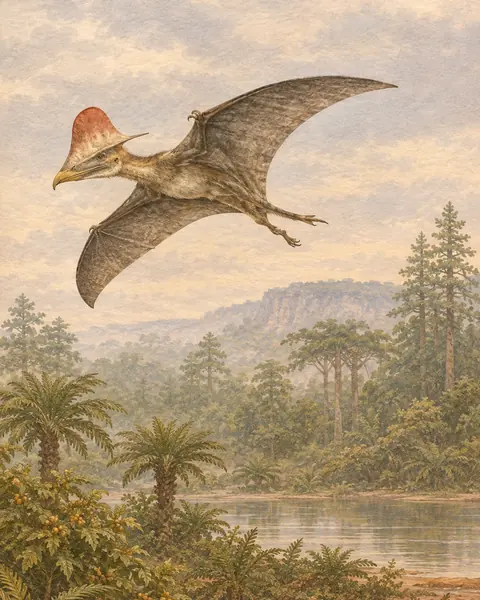
Pteranodon is known from about 1,200 fossils, more than any other pterosaur, and not one of them has a tooth. It was a pterosaur, not a dinosaur: a toothless fish-eater that soared over the Western Interior Seaway on wings that spread up to about 7 meters. Males carried a long, backswept bony crest on the head.
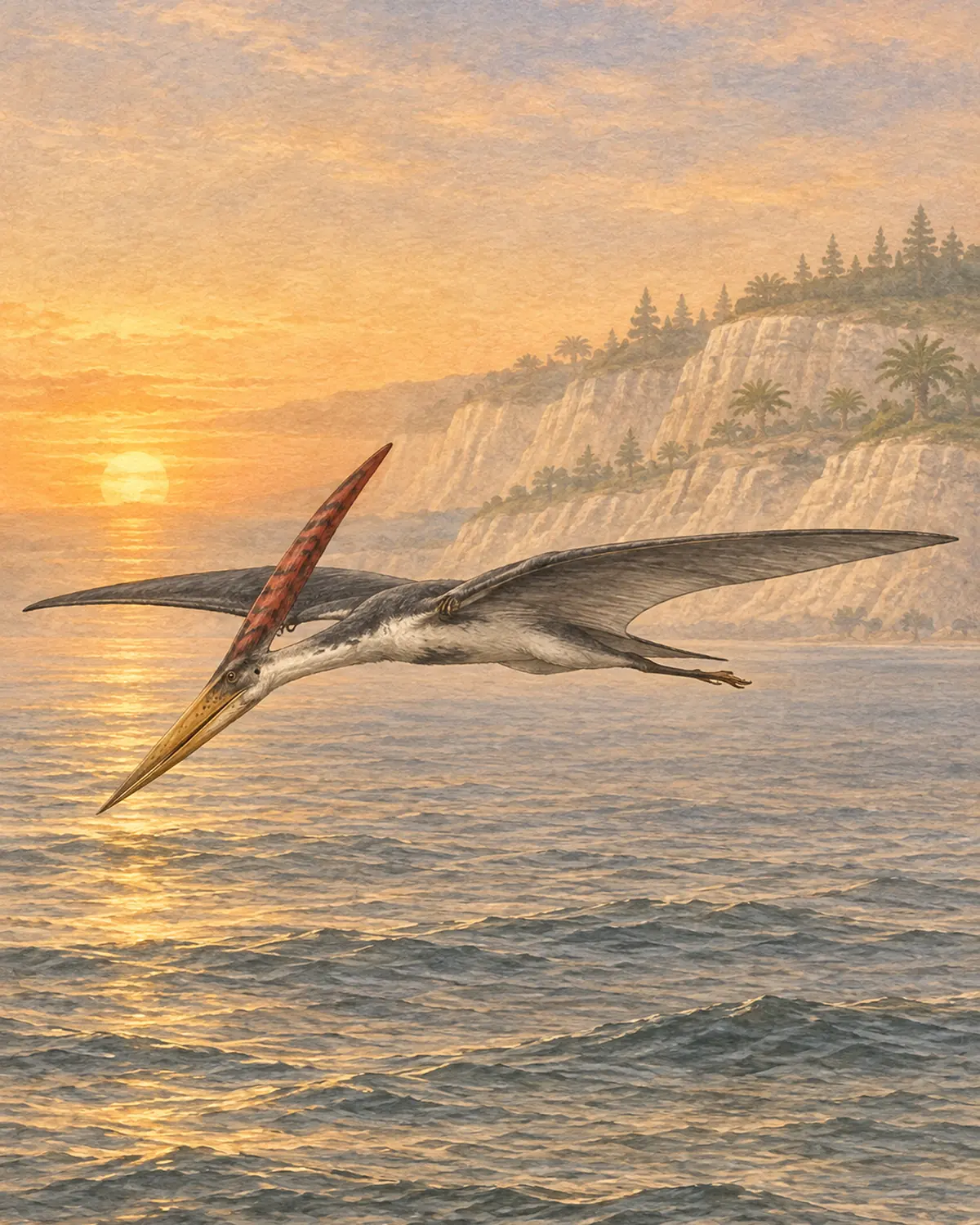
Quick facts about Pteranodon
- Scientific name
- Pteranodon longiceps, named in 1876
- Group
- Pterosaur (pteranodontid), not a dinosaur
- Lived
- About 86–84 million years ago (Late Cretaceous)
- Diet
- Piscivore
- Length
- 5.6–7.6 m (18–25 ft) wingspan
- Height
- About 1 m (3.3 ft) at the shoulder
- Weight
- 20–35 kg (44–77 lb)
- Fossils found in
- North America (Kansas, Nebraska, Wyoming, South Dakota and Alabama, USA; Smoky Hill Chalk of the Niobrara Formation)
- Fossil record
- Common: known from many good fossils
Was Pteranodon a dinosaur?
No. Pteranodon was a pterosaur, not a dinosaur. It lived in the age of the dinosaurs, but it belonged to a different group of animals.
What was Pteranodon like?
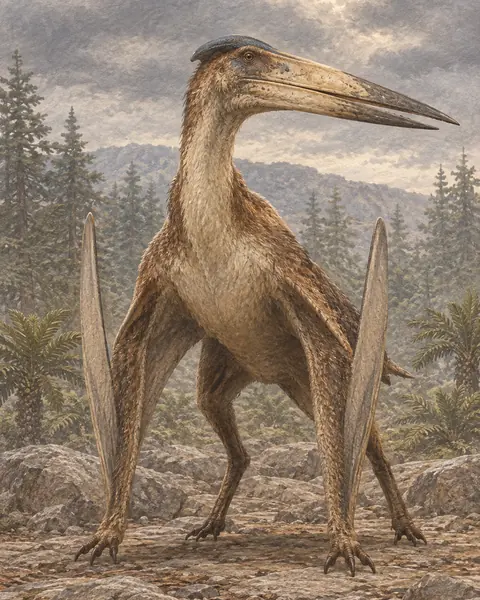
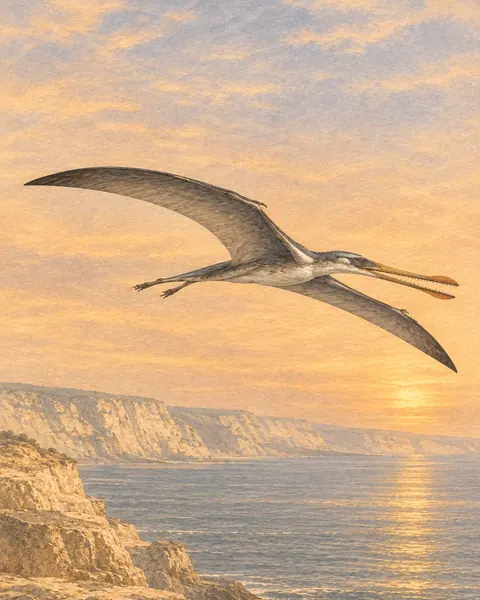
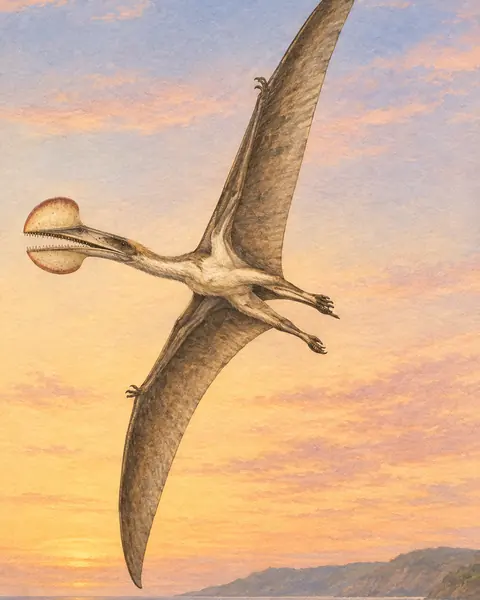
Pteranodon was a pterosaur, a flying reptile that belongs to a separate group from the dinosaurs. Its name means 'wing without teeth', and it is true to the name: the long, pointed beak held no teeth at all, and it probably caught fish near the surface of the Western Interior Seaway, the shallow sea that once split North America in two. The wing was a leathery membrane held out by one enormously long fourth finger, with three small clawed fingers left free at the wrist. Adult males had wingspans of roughly 5.6 to 7.6 meters and a large crest of bone sweeping back from the skull; females were smaller, averaging about 3.8 meters across, with much smaller crests. Despite that span, the largest males probably weighed only around 20 to 35 kilograms, because the bones were thin-walled and hollow. The tail was a short stub. With about 1,200 specimens, many of them well preserved, Pteranodon is the best-known pterosaur of all.
How big was Pteranodon?
Adult Pteranodon estimates: length 5.6–7.6 m (18–25 ft) wingspan, height about 1 m (3.3 ft) at the shoulder, weight 20–35 kg (44–77 lb). Where a range is given, it spans the published estimates for adults.
When did Pteranodon live?
Pteranodon lived about 86–84 million years ago, in the Late Cretaceous.
Where have Pteranodon fossils been found?
Its fossils come from North America (Kansas, Nebraska, Wyoming, South Dakota and Alabama, USA; Smoky Hill Chalk of the Niobrara Formation).
Who discovered Pteranodon?
Othniel Charles Marsh's team found the first Pteranodon wing bones in 1870 or 1871 in the Smoky Hill Chalk of western Kansas, the first pterosaur ever found outside Europe. The first skull turned up on May 2, 1876, along the Smoky Hill River, found by Samuel Wendell Williston, and Marsh named the genus Pteranodon that same year because it had no teeth, unlike every pterosaur then known.
How complete are the fossils of Pteranodon?
About 1,200 specimens are known, many with nearly complete skulls and articulated skeletons, more than for any other pterosaur.
Pteranodon in Fossil Deck
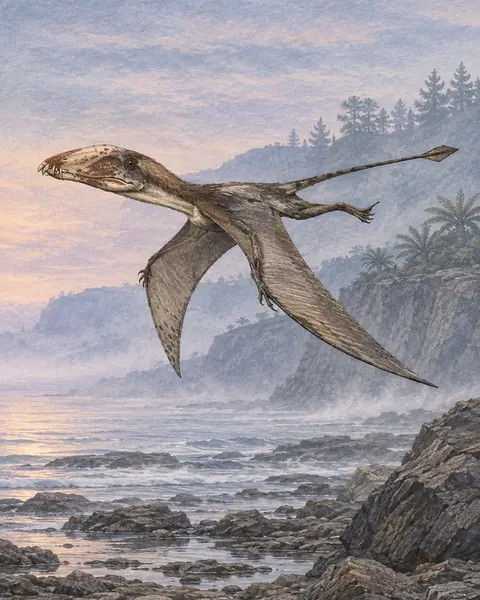
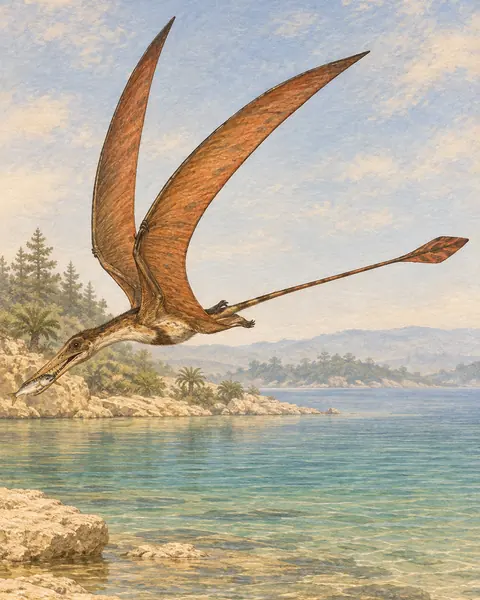
Pteranodon appears on one card, each painted for its deck.
Facts and sizes last checked November 24, 2026. How we check them.