 Fossil Deck
Apex Predators
The deadliest hunters. The greatest carnivores of every age — the crown of the food chain.
Twelve cards in the The Hunters expedition. In the app the deck is a one-time purchase, and its first card is a free find.
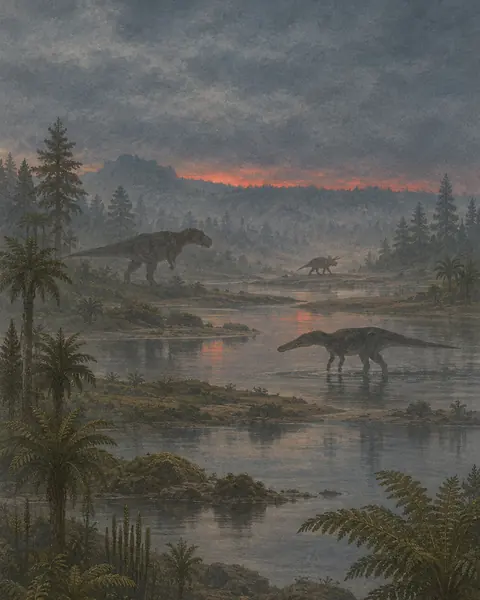
The 12 cards
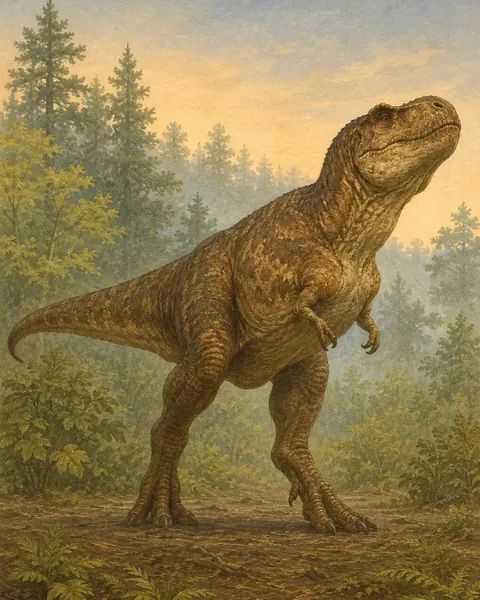
With large forward-facing eyes set in a broad skull, Tyrannosaurus rex may have had a binocular field of view estimated at about 55 degrees — wider than a modern hawk's — giving it excellent depth perception.
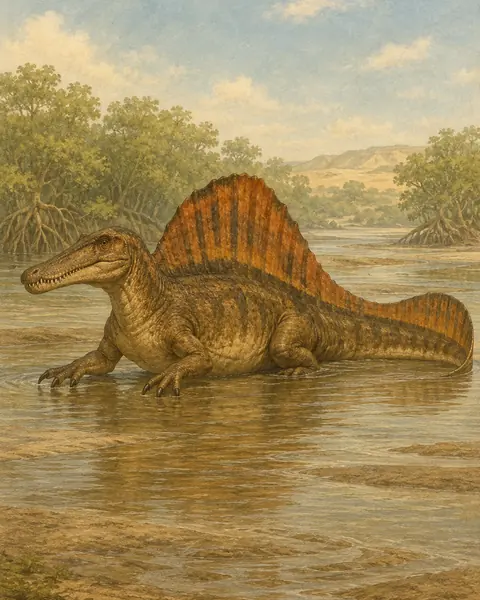
One of the strangest dinosaurs ever found, Spinosaurus carried a towering skin sail along its spine and a long, crocodile-like snout built for snatching fish.
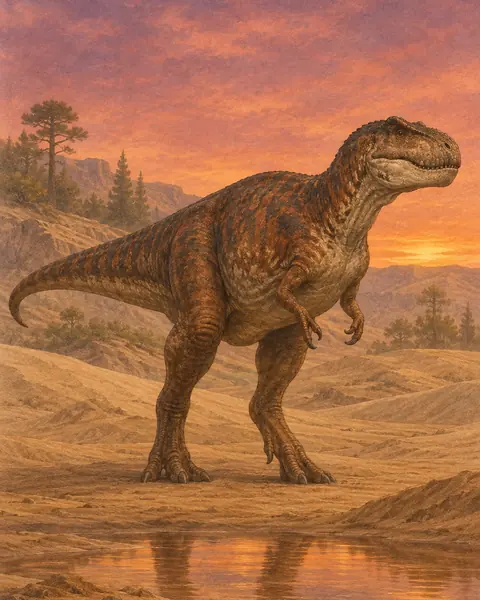
Giganotosaurus was one of the largest meat-eating dinosaurs ever found — reaching up to about 13 meters, slightly longer than Tyrannosaurus rex, though more lightly built.
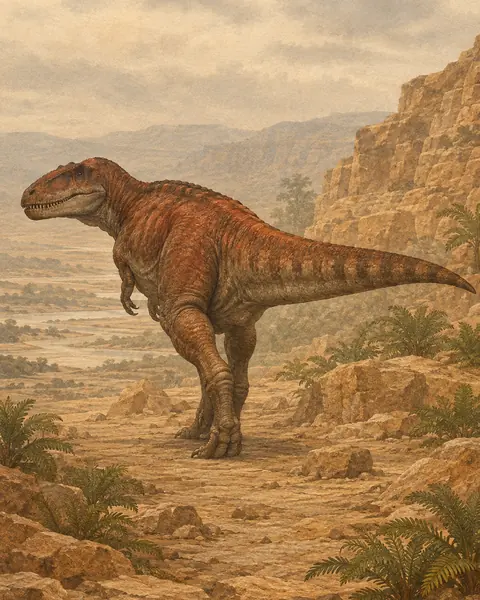
Carcharodontosaurus — its name means 'shark-toothed lizard' — had an enormous skull, an estimated 1.6 meters long when complete, lined with long, serrated, blade-like teeth and ranking among the largest skulls of any known meat-eating dinosaur.
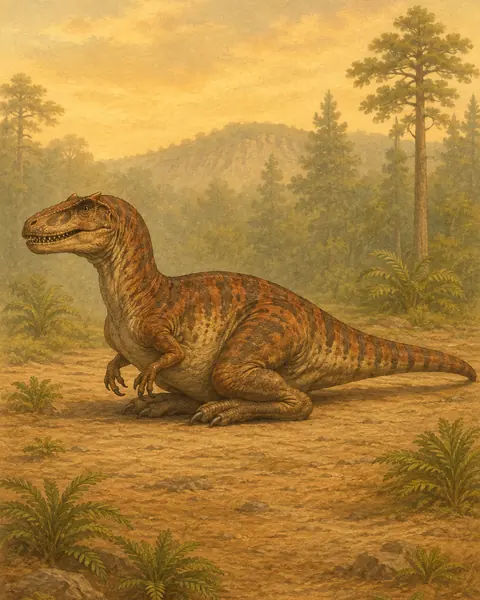
Allosaurus was the dominant predator of the Late Jurassic Morrison floodplains — a large bipedal hunter with small brow hornlets and three-clawed hands, unlike the two-fingered tyrannosaurs that came later.
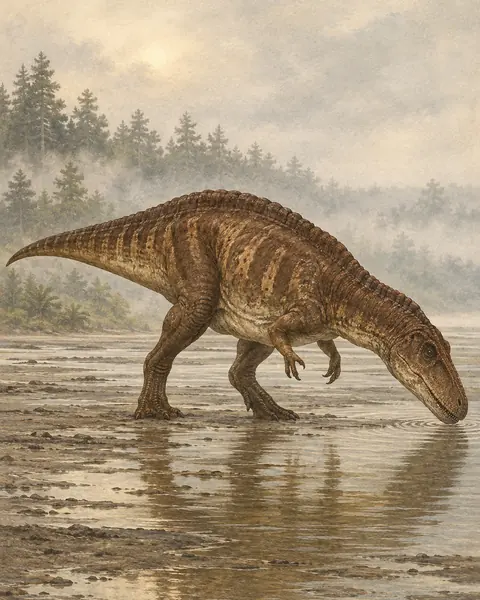
Acrocanthosaurus means 'high-spined lizard.' Tall bony spines rose from its neck, back and hips, up to about two and a half times the height of the vertebrae beneath them, and most likely held up a low ridge of muscle along the body.
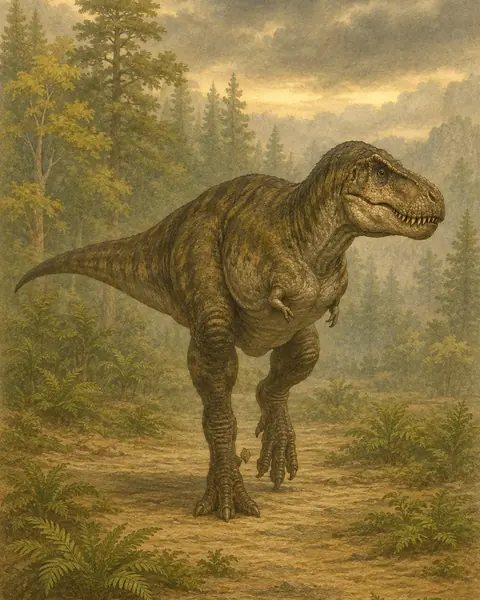
Tarbosaurus was the Asian counterpart of Tyrannosaurus rex — a deep-skulled tyrannosaur up to about 10 metres long, with thick teeth whose crowns reached about 11 centimetres.
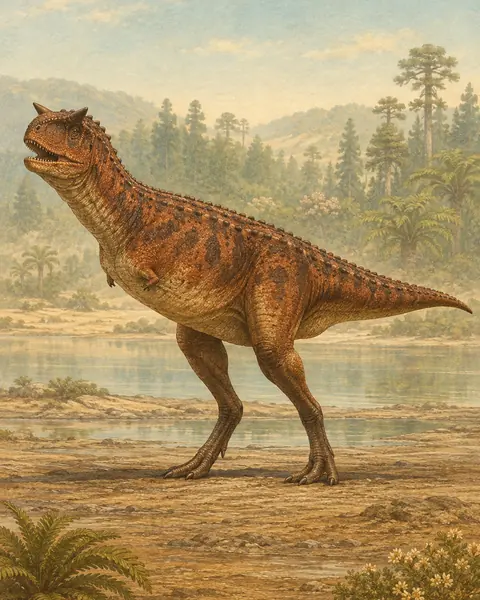
For its size, Carnotaurus carried the largest tail-driven leg muscles of any meat-eating dinosaur yet studied — an engine estimated at roughly 15 percent of its body weight that may have made it one of the fastest of the big predatory dinosaurs.
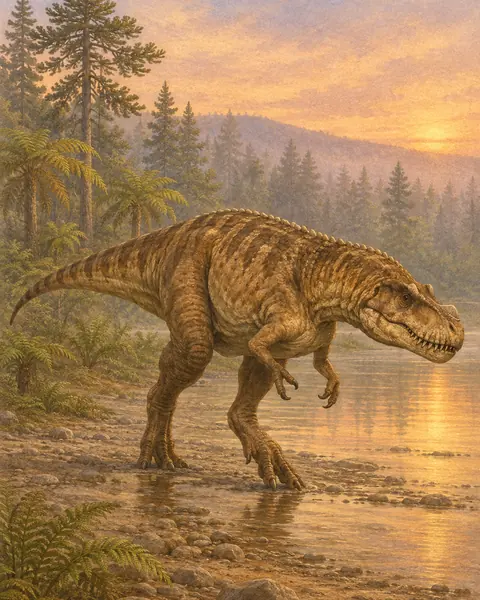
Ceratosaurus carried a prominent horn on the midline of its snout, a pair of small ridges over its eyes, and a row of small bony plates down its back.
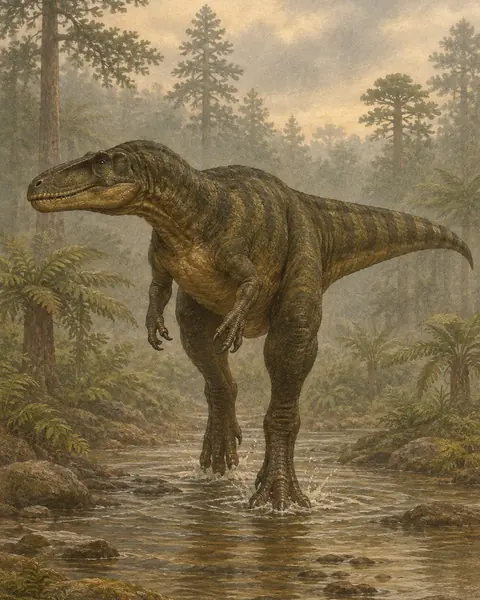
Megalosaurus was the first dinosaur ever given a scientific name, in 1824.
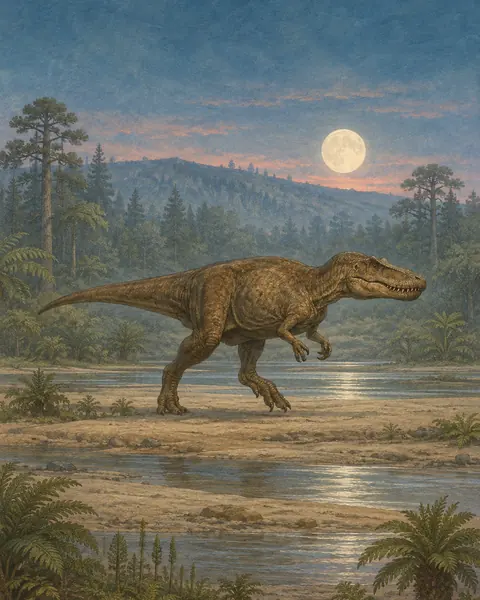
Torvosaurus means 'savage lizard,' and it was among the largest predators of the Late Jurassic.
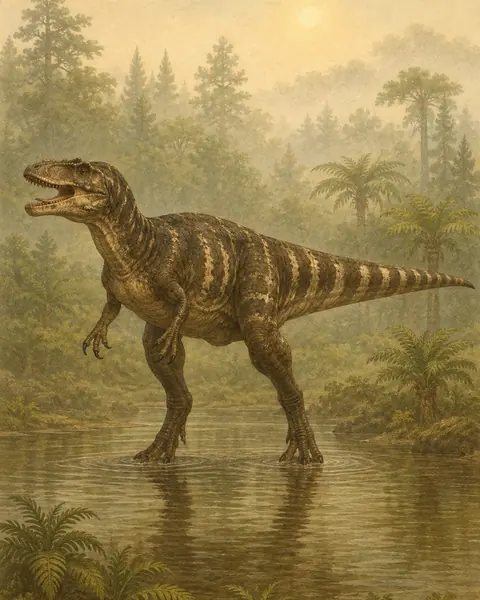
Yangchuanosaurus was the top predator of Late Jurassic Sichuan, in a world of long-necked Mamenchisaurus and plated Tuojiangosaurus.