 Fossil Deck
Carcharodontosaurus
Carcharodontosaurus saharicus
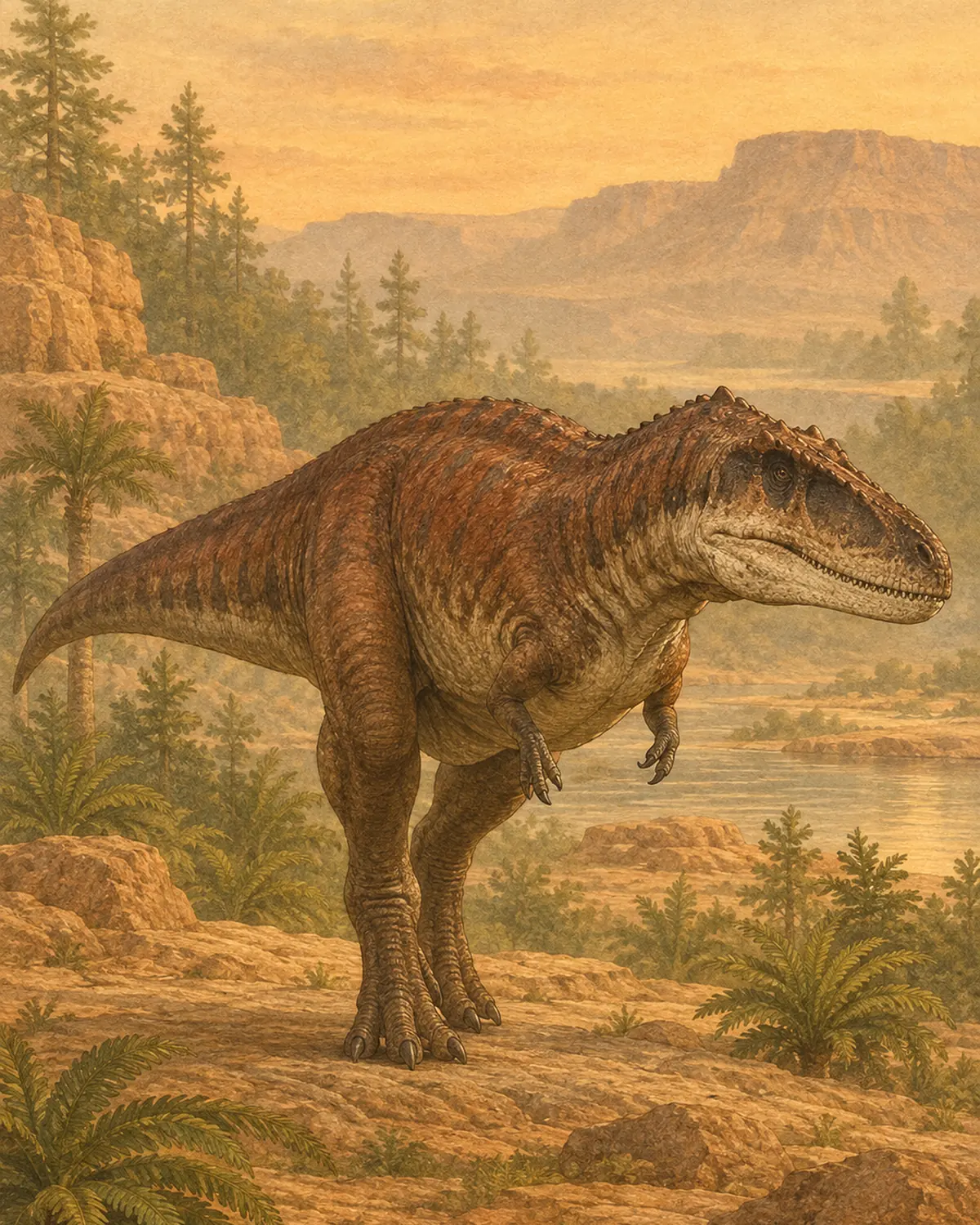
Carcharodontosaurus was a carcharodontosaurid theropod that lived in Africa about 99–94 million years ago, in the Late Cretaceous. It was 12–12.5 m (39–41 ft) long and weighed 5–7 tonnes (5.5–7.7 tons).
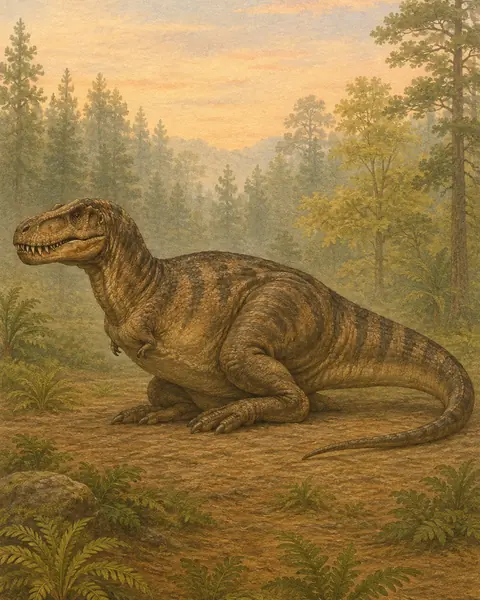
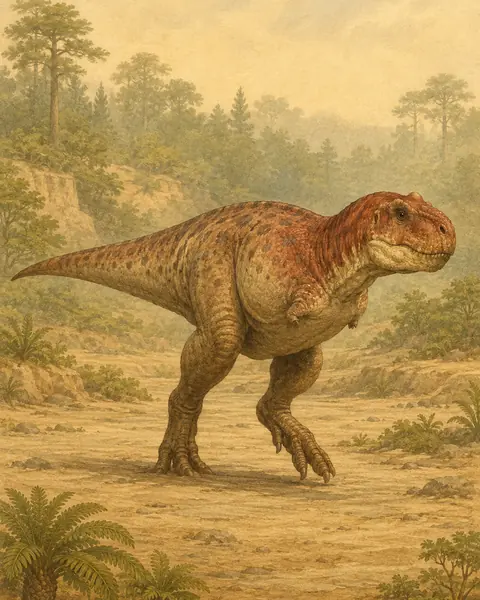
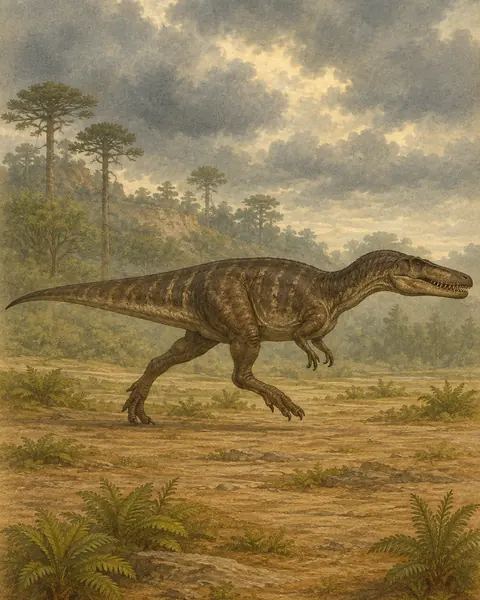
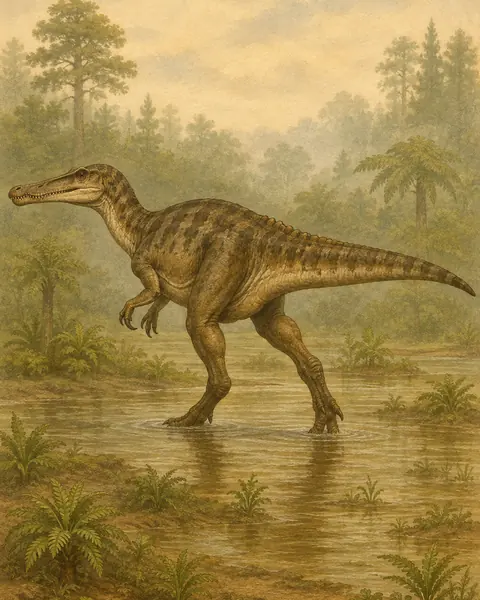
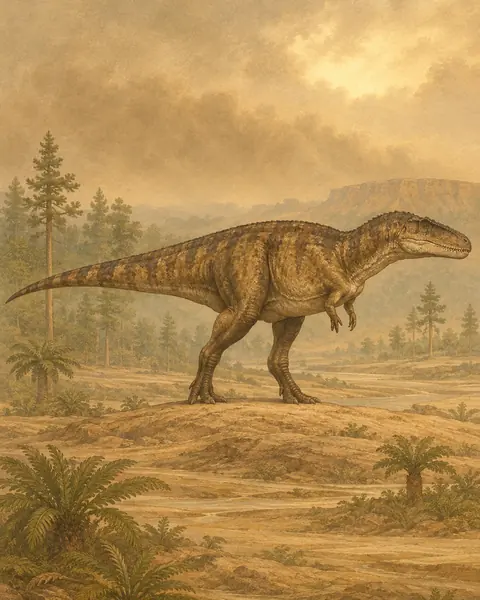
Carcharodontosaurus — its name means 'shark-toothed lizard' — had an enormous skull, an estimated 1.6 meters long when complete, lined with long, serrated, blade-like teeth and ranking among the largest skulls of any known meat-eating dinosaur. At around twelve to twelve-and-a-half meters long it was one of the largest land predators of its world, sharing the great rivers of Cretaceous North Africa with the sail-backed Spinosaurus. No complete skeleton has ever been found, and much of the best early material was lost in a Second World War bombing raid.
Quick facts about Carcharodontosaurus
- Scientific name
- Carcharodontosaurus saharicus, named in 1931
- Group
- Dinosaur (carcharodontosaurid theropod)
- Lived
- About 99–94 million years ago (Late Cretaceous)
- Diet
- Carnivore
- Length
- 12–12.5 m (39–41 ft)
- Height
- About 3.8 m (12 ft) at the hip
- Weight
- 5–7 tonnes (5.5–7.7 tons)
- Fossils found in
- North Africa
- Fossil record
- Rare: known from partial remains
What was Carcharodontosaurus like?
Carcharodontosaurus — 'shark-toothed lizard' — had an enormous skull, an estimated 1.6 meters long when complete and among the largest of any known meat-eating dinosaur, with jaws lined by long, serrated, blade-like teeth. The paleontologist who named it chose that name because those teeth reminded him of a great white shark's. At around twelve to twelve-and-a-half meters long it was one of the largest land predators ever to live, rivaling Tyrannosaurus and its close South American relative Giganotosaurus in length, though it was more lightly built. Unlike the two-fingered tyrannosaurs, it sat on the allosaur branch of the theropod family tree and kept three clawed fingers on each hand. It shared the vast river systems of Cretaceous North Africa with the sail-backed Spinosaurus, giant crocodile relatives and huge fish. Much of what scientists first learned about it was lost when its best early skeleton was destroyed in a wartime bombing, and no complete skeleton has ever been found — and recently some researchers have even argued that that destroyed skeleton may have belonged to a different dinosaur altogether.
How big was Carcharodontosaurus?
Adult Carcharodontosaurus estimates: length 12–12.5 m (39–41 ft), height about 3.8 m (12 ft) at the hip, weight 5–7 tonnes (5.5–7.7 tons). Where a range is given, it spans the published estimates for adults.
When did Carcharodontosaurus live?
Carcharodontosaurus lived about 99–94 million years ago, in the Late Cretaceous.
Where have Carcharodontosaurus fossils been found?
Its fossils come from North Africa.
Who discovered Carcharodontosaurus?
First known from two teeth found in the Algerian Sahara in 1924 and named Megalosaurus saharicus by Charles Depéret and Justin Savornin in 1925. In 1931 the German paleontologist Ernst Stromer moved the species into a new genus, Carcharodontosaurus, using a fuller Egyptian skeleton collected by Richard Markgraf — a skeleton later destroyed in the 1944 bombing of Munich. No complete skeleton survives today; the best reference specimen is an incomplete skull found in Morocco's Kem Kem beds in 1995 and made the species' official replacement type in 2007.
How complete are the fossils of Carcharodontosaurus?
No complete skeleton is known — Carcharodontosaurus is pieced together from an incomplete Moroccan skull, many isolated teeth and a few scattered bones, after the fuller skeleton Ernst Stromer studied was destroyed in a 1944 bombing raid on Munich.
Carcharodontosaurus in Fossil Deck
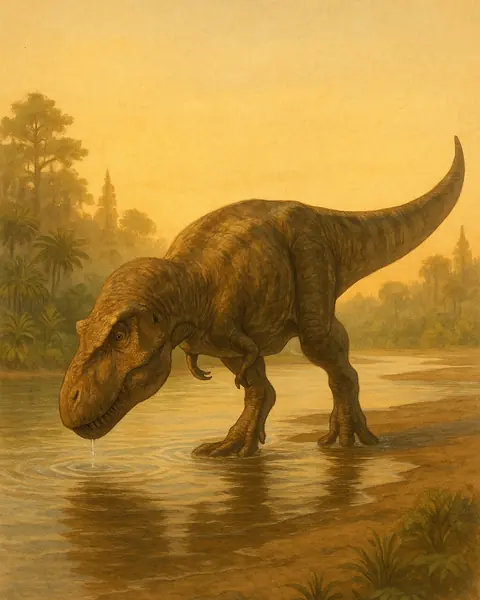
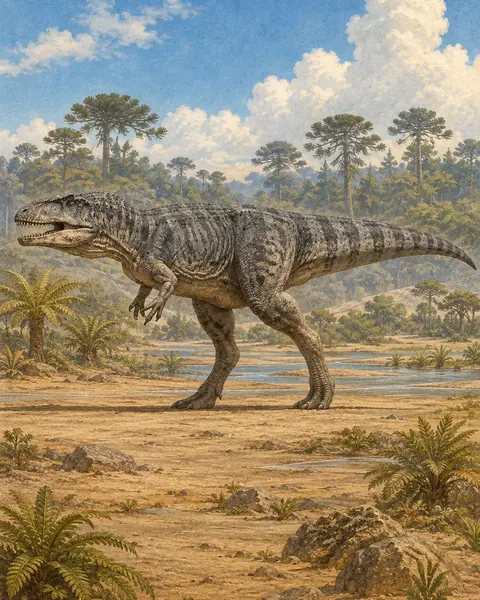
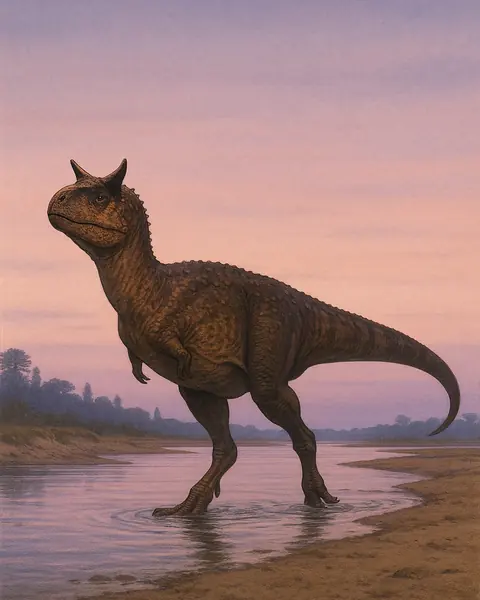
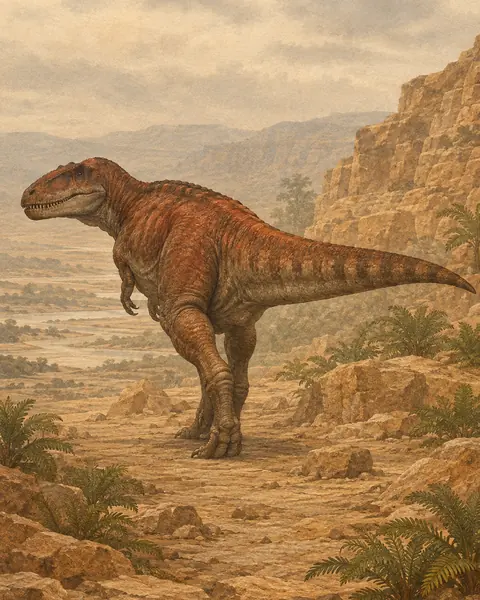
Carcharodontosaurus appears on 3 cards, each painted for its deck.
Facts and sizes last checked November 24, 2026. How we check them.