 Fossil Deck
Baryonyx
Baryonyx walkeri
Baryonyx was a spinosaurid theropod that lived in Europe about 130–125 million years ago, in the Early Cretaceous. It was 7.5–10 m (25–33 ft) long and weighed 1.2–2 tonnes (1.3–2.2 tons).
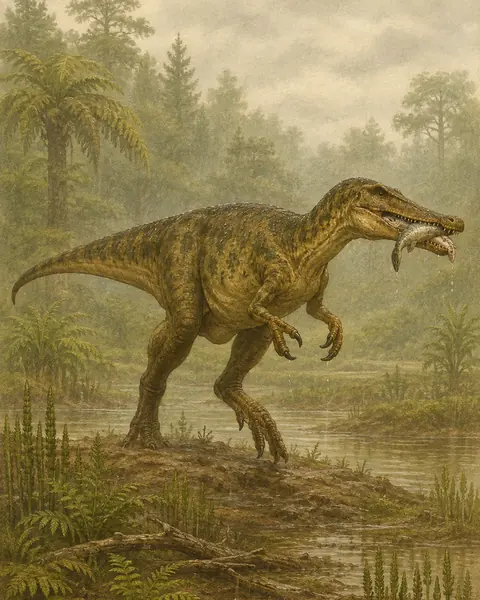
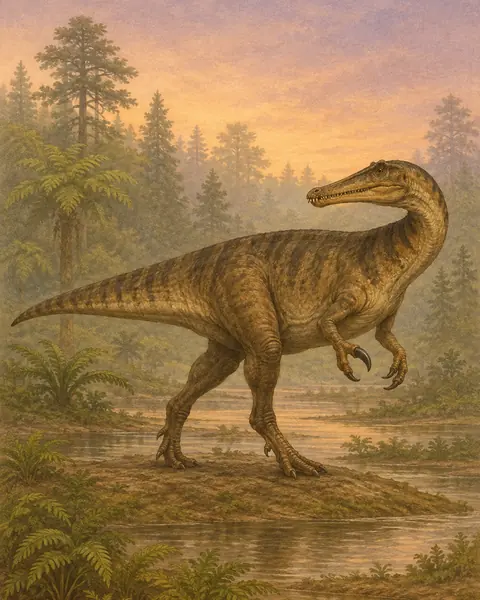
Baryonyx is named for its huge, curved thumb claw — about 30 centimetres long on the outer curve — set on a powerful, robust hand. Fish scales and teeth preserved in one skeleton's stomach make it one of the first dinosaurs shown to have eaten fish, caught in a long, crocodile-like snout lined with many small conical teeth. Bones of a young Iguanodon in the same gut suggest it hunted or scavenged other animals too.
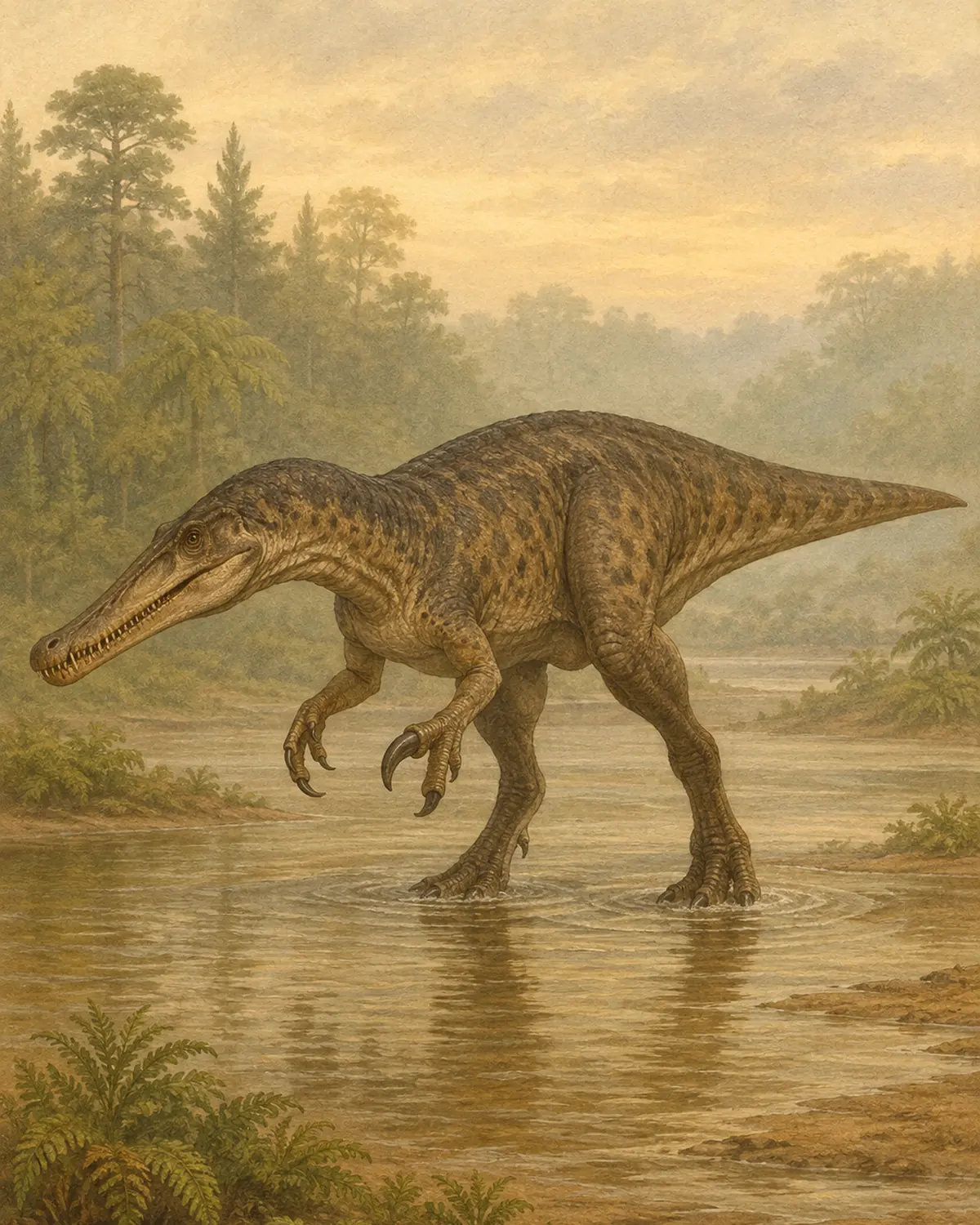
Quick facts about Baryonyx
- Scientific name
- Baryonyx walkeri, named in 1986
- Group
- Dinosaur (spinosaurid theropod)
- Lived
- About 130–125 million years ago (Early Cretaceous)
- Diet
- Carnivore
- Length
- 7.5–10 m (25–33 ft)
- Height
- About 2.5 m (8.2 ft) at the hip
- Weight
- 1.2–2 tonnes (1.3–2.2 tons)
- Fossils found in
- Western Europe
- Fossil record
- Rare: known from partial remains
What was Baryonyx like?
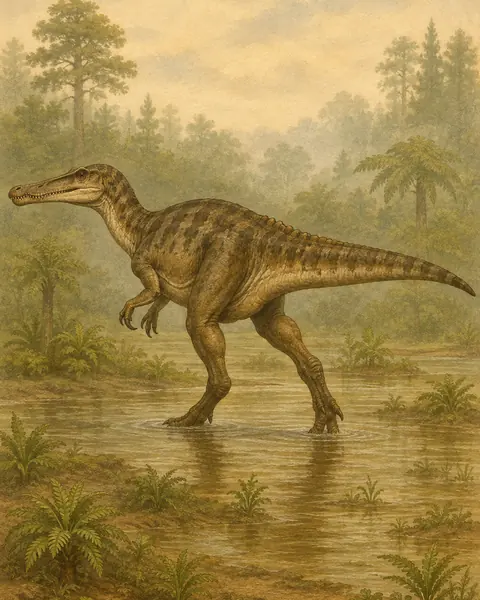
Baryonyx is named for its huge, curved thumb claw — about 30 centimetres long on the outer curve — carried on a robust, powerful hand. Its long, low, narrow snout was strikingly crocodile-like, ending in a rounded rosette of teeth and lined with many small, finely serrated conical teeth: it had roughly twice as many teeth as most meat-eating dinosaurs, better suited to gripping slippery prey than slicing flesh. That impression was confirmed by a rare find — acid-etched fish scales and teeth preserved in the stomach region of the original skeleton, making Baryonyx one of the first dinosaurs with direct evidence of a fish diet. The same gut also held the bones of a young Iguanodon, suggesting it was an opportunist that fished the riverbanks but took other prey when it could. Unlike its later relative Spinosaurus, Baryonyx had no tall sail — at most a low ridge or slight hump along its back — and it walked on two legs beside the slow rivers and floodplains of Early Cretaceous southern England. Because its holotype is the most complete spinosaurid skeleton yet found, this otherwise poorly known family is often pictured through Baryonyx.
How big was Baryonyx?
Adult Baryonyx estimates: length 7.5–10 m (25–33 ft), height about 2.5 m (8.2 ft) at the hip, weight 1.2–2 tonnes (1.3–2.2 tons). Where a range is given, it spans the published estimates for adults.
When did Baryonyx live?
Baryonyx lived about 130–125 million years ago, in the Early Cretaceous.
Where have Baryonyx fossils been found?
Its fossils come from Western Europe.
Who discovered Baryonyx?
In January 1983, amateur fossil collector William Walker found the large claw in the Smokejack Clay Pit near Ockley, Surrey, in southern England. Paleontologists Alan Charig and Angela Milner of London's Natural History Museum described and named Baryonyx walkeri — roughly 'Walker's heavy claw' — in 1986. The single skeleton they recovered is about 65% complete, the most complete spinosaurid ever found, though only scattered teeth and bones are otherwise known.
How complete are the fossils of Baryonyx?
Known mainly from a single skeleton — about 65% complete and the most complete spinosaurid ever found — plus scattered teeth and bones; substantial for this rare group, but still essentially one good, incomplete specimen.
Baryonyx in Fossil Deck
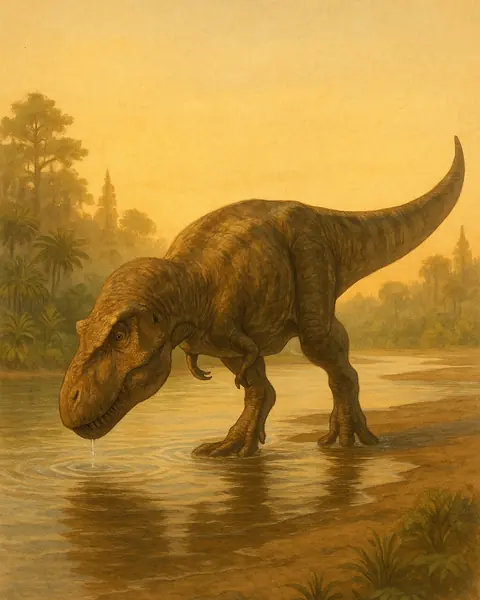
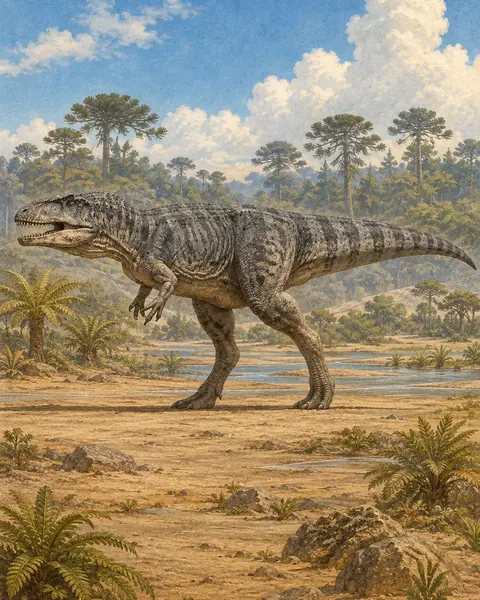
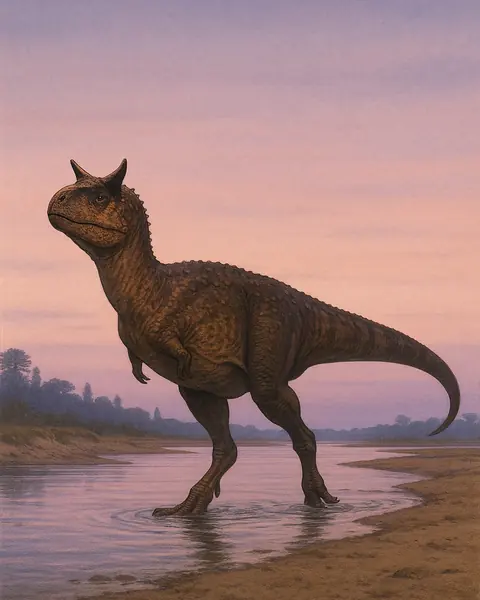
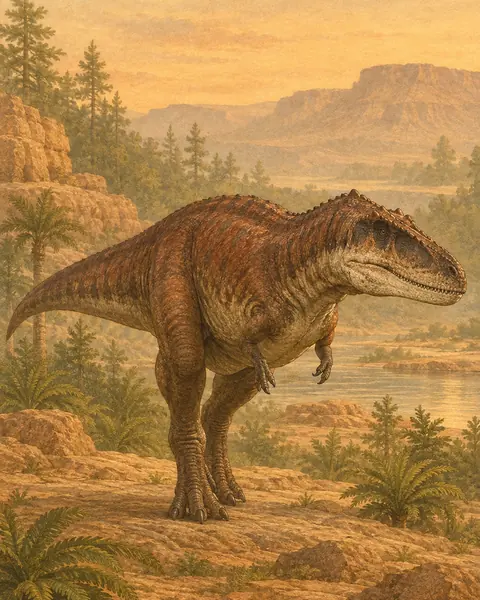
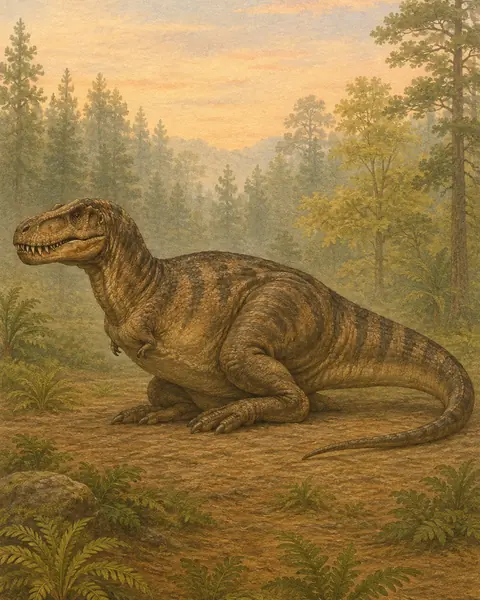
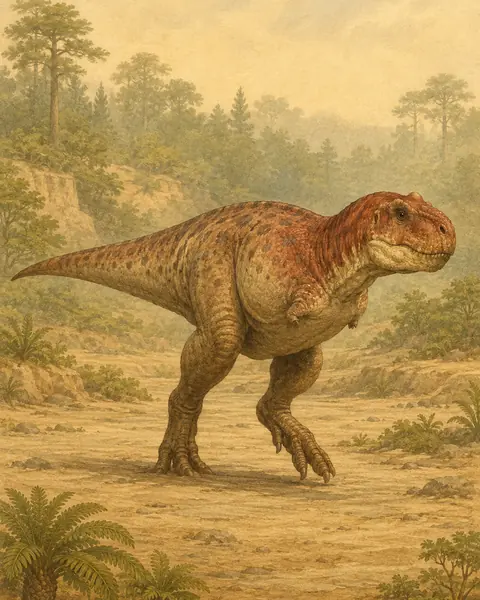
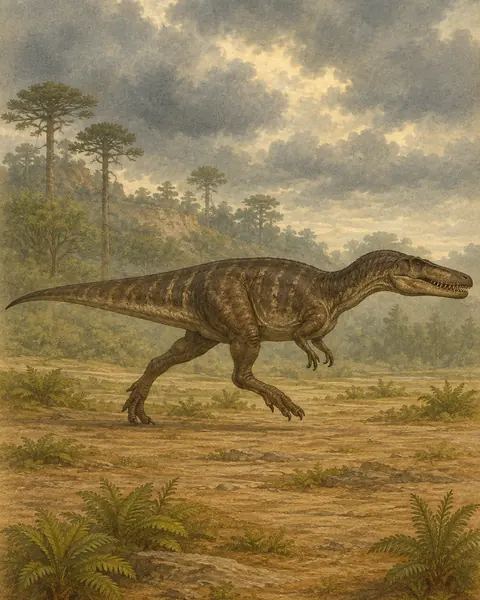
Baryonyx appears on 3 cards, each painted for its deck.
Facts and sizes last checked November 24, 2026. How we check them.
More from Cretaceous Predators
See the whole deck