 Fossil Deck
River Hunters
Waterside predators. Fish-eaters of the ancient rivers — long-jawed and water-adjacent, never marine.
Twelve cards in the The Hunters expedition. In the app the deck is a one-time purchase, and its first card is a free find.
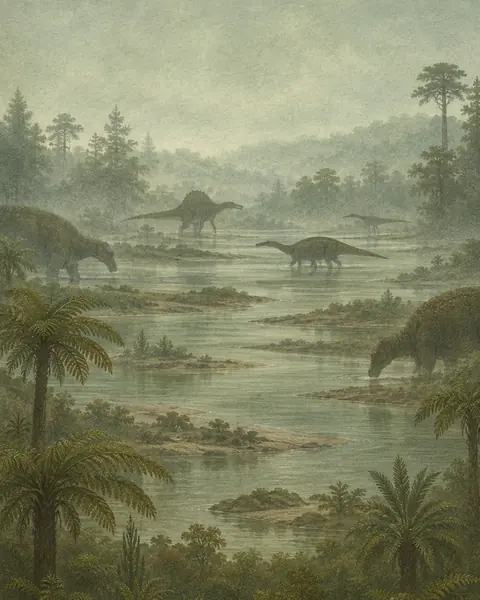
The 12 cards
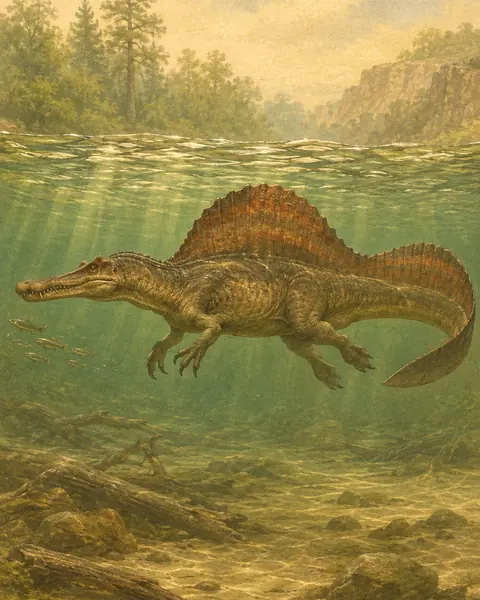
One of the strangest dinosaurs ever found, Spinosaurus carried a towering skin sail along its spine and a long, crocodile-like snout built for snatching fish.
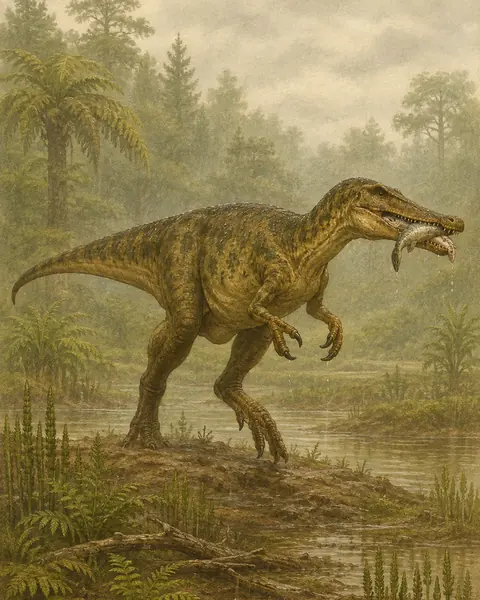
Baryonyx is named for its huge, curved thumb claw — about 30 centimetres long on the outer curve — set on a powerful, robust hand.
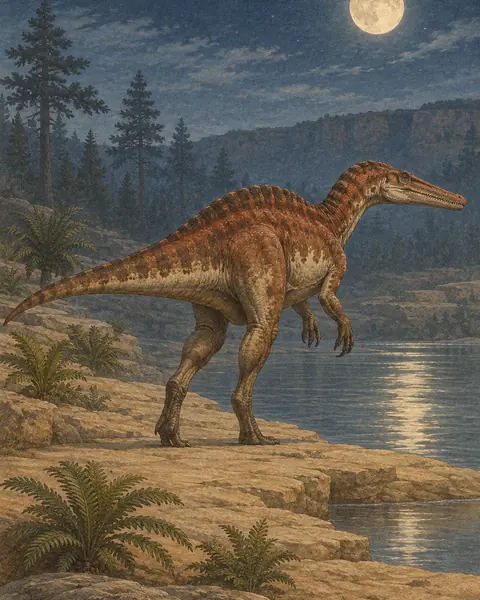
Suchomimus — its name means 'crocodile mimic' — had a long, narrow, crocodile-like snout lined with more than 100 small conical teeth, ideal for gripping slippery fish.
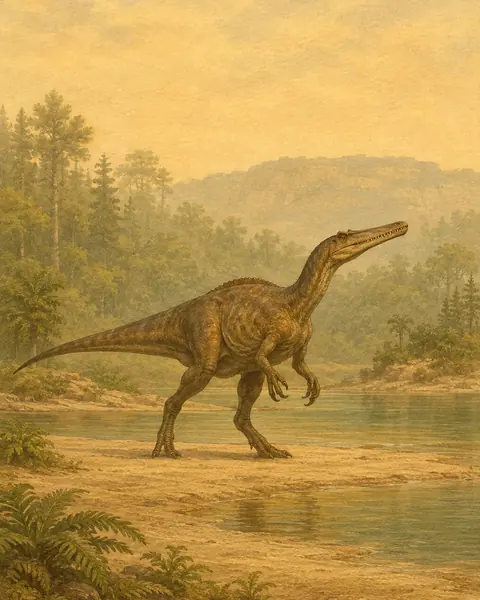
Irritator is named for the irritation of the scientists who found its skull heavily damaged and doctored by the dealers who sold it.
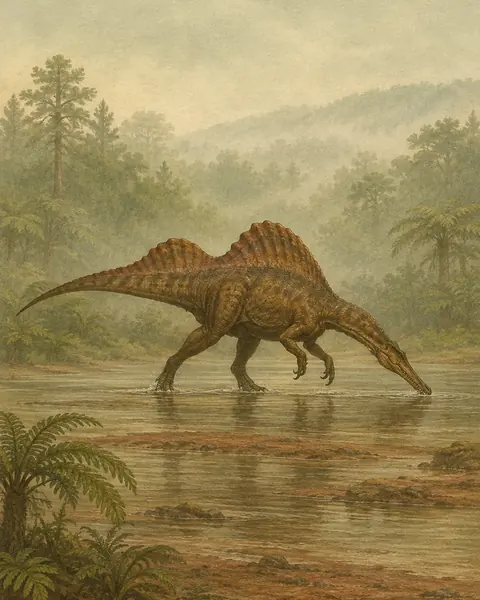
Ichthyovenator, 'fish hunter', carried the most unusual sail of any spinosaurid: a wave-shaped fan of tall spines that dipped over the hips and split into two separate sails.
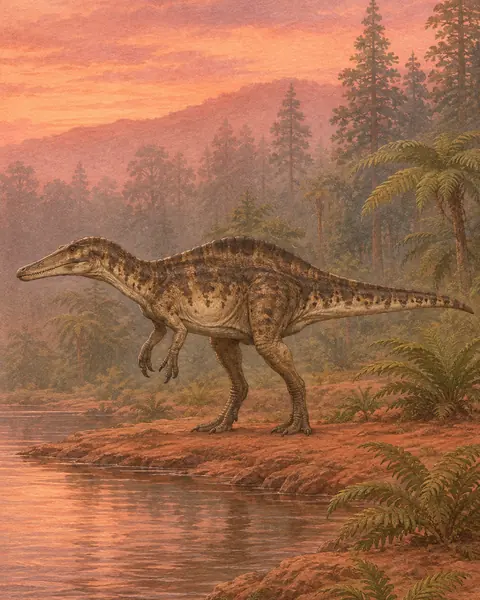
Siamosaurus was the first spinosaurid ever reported from Asia, and it is known from little more than teeth.
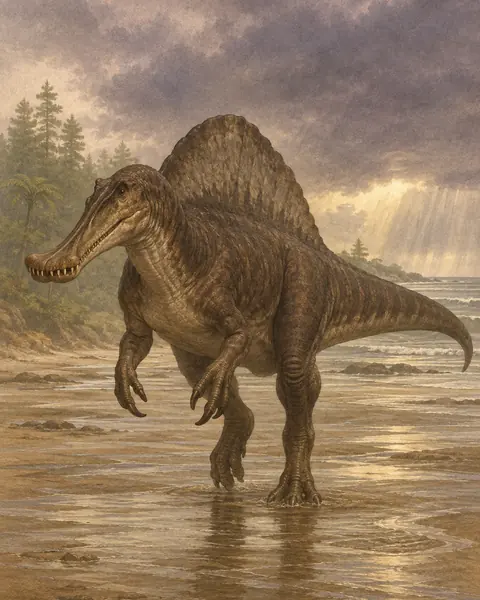
Oxalaia is the largest meat-eating dinosaur known from Brazil, yet only two pieces of its snout and jaw have ever been found.
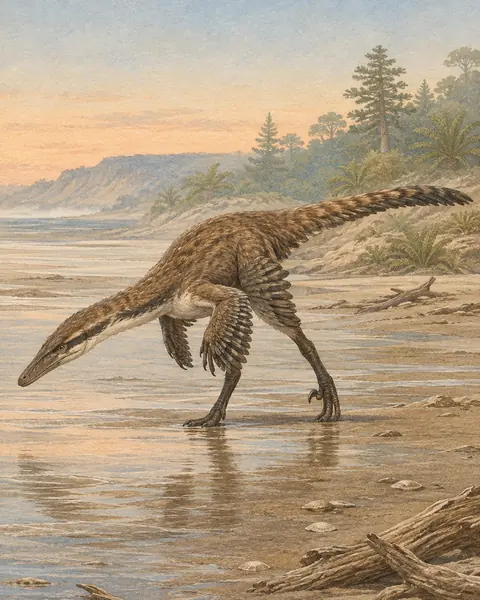
Austroraptor, 'southern thief', was the largest raptor-like dinosaur of the southern continents, but built nothing like the slim hunters of the north.
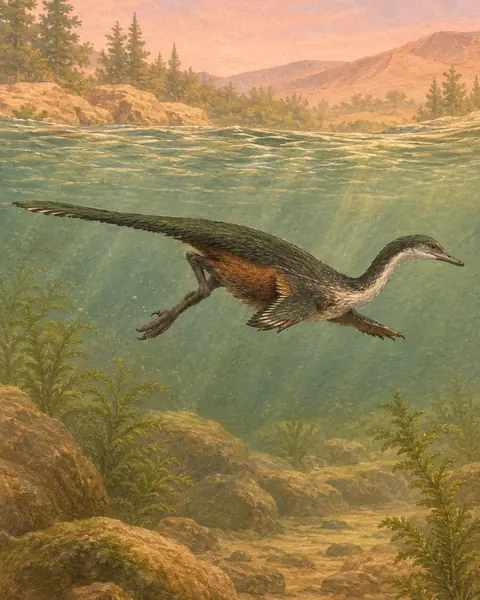
Halszkaraptor was about the size of a mallard duck, with a very long, swan-like neck, a flat snout full of small teeth and flipper-like arms.
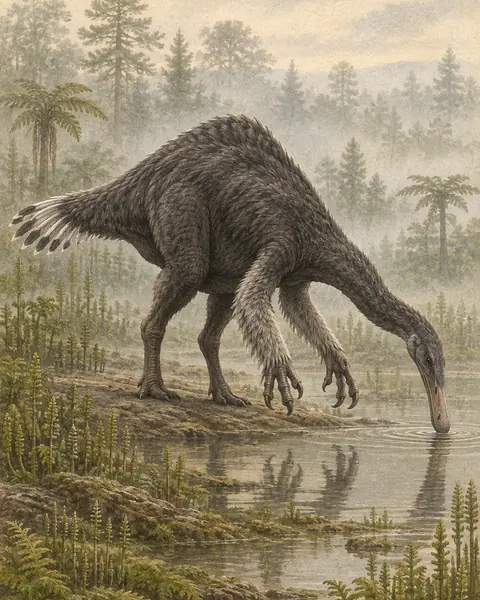
For almost fifty years Deinocheirus was known only from a pair of arms 2.4 metres long, and nobody could say what animal they belonged to.
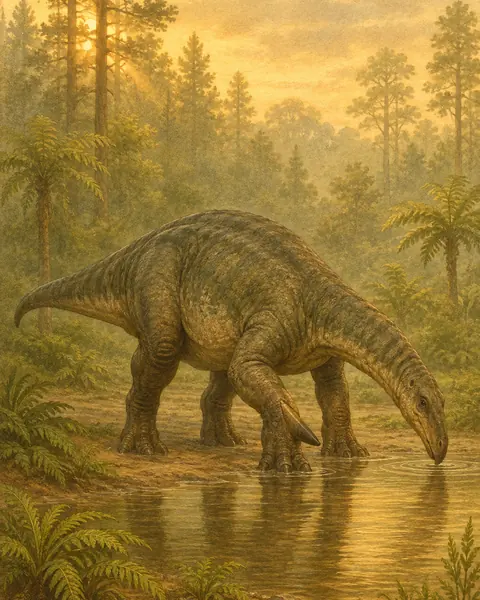
Lurdusaurus, 'heavy lizard', was a plant-eater, not a hunter, and lived on the same river banks as the fish-eating spinosaurids.
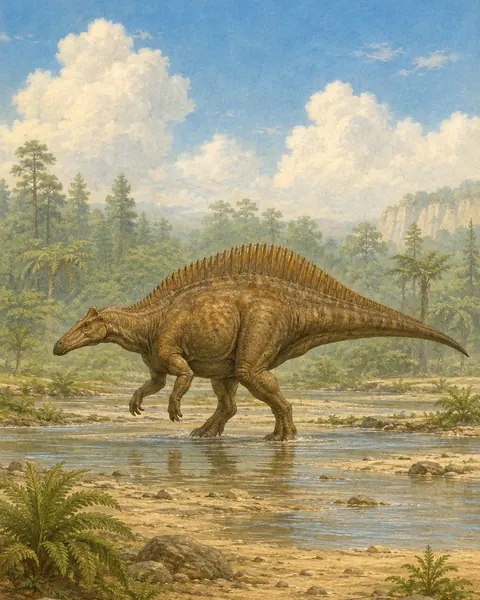
Ouranosaurus had a tall sail running from its shoulders to its tail, held up by long spines of its backbone, on top of a broad, duck-billed head.