 Fossil Deck
North American Dinosaurs
Fossils of a continent. The iconic dinosaurs unearthed across North America.
Twelve cards in the Around the World expedition. In the app the deck is a one-time purchase, and its first card is a free find.
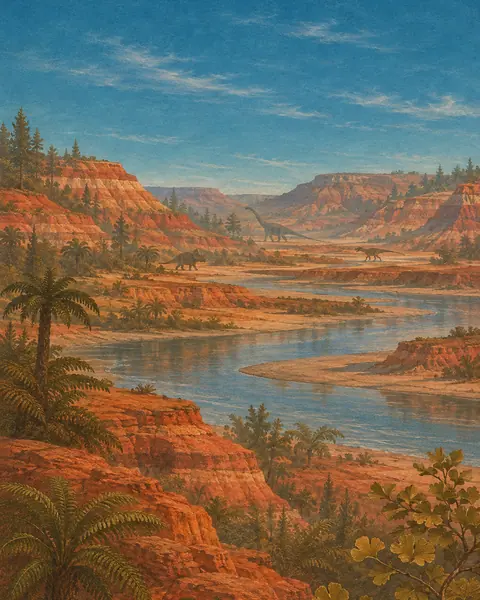
The 12 cards
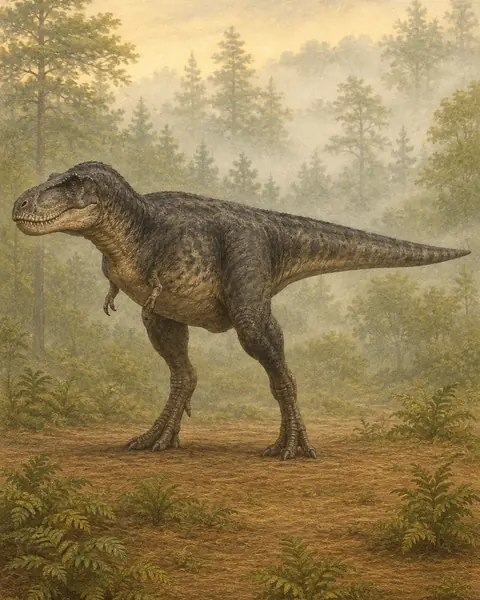
With large forward-facing eyes set in a broad skull, Tyrannosaurus rex may have had a binocular field of view estimated at about 55 degrees — wider than a modern hawk's — giving it excellent depth perception.
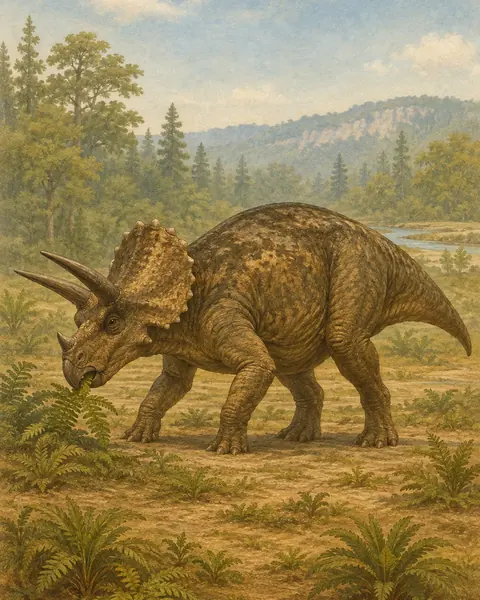
Triceratops weighed up to about 10 tonnes and appears to have been the most common large herbivore of its world.
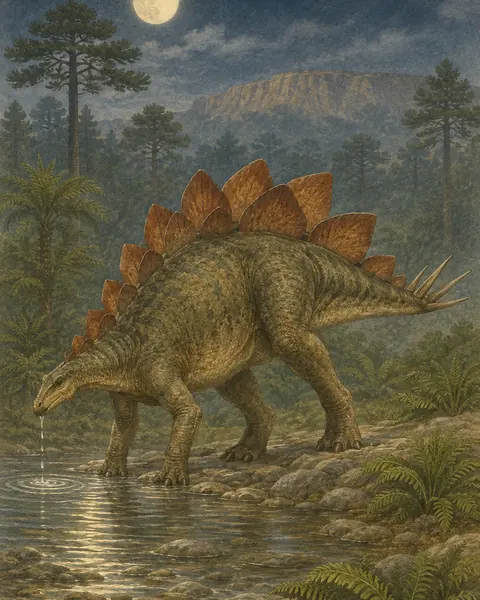
Stegosaurus reached up to about 9 meters and 5.3 tonnes, yet its brain was no larger than a dog's and its weak, peg-like teeth suited only soft, low-growing plants, which it browsed with its head held low on pillar-like legs.
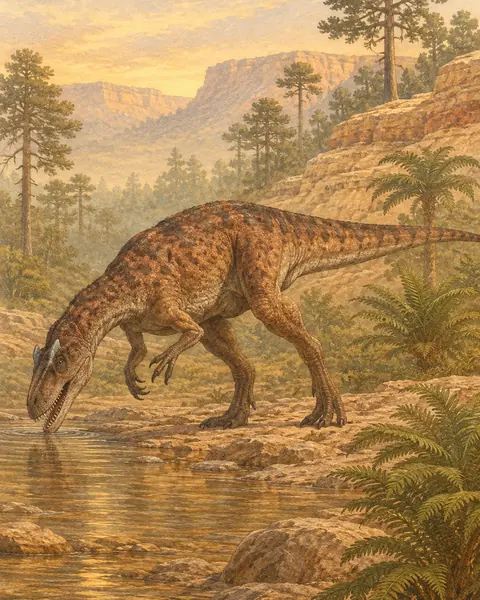
Allosaurus was the dominant predator of the Late Jurassic Morrison floodplains — a large bipedal hunter with small brow hornlets and three-clawed hands, unlike the two-fingered tyrannosaurs that came later.
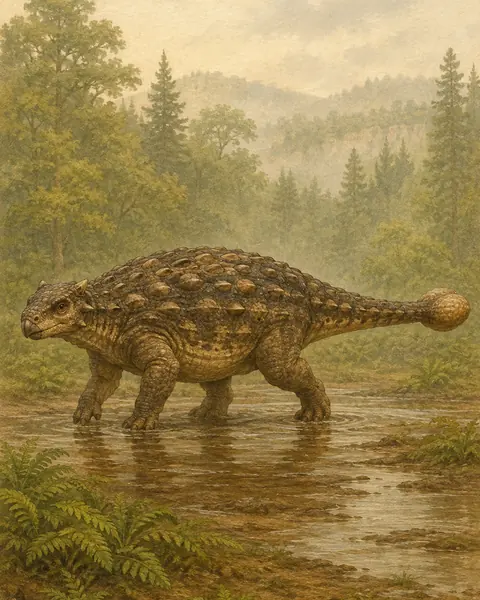
Ankylosaurus was one of the largest armored plant-eaters, up to about 8 meters long and perhaps 8 tonnes, a low, broad animal sheathed in bony armor with a tail ending in a massive club of fused bone.
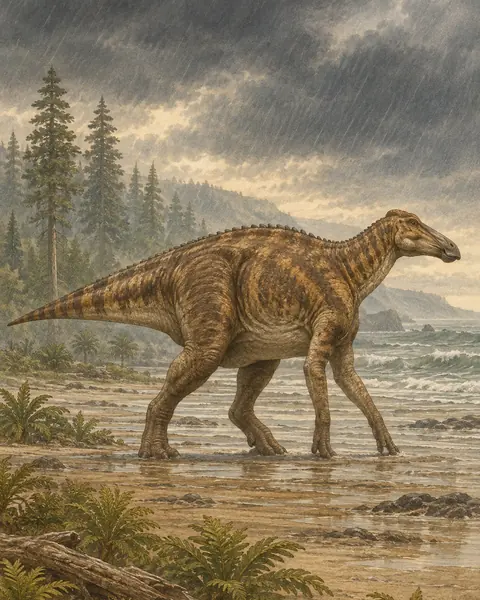
Edmontosaurus is known from so many fossils that it is one of the best-understood dinosaurs: skulls with the beak preserved, mummified skin, and a Wyoming bone bed spreading across more than a square kilometre.
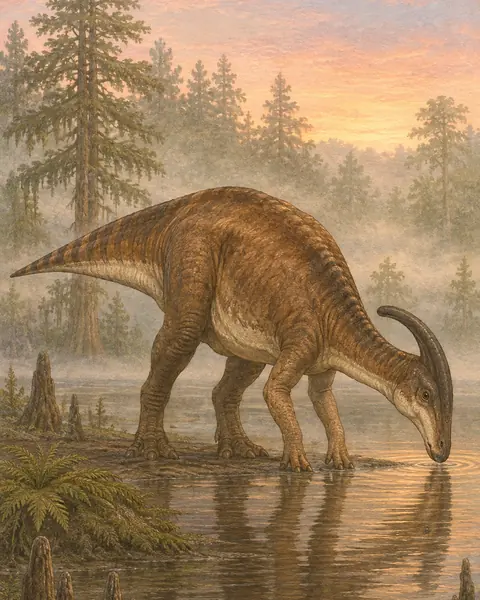
Parasaurolophus carried the most extravagant crest of any duck-billed dinosaur: a long, curved, hollow tube that may have worked like a natural trumpet, channeling air through looping nasal passages to produce deep, resonating calls.
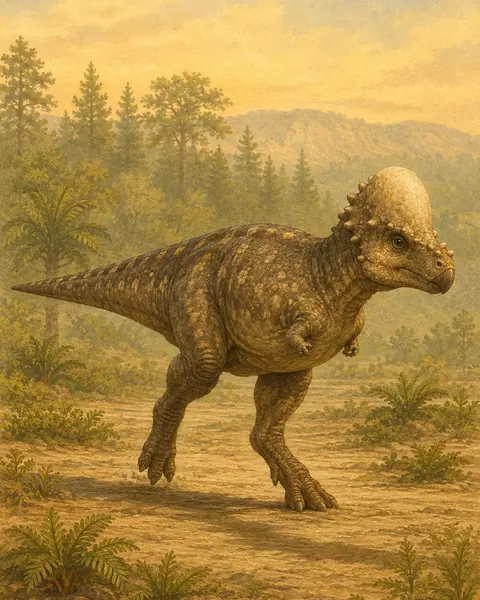
Pachycephalosaurus carried the largest dome of the bone-headed dinosaurs, solid bone up to about 22 centimetres thick, ringed by knobs and spikes.
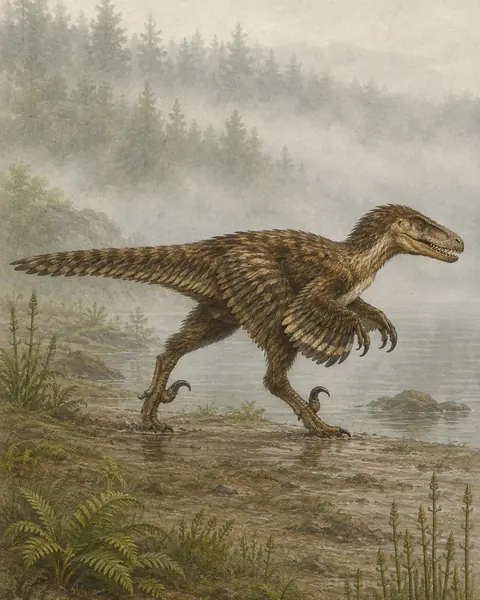
Deinonychus carried a single enlarged sickle-shaped claw, up to about 12 centimeters long, raised off the ground on the second toe of each foot.
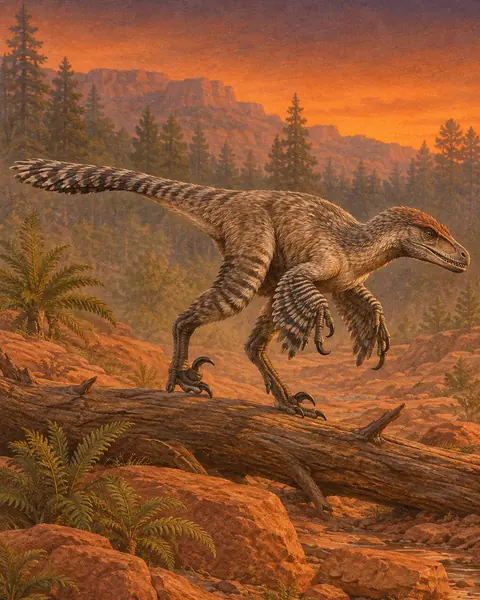
Utahraptor was the largest known member of the raptor family (the dromaeosaurids), and each foot bore an enormous sickle-shaped claw about 22 centimetres long along its curve — perhaps 24 cm once its horny sheath is added.
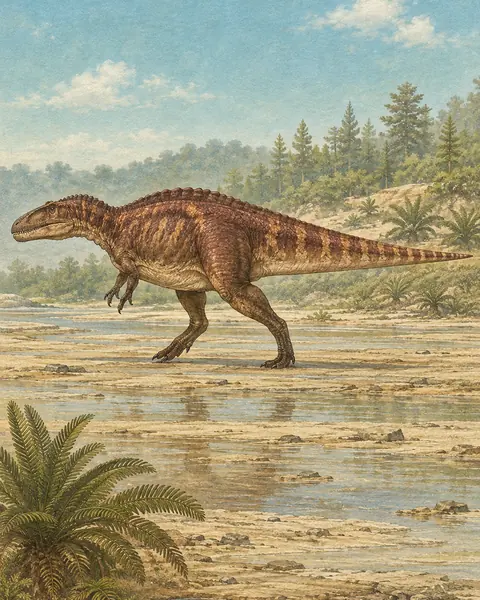
Acrocanthosaurus means 'high-spined lizard.' Tall bony spines rose from its neck, back and hips, up to about two and a half times the height of the vertebrae beneath them, and most likely held up a low ridge of muscle along the body.
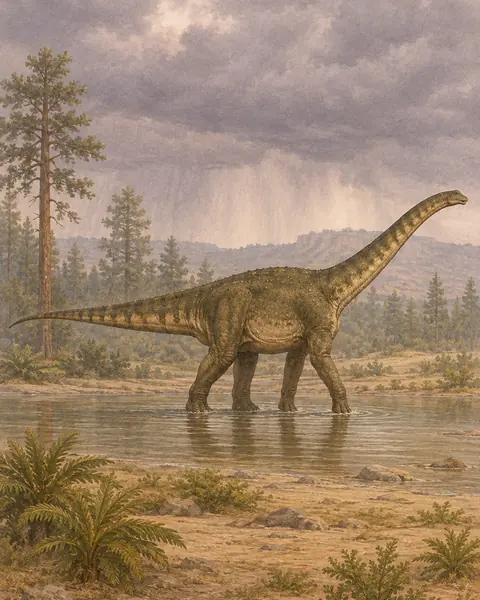
Alamosaurus was the giant of North America at the end of the dinosaur age, and the dominant large plant-eater of the southern continent.