 Fossil Deck
Pachycephalosaurus
Pachycephalosaurus wyomingensis
Pachycephalosaurus was a pachycephalosaurid ornithischian that lived in North America about 68–66 million years ago, in the Late Cretaceous. It was about 4.5 m (15 ft) long and weighed 370–450 kg (816–992 lb).
Pachycephalosaurus had a dome of solid bone up to about 22 centimetres thick on top of its head, ringed by a fringe of bony knobs and spikes. It was long thought to have butted heads like a ram, though some researchers now see the dome mainly as a display.
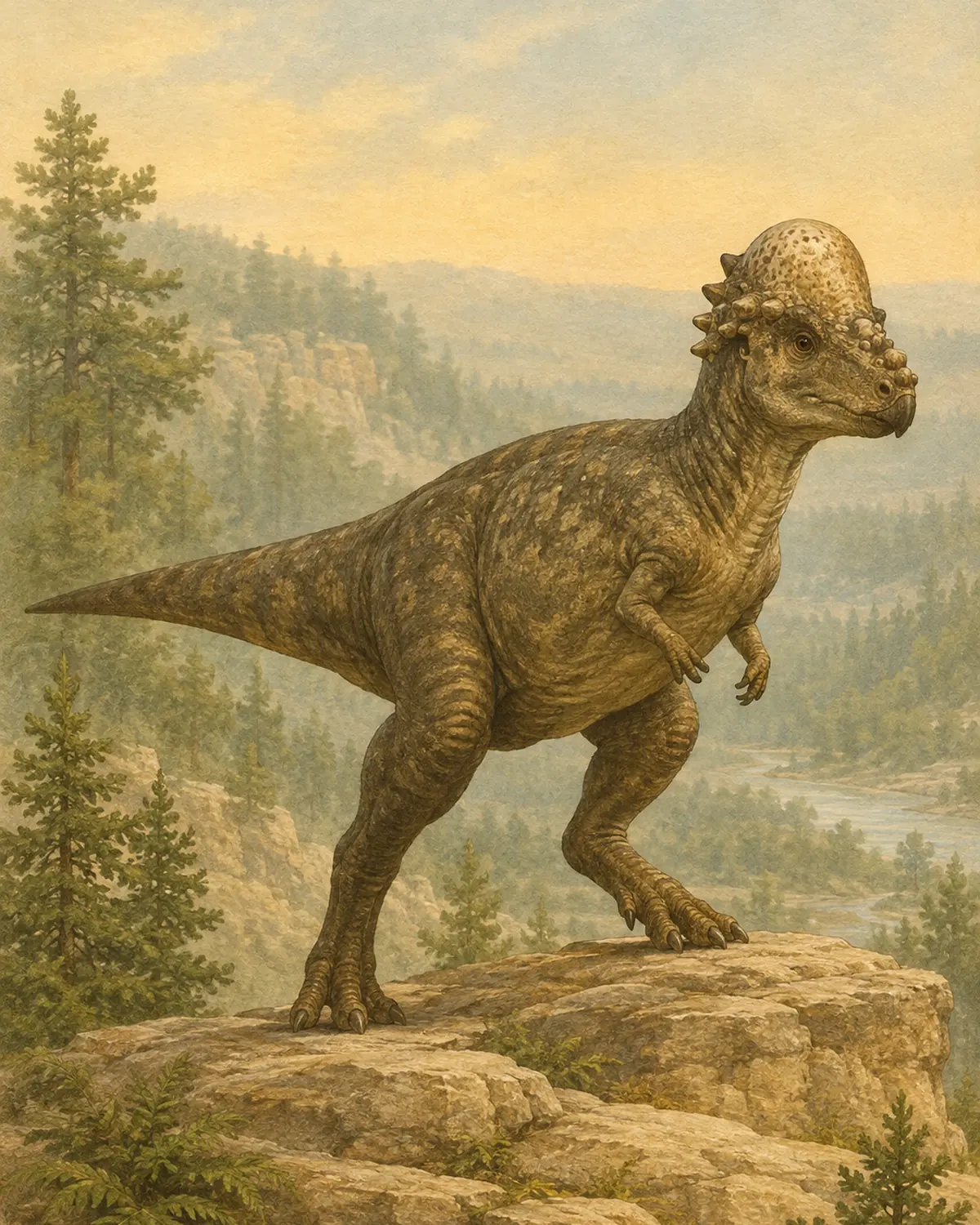
Quick facts about Pachycephalosaurus
- Scientific name
- Pachycephalosaurus wyomingensis, named in 1943
- Group
- Dinosaur (pachycephalosaurid ornithischian)
- Lived
- About 68–66 million years ago (Late Cretaceous)
- Diet
- Herbivore
- Length
- About 4.5 m (15 ft)
- Height
- About 1.5 m (4.9 ft) at the hip
- Weight
- 370–450 kg (816–992 lb)
- Fossils found in
- North America (Montana, Wyoming, South Dakota, USA; Hell Creek Formation)
- Fossil record
- Common: known from many good fossils
What was Pachycephalosaurus like?
Pachycephalosaurus carried a dome of solid bone, up to about 22 centimetres thick, on top of its skull, with rows of bony knobs and short spikes around the back and sides of the head and up the snout. Its name means 'thick-headed lizard.' Whether it used the dome for head-to-head fights has been argued over for decades: skull domes of related species show injuries consistent with impacts, but the dome's shape and the neck also fit flank-butting or display. Behind this head it was a bipedal plant-eater of a stocky build, with a short neck, strong hind legs, a stiff tail and small arms, and it probably ate leaves, fruit and seeds with small leaf-shaped teeth. Because skull domes are tough, they are what is usually found; most of the rest of the skeleton is incompletely known.
How big was Pachycephalosaurus?
Adult Pachycephalosaurus estimates: length about 4.5 m (15 ft), height about 1.5 m (4.9 ft) at the hip, weight 370–450 kg (816–992 lb). Where a range is given, it spans the published estimates for adults.
When did Pachycephalosaurus live?
Pachycephalosaurus lived about 68–66 million years ago, in the Late Cretaceous.
Where have Pachycephalosaurus fossils been found?
Its fossils come from North America (Montana, Wyoming, South Dakota, USA; Hell Creek Formation).
Who discovered Pachycephalosaurus?
The first remains were a partial skull found in 1930 in Wyoming's Lance Formation, described in 1931 as a species of Troodon. Palaeontologists Barnum Brown and Erich Schlaikjer named Pachycephalosaurus in 1943, using a more complete skull from Montana's Hell Creek Formation. The species name wyomingensis comes from the 1930 Wyoming specimen.
How complete are the fossils of Pachycephalosaurus?
Mostly known from thick skull domes, which survive well; the rest of its skeleton is poorly known.
Pachycephalosaurus in Fossil Deck
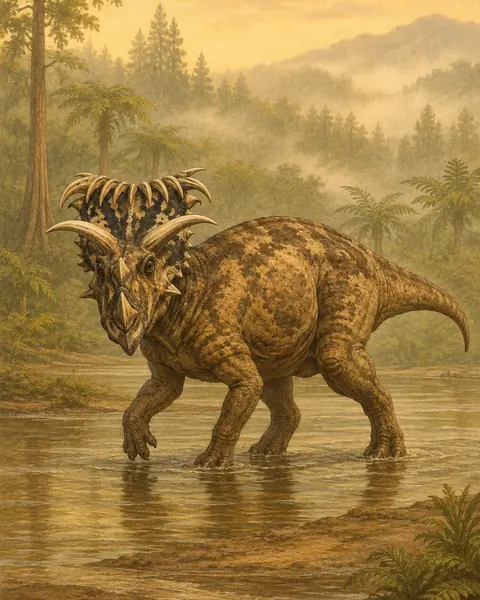
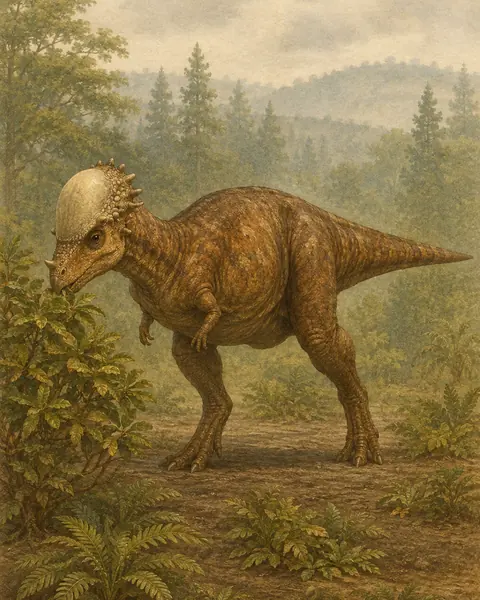
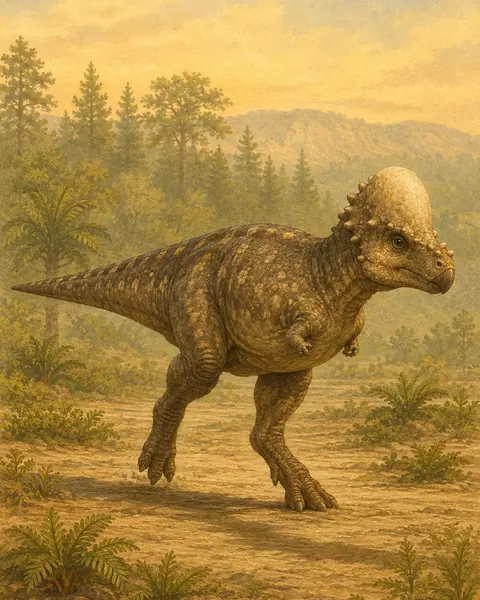
Pachycephalosaurus appears on 3 cards, each painted for its deck.
Facts and sizes last checked November 24, 2026. How we check them.