 Fossil Deck
Utahraptor
Utahraptor ostrommaysorum
Utahraptor was a dromaeosaurid theropod that lived in North America about 135–130 million years ago, in the Early Cretaceous. It was 6–7 m (20–23 ft) long and weighed 250–500 kg (551–1,102 lb).
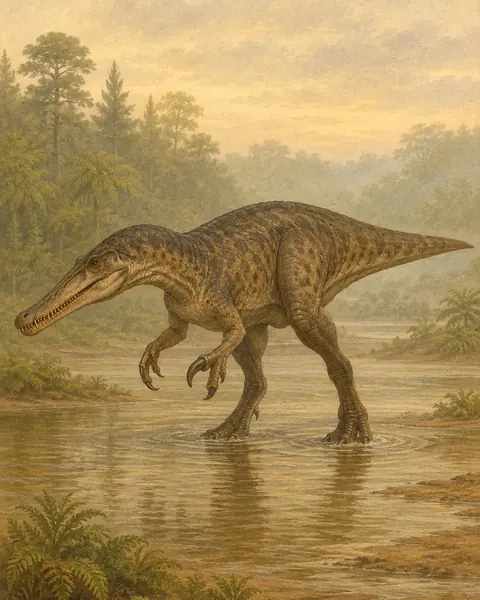
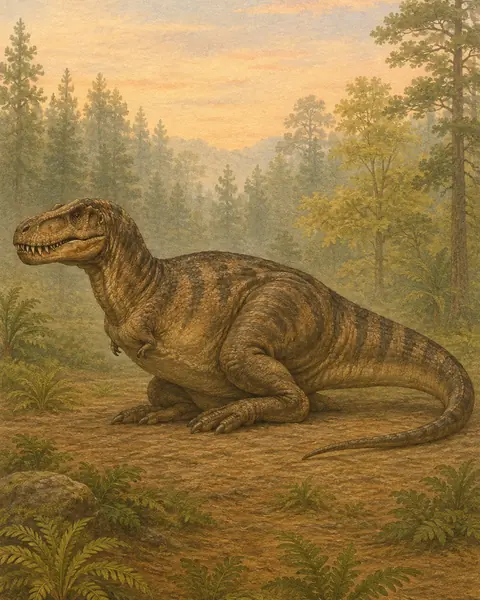
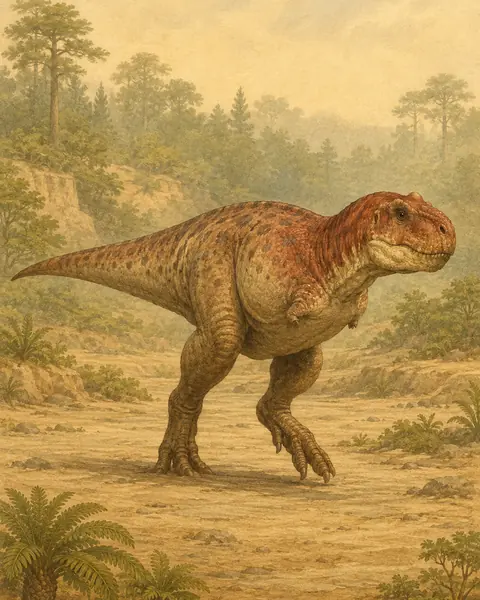
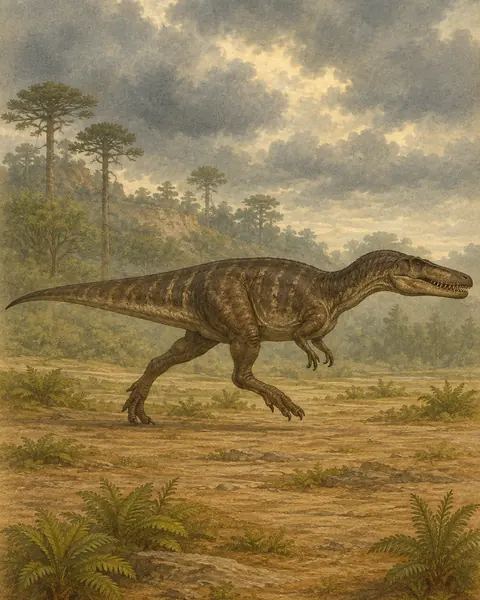
Utahraptor was the largest known member of the raptor family (the dromaeosaurids), and each foot bore an enormous sickle-shaped claw about 22 centimetres long along its curve — perhaps 24 cm once its horny sheath is added. Like its smaller cousins it was a feathered predator rather than a bare-skinned reptile, but at up to roughly 5 to 7 metres long it was far more heavily built. Fittingly for a Utah icon, most of what we know comes from a single region, including a huge sandstone block packed with several individuals.
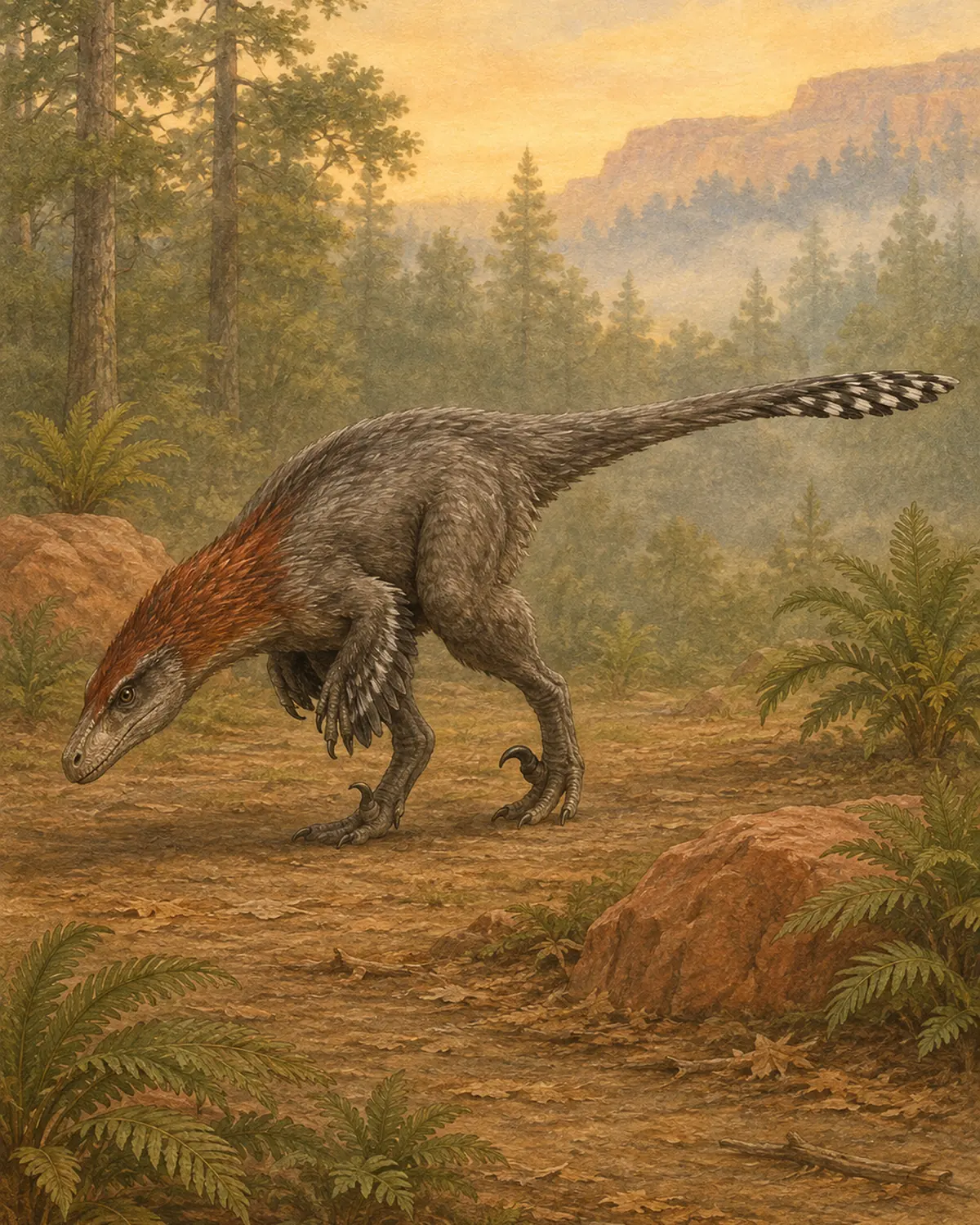
Quick facts about Utahraptor
- Scientific name
- Utahraptor ostrommaysorum, named in 1993
- Group
- Dinosaur (dromaeosaurid theropod)
- Lived
- About 135–130 million years ago (Early Cretaceous)
- Diet
- Carnivore
- Length
- 6–7 m (20–23 ft)
- Height
- About 1.8 m (5.9 ft) at the hip
- Weight
- 250–500 kg (551–1,102 lb)
- Fossils found in
- Western North America (Utah)
- Fossil record
- Rare: known from partial remains
What was Utahraptor like?
Utahraptor was the largest known member of the raptor family (the dromaeosaurids), and each second toe carried an enormous sickle-shaped claw about 22 centimetres long measured along its curve — perhaps 24 centimetres once its horny sheath is added. Held raised clear of the ground as the animal walked, this claw was likely used to grip and pin prey rather than simply to slash, much as in its smaller relatives. Despite its formidable build it was a feathered animal: no feather impressions have been found for Utahraptor itself, but they are preserved in close dromaeosaur relatives, so it is reconstructed with a covering of true feathers rather than bare, scaly skin. It was also far more heavily built than the turkey-sized Velociraptor — estimates for the largest individuals range from about 5 up to roughly 7 metres long and perhaps half a tonne, making it a stocky, powerful hunter of the Early Cretaceous floodplains. Almost everything known about it comes from the Cedar Mountain Formation of eastern Utah, including a remarkable multi-tonne sandstone block that entombed at least half a dozen individuals — adults, juveniles and a hatchling — together, a rare hint that these giant raptors may sometimes have gathered in groups, though why they died side by side is still debated.
How big was Utahraptor?
Adult Utahraptor estimates: length 6–7 m (20–23 ft), height about 1.8 m (5.9 ft) at the hip, weight 250–500 kg (551–1,102 lb). Where a range is given, it spans the published estimates for adults.
When did Utahraptor live?
Utahraptor lived about 135–130 million years ago, in the Early Cretaceous.
Where have Utahraptor fossils been found?
Its fossils come from Western North America (Utah).
Who discovered Utahraptor?
In October 1991 a College of Eastern Utah lab worker uncovered a huge raptor foot claw — about twice the size of any then known — at the Gaston Quarry near Arches National Park in Grand County, Utah. James Kirkland, Robert Gaston and Donald Burge described and named Utahraptor ostrommaysorum in 1993, honoring paleontologist John Ostrom and Dinamation founder Chris Mays. No complete skeleton exists, but material from several individuals is known, including a roughly nine-tonne sandstone block found in 2001 that held at least seven Utahraptors of different ages.
How complete are the fossils of Utahraptor?
Known from disarticulated and scattered material of several individuals from Utah's Cedar Mountain Formation — including a roughly nine-tonne sandstone block found in 2001 that held at least seven Utahraptors of different ages — but no complete, articulated skeleton has ever been found.
Utahraptor in Fossil Deck
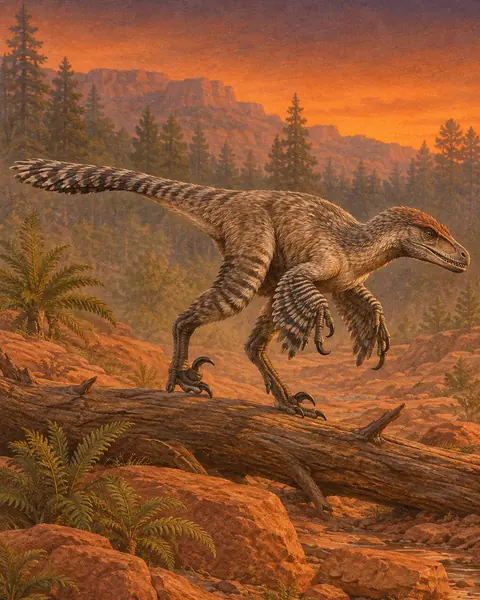
Utahraptor appears on 2 cards, each painted for its deck.
Facts and sizes last checked November 24, 2026. How we check them.
More from Cretaceous Predators
See the whole deck