 Fossil Deck
Who discovered dinosaurs?
People found giant bones for centuries without knowing what they were. The first dinosaur to be named was Megalosaurus, by William Buckland in 1824, and the anatomist Richard Owen invented the word “dinosaur” in 1842. Fossil hunters such as Mary Anning, who found the first complete plesiosaur, and the rival scientists of America’s Bone Wars, who named more than 130 new dinosaurs, turned old bones into science.
What did people think giant fossil bones were?
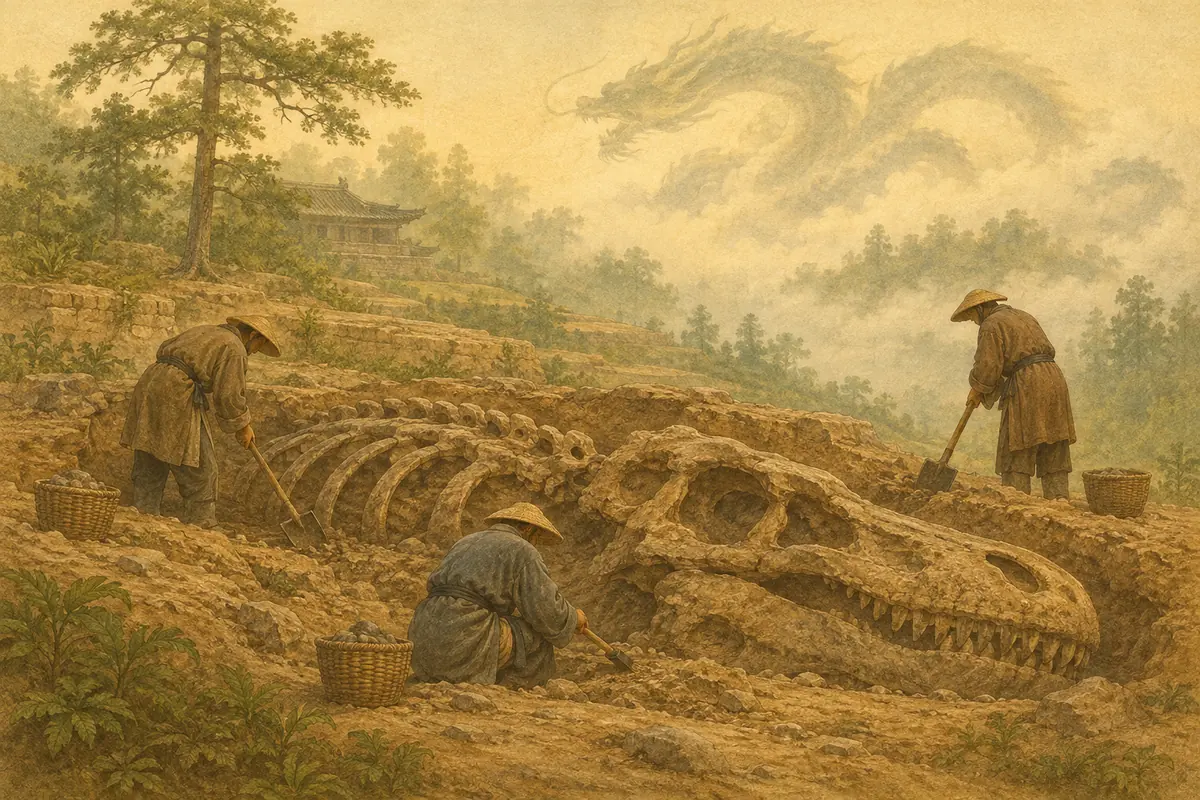
Dragons, giants and griffins. In China, giant bones were called dragon bones and ground into medicine; in Europe they were said to belong to giants and dragons.
People were finding giant bones long before anyone had heard the word “dinosaur”. They did what people always do with a mystery: they told stories to explain it.
In China, farmers have dug huge bones out of the ground for many centuries. They called them dragon bones and ground them into powder for medicine. Around the year 300, the writer Chang Qu recorded dragon bones found in Sichuan, a region now famous for its dinosaurs.
The dragon bones that scientists have been able to test came from ancient mammals, such as rhinos and elephants, and not from dinosaurs. All the same, the people who named them were right about one thing. These were the remains of astonishing animals that no longer walk the Earth.
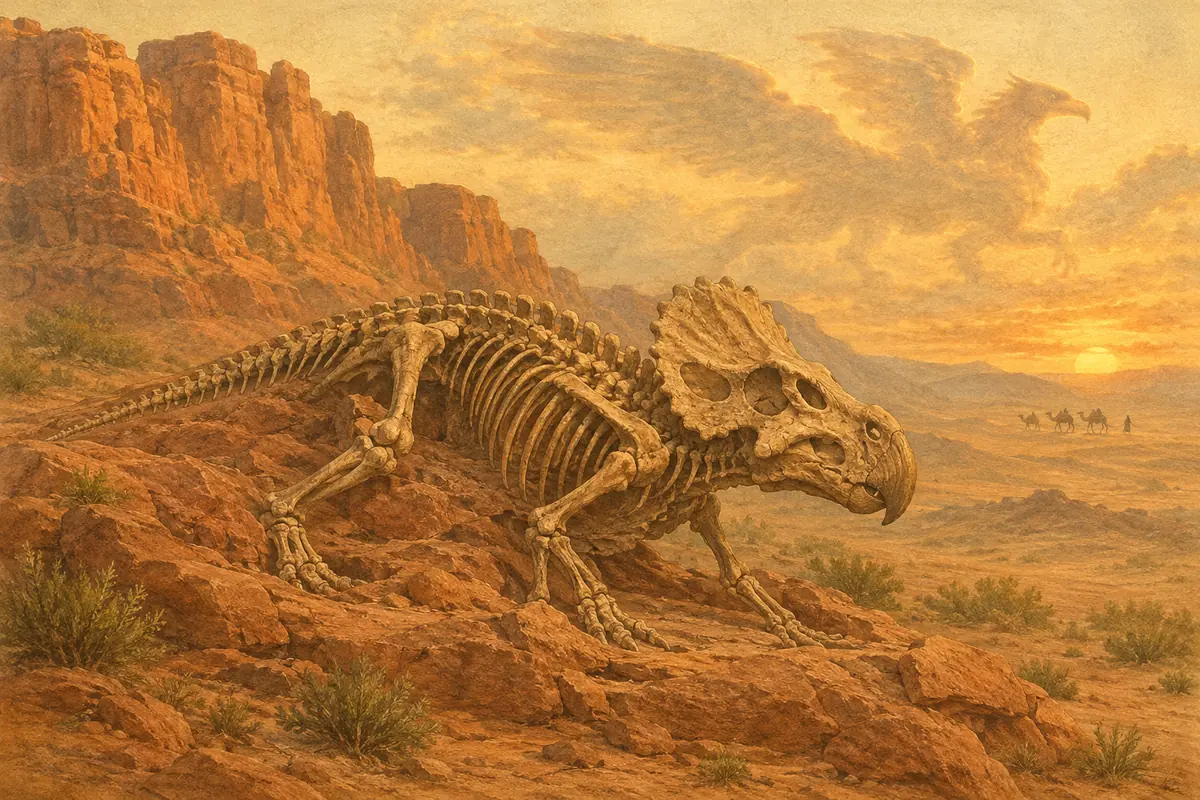
Far to the west, travelers on the old gold roads across Central Asia told of the griffin, a beast with the body of a lion and the beak of an eagle that guarded gold in the desert. In those same deserts lie the skeletons of Protoceratops, a four-legged dinosaur with a great hooked beak. Some historians think its bones started the legend. Others doubt it, because pictures of griffins are older than those journeys. It is still a good puzzle.
In Europe, big bones were said to belong to giants and dragons. In the Austrian city of Klagenfurt there is a dragon fountain carved in the 1500s. Its head is said to be modeled on a “dragon skull” found nearby in 1335, which was really the skull of a woolly rhinoceros. On the island of Sicily, the skulls of dwarf elephants have one large hole in the middle, where the trunk was attached. They may have given the ancient Greeks the idea of the Cyclops, a giant with a single eye.
Dragons, giants, griffins: they were all good guesses. To do better, people needed a new idea, that a whole kind of animal could vanish from the world forever.
That idea came from a French scientist, Georges Cuvier. In the 1790s he compared the bones of mammoths with those of living elephants and showed that they were different animals, and that the mammoths were all gone. Animals could die out. It sounds obvious now. At the time it changed everything, because it meant the Earth had a lost past, and old bones were its record.
What was the first dinosaur discovered?
Megalosaurus. A piece of its thigh bone was described in a book in the 1670s, by a professor who thought it came from a giant, and in 1824 Megalosaurus became the first dinosaur to be given a name.
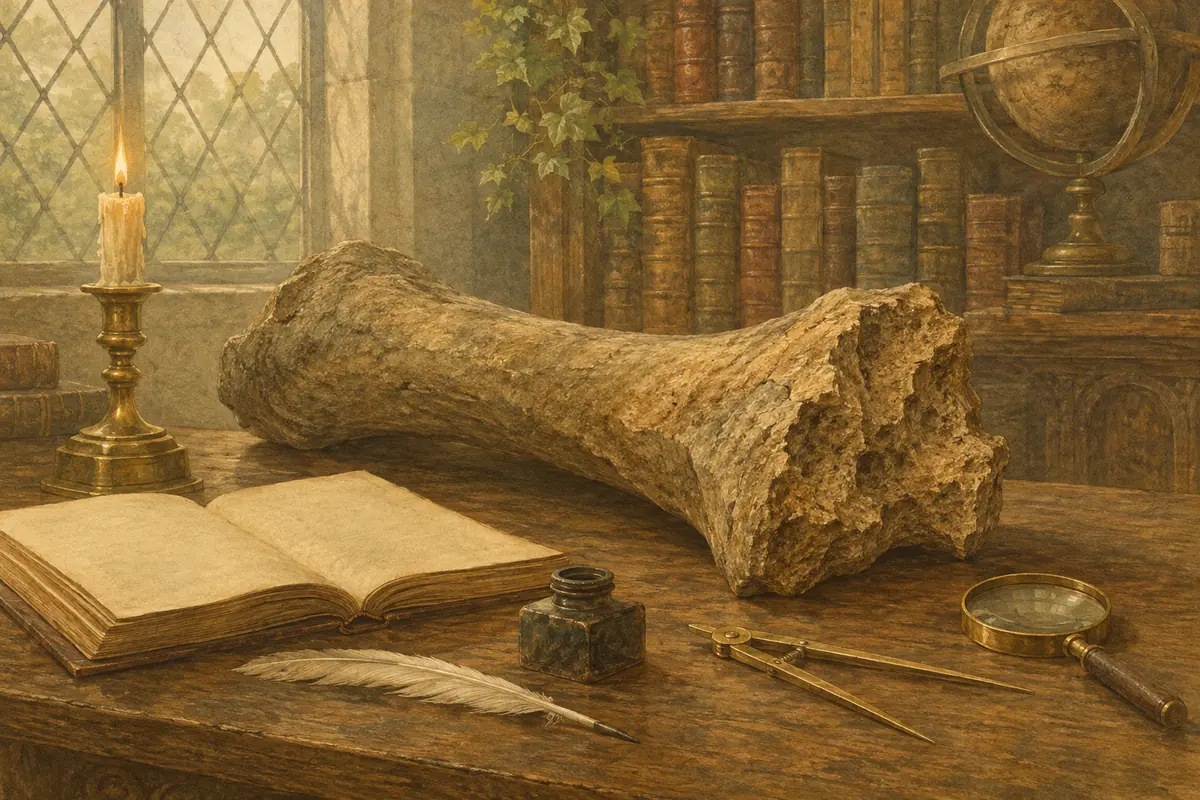
In England in the 1670s, a professor named Robert Plot was given the end of an enormous thigh bone from a quarry near Oxford. He saw that it was far too big for any animal living in England. First he wondered about an elephant brought over by the Romans. In the end he decided it had belonged to a giant man or woman. It was really a piece of a dinosaur called Megalosaurus, and it was the first dinosaur bone ever described in a book. Nobody knew that for another 150 years.
The first dinosaur got its name in 1824. William Buckland, a professor at Oxford, described a huge jaw with teeth like knives and called its owner Megalosaurus, “great lizard”. A year later a country doctor, Gideon Mantell, named Iguanodon after its teeth, which looked like an iguana’s but were twenty times longer. Then, in 1842, the anatomist Richard Owen saw that these animals belonged in a group of their own. He named the group Dinosauria: “terrible lizards”.
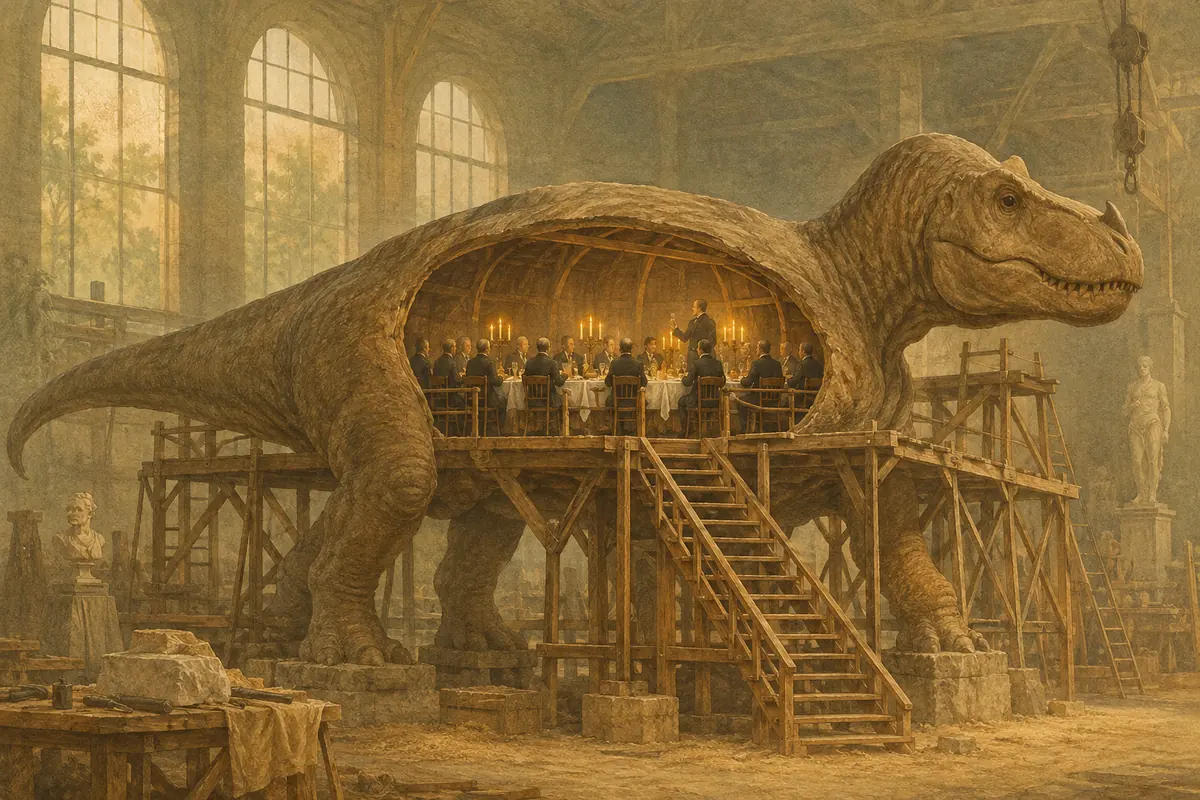
London went dinosaur-mad. In 1854 the first life-size dinosaur statues in the world were unveiled in a park in the south of the city. To celebrate, their sculptor held a New Year’s Eve dinner for scientists inside the mold of the Iguanodon. The statues got plenty wrong. The Iguanodon has a horn on its nose that was really a spike on its thumb. But they still stand in the park today.
Who was Mary Anning?
A fossil collector from Lyme Regis, on the south coast of England, who found some of the first great fossil sea reptiles, among them the first complete plesiosaur.
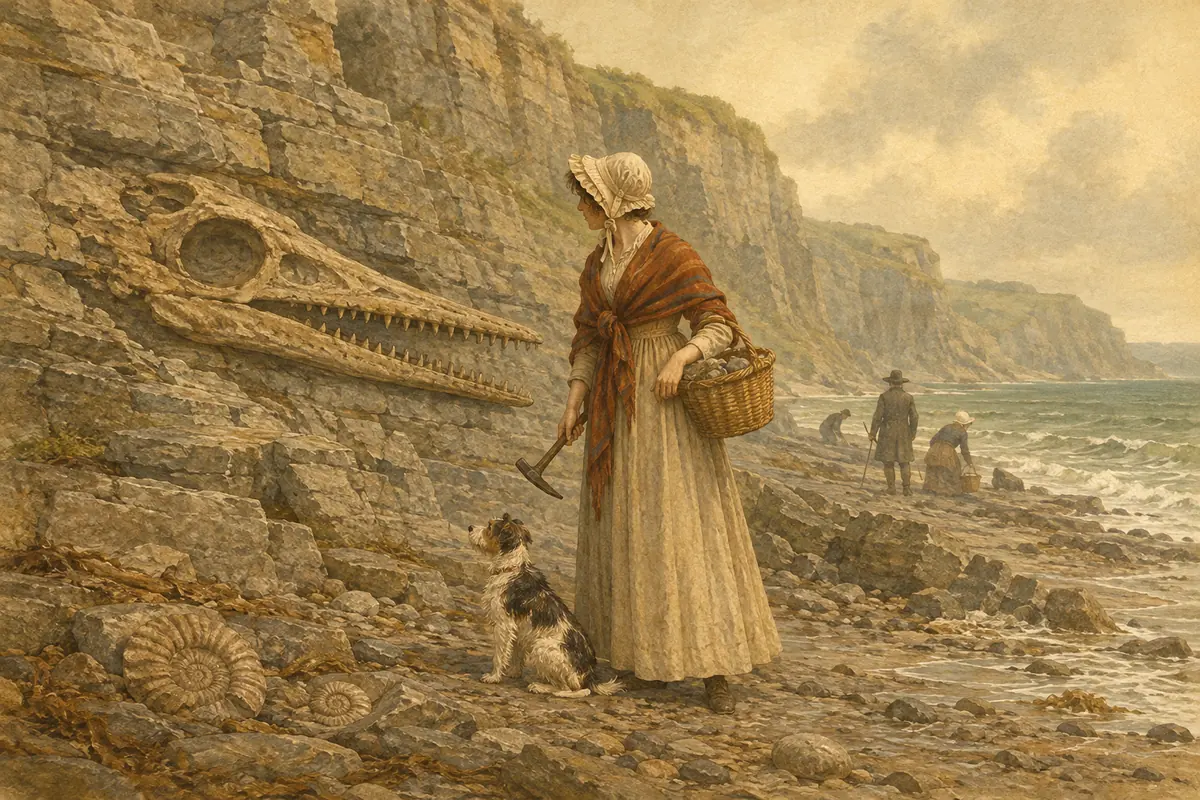
On the stormy south coast of England lived a girl who became very good at reading that record. Mary Anning’s family was poor, and she collected fossils from the sea cliffs at Lyme Regis to sell to visitors. In 1811, when she was twelve, her brother Joseph found a strange skull more than a meter long. The next year Mary dug out the rest of the skeleton. It was an ichthyosaur, a sea reptile shaped like a dolphin.
She went on to find the first complete plesiosaur and the first pterosaur discovered in Britain. Mary had little schooling, and the scientific societies of her day did not admit women. But the scientists who visited her shop knew that she understood these fossils better than most of them did.
What were the Bone Wars?
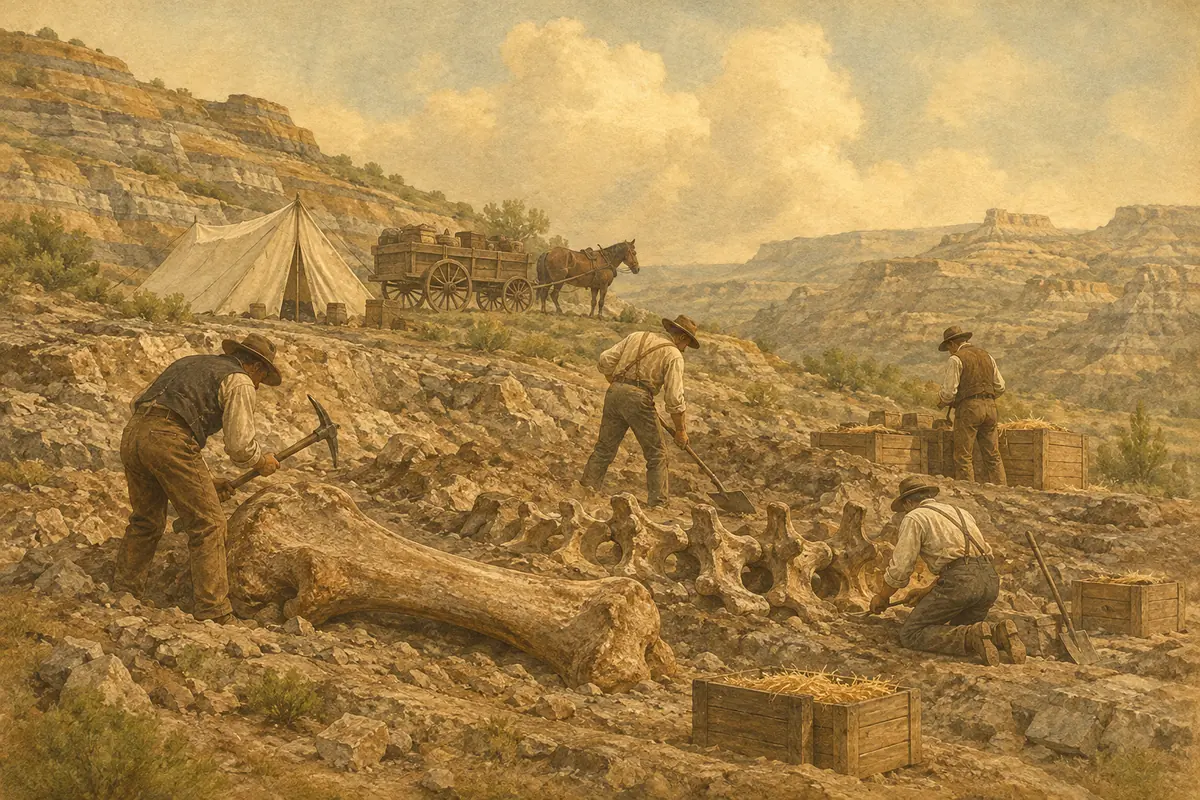
In America the hunt became a race. From the 1870s two scientists, Othniel Charles Marsh and Edward Drinker Cope, competed to name the most dinosaurs from the fossil fields of the West. They were bitter rivals, and their feud is remembered as the Bone Wars. Their crews spied on each other, bribed each other’s workers and even smashed bones so that the other side could not have them. Between them, all the same, they named more than 130 new dinosaurs, among them Stegosaurus, Triceratops, Diplodocus and Allosaurus.
How do scientists find dinosaurs today?
Soon museums were sending expeditions around the world. In the first years of the 1900s, Barnum Brown dug Tyrannosaurus rex out of the hills of Montana. In 1923 an expedition to the Gobi Desert in Mongolia found the first eggs that scientists recognized as dinosaur eggs, still lying in their nests.
For a long time people pictured dinosaurs as slow, cold giants that dragged their tails through swamps. That changed in the 1960s, when John Ostrom studied Deinonychus, a wolf-sized hunter with a huge curved claw on each foot. This was plainly a fast, agile animal, and its skeleton looked remarkably like a bird’s. Then, in 1996, a farmer in China found a small dinosaur covered in a coat of fuzz. It was the first dinosaur known with simple feathers, and many more have turned up since.
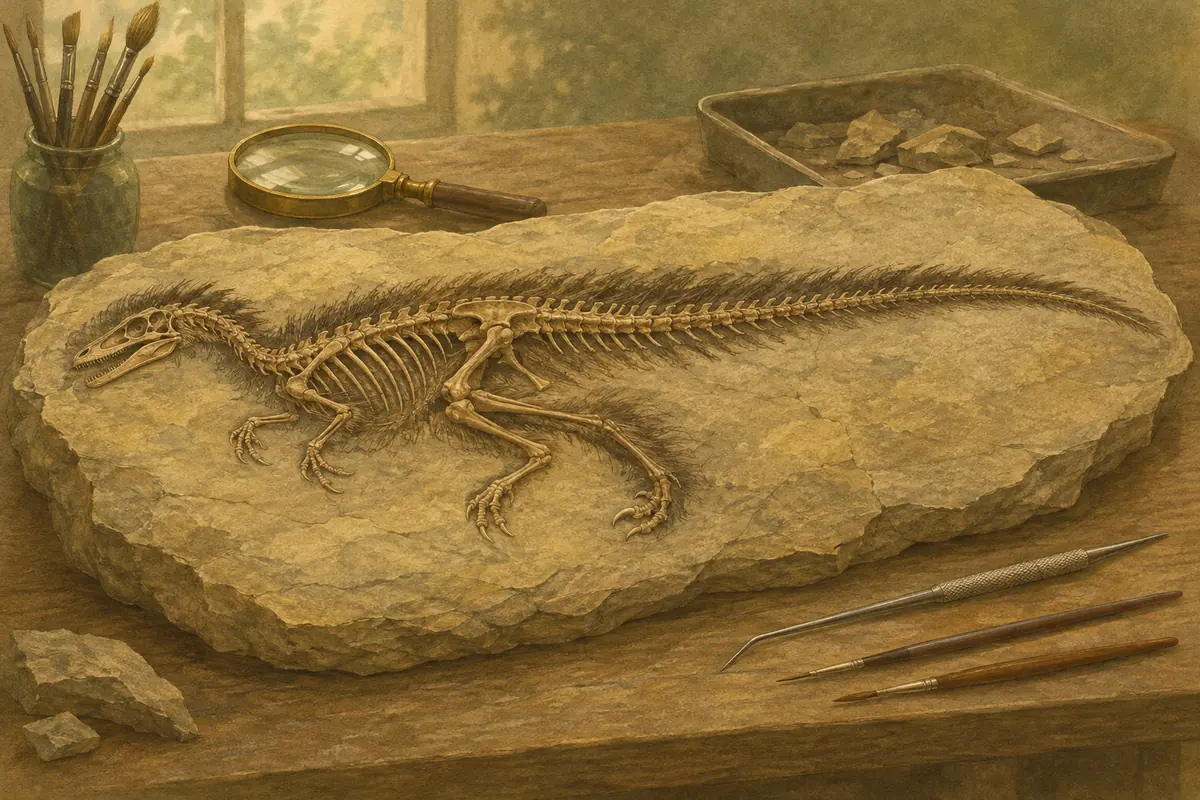
Today’s bone hunters use tools that Mary Anning could not have imagined. Scanners look inside a skull without breaking it. Microscopes pick out tiny grains of pigment in fossil feathers, so we know that one small dinosaur had a striped tail and that another shone glossy black like a starling.
And the discoveries are speeding up. More than a thousand kinds of dinosaur have been named, and about fifty new ones are added every year. That is nearly one a week. The next one may be waiting in a rock right now, for someone curious enough to look.
Dinosaur discoveries in order
The discoveries
- About 300In China, Chang Qu writes of dragon bones found in Sichuan.
- 1670sRobert Plot describes a giant thigh bone. It is later recognized as Megalosaurus.
- 1811Mary Anning and her brother find an ichthyosaur at Lyme Regis. She is twelve.
- 1824Megalosaurus becomes the first dinosaur to be given a name.
- 1842Richard Owen invents the word “dinosaur”.
- 1854The first life-size dinosaur statues go on show in London.
- 1861Archaeopteryx is found in Germany: a bird with teeth, claws and a long bony tail.
- 1877The Bone Wars begin in the American West.
- 1905Tyrannosaurus rex is named.
- 1923The first eggs recognized as dinosaur eggs are found in Mongolia.
- 1969Deinonychus shows that dinosaurs were quick and active.
- 1980A layer of iridium points to an asteroid.
- 1996The first feathered dinosaur is found in China.
- TodayAbout fifty new dinosaurs are named every year.
Restore the dinosaurs yourself
Fossil Deck is a calm puzzle game for iPhone and iPad: restore each dinosaur card piece by piece, then read its story in the encyclopedia.
Download on theApp Store