 Fossil Deck
How did dinosaurs go extinct?
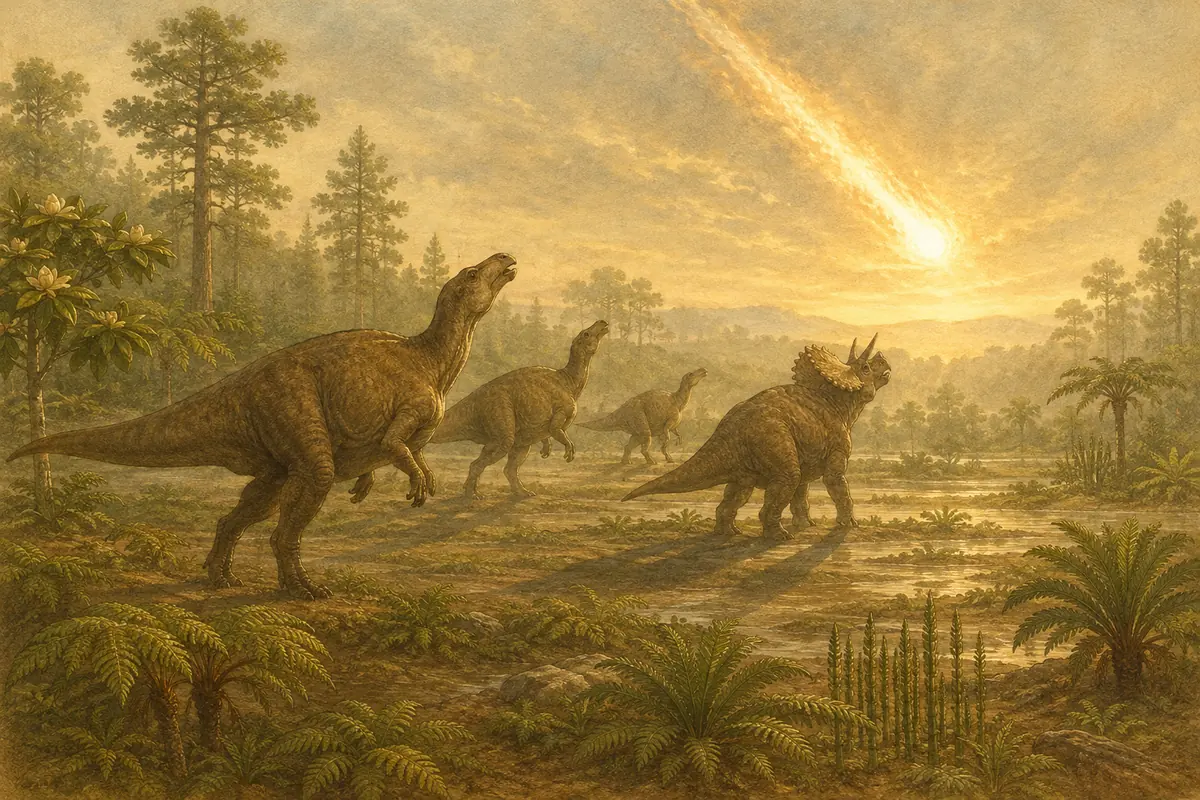
About 66 million years ago, an asteroid about 10 kilometers (6 miles) wide hit the shallow sea where the coast of Mexico is today. Fires, giant waves and months of darkness followed. Without sunlight, plants stopped growing, the plant-eaters starved and then the meat-eaters. Three out of every four kinds of plant and animal died out, among them every dinosaur except the birds.
What happened when the asteroid hit?
Sixty-six million years ago, a rock from space came out of the sky. It was about 10 kilometers (6 miles) wide, wider than Mount Everest is tall, and it was moving at about 20 kilometers every second. It hit the shallow sea where the coast of Mexico is today.
How big was it?
Mount Everest8.8 km (5.5 miles) high
The asteroidAbout 10 km (6 miles) across
The crash blasted out a crater about 180 kilometers across. Waves taller than skyscrapers raced over the sea. Red-hot rock rained down and set forests on fire, and so much dust and soot rose into the air that the Sun went dim.
Why did the dinosaurs die out?
The darkness and cold lasted for months, perhaps years. Without sunlight, plants stopped growing. The plant-eaters starved, and then the meat-eaters that hunted them. In India, huge volcanoes had already been pouring gas into the air, which made a hard time harder. By the end, three out of every four kinds of plant and animal were gone. Almost no land animal heavier than a large dog survived.
How do scientists know an asteroid killed the dinosaurs?
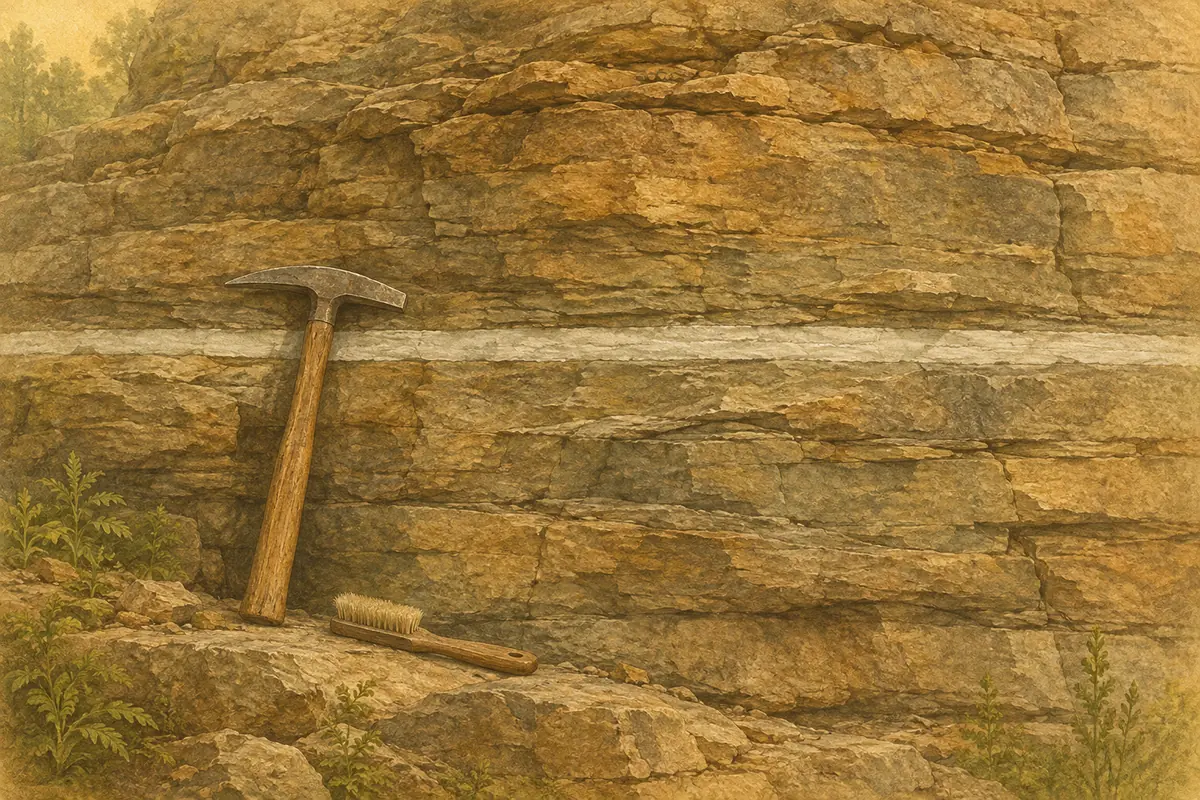
For a long time nobody knew why the dinosaurs had vanished. Then, in 1980, the geologist Walter Alvarez and his father Luis, a physicist, found a clue. All around the world, in rocks of exactly the right age, lies a thin layer of clay rich in a rare metal called iridium. Iridium is scarce in the Earth’s crust but common in asteroids. Ten years later the crater itself was identified, hidden under the coast of Mexico. Geologists looking for oil had mapped its ring years earlier.
Did any dinosaurs survive?
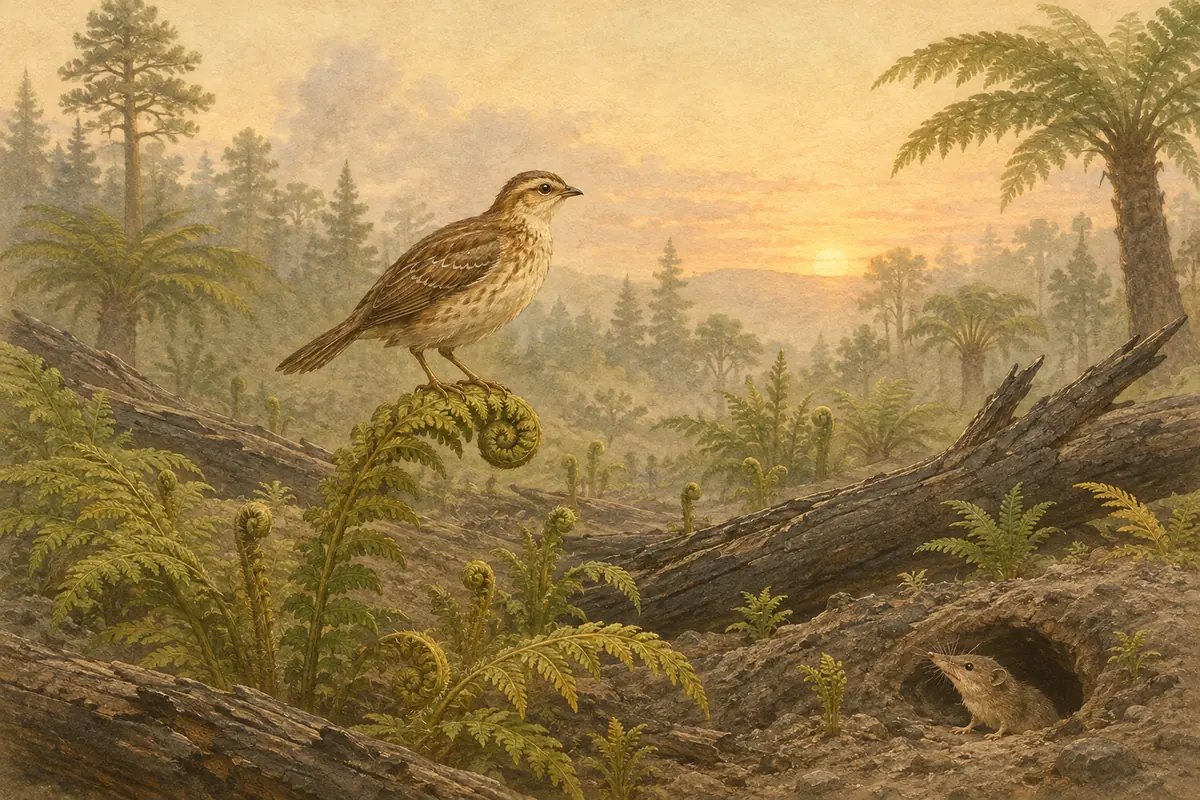
Yes: the birds. One group of small, feathered dinosaurs came through the disaster, and about 11,000 kinds of bird are alive today.
But the story does not stop there. Small animals that could shelter in burrows or under water, and live on seeds, insects and scraps, came through the disaster: little mammals, frogs, turtles, crocodiles. So did one group of small, feathered dinosaurs. We call them birds.
Every sparrow, penguin and eagle is a living dinosaur. About 11,000 kinds of bird are alive today, so in one way the Age of Dinosaurs never ended.
Restore the dinosaurs yourself
Fossil Deck is a calm puzzle game for iPhone and iPad: restore each dinosaur card piece by piece, then read its story in the encyclopedia.
Download on theApp Store