 Fossil Deck
The Age of Dinosaurs
How they rose, ruled the Earth and vanished, and how we found them again
A 12-minute read, from the encyclopedia in the Fossil Deck app.
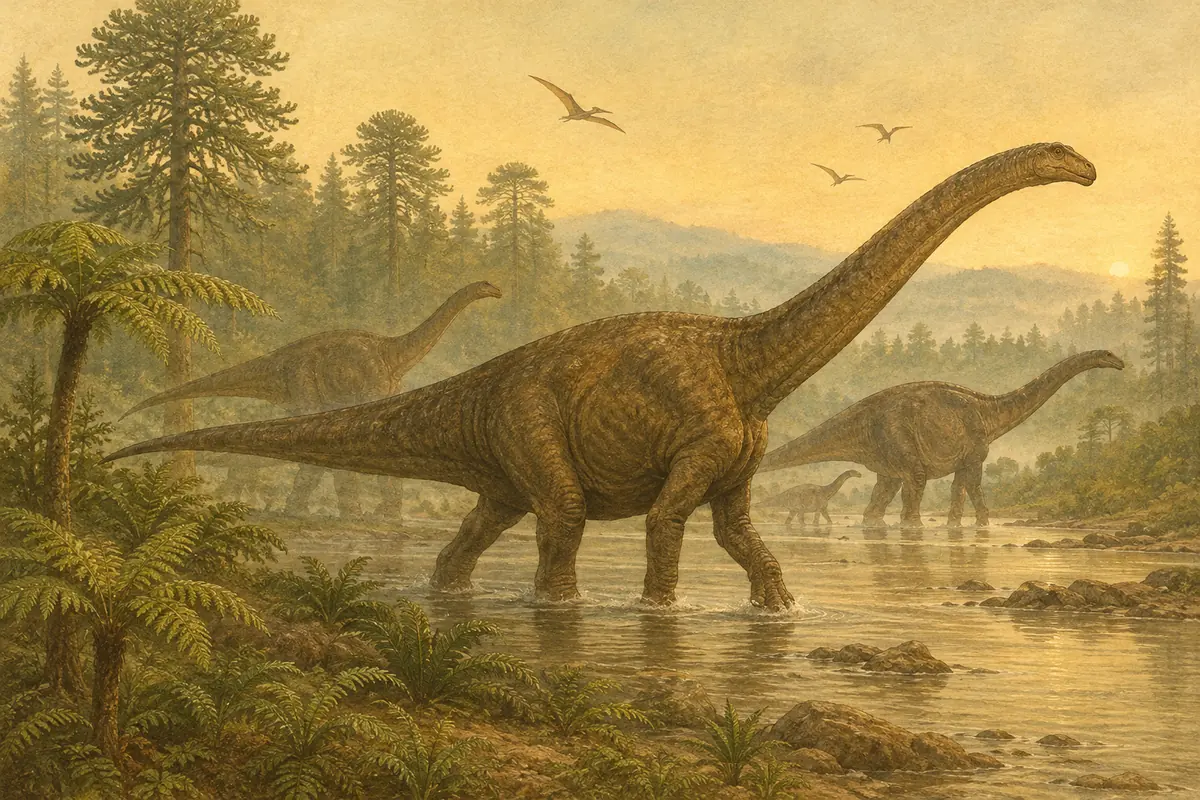
Long before the first person, the first horse or the first flower, the Earth belonged to the dinosaurs. They ruled the land for about 165 million years. Beside that, the whole human story so far is a blink. This is the story of where the dinosaurs came from, the three great ages they lived through, the day their world ended, and the bone hunters who brought them back.
How long is 165 million years?
A world waiting for dinosaurs
About 252 million years ago, life on Earth almost ended. In what is now Siberia, vast volcanoes poured out lava and gas for many thousands of years. The air grew hot and the seas turned sour. About four out of every five kinds of sea creature died out, and most land animals went with them. Scientists call it the Great Dying. Nothing before or since has come so close to emptying the planet.
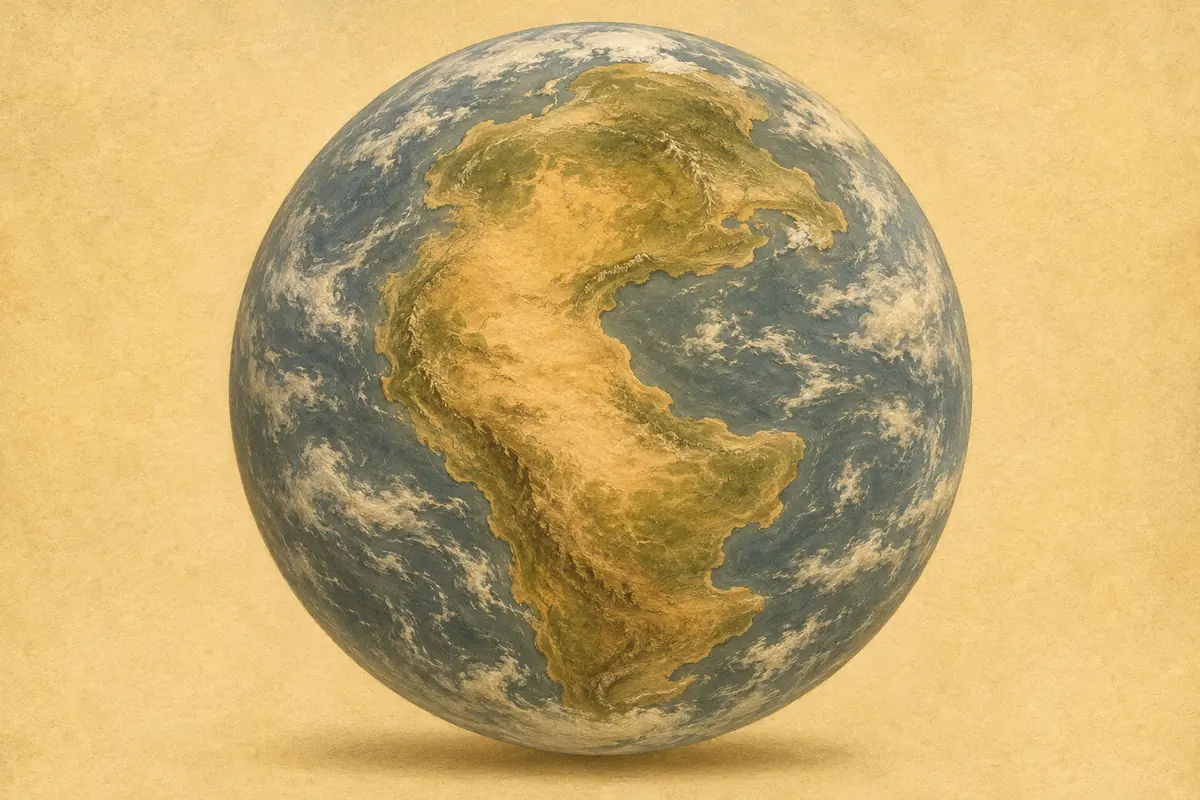
The survivors found themselves in a strange world. All the land was joined together in one giant continent called Pangaea, which reached almost from pole to pole. Far from the sea, much of it was hot, dry desert. An animal could walk from one end of the land to the other without ever meeting an ocean.
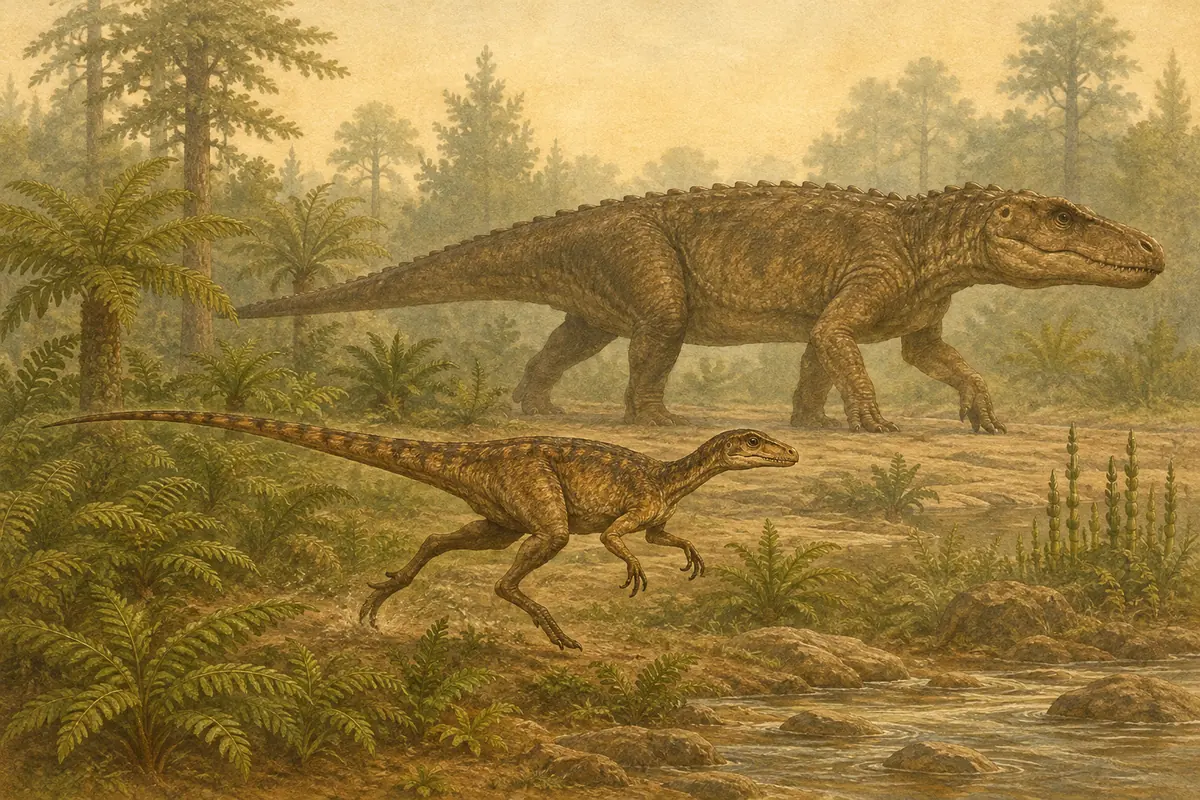
Here, about 233 million years ago, the first dinosaurs appeared. They were not giants. Eoraptor, one of the earliest we know, was about a meter long and no heavier than a small dog. It ran on two slender back legs through the fern thickets of what is now Argentina, quick enough to catch small prey and to stay out of trouble.
Trouble was easy to find. The rulers of this world were other reptiles. The biggest hunters were cousins of the crocodiles that walked on land on long, straight legs. One of them, Saurosuchus, grew longer than a large car and had jaws lined with teeth like steak knives. Next to animals like that, the first dinosaurs were small, nervous neighbors.
But dinosaurs had a secret, and it was in their legs. A lizard’s legs sprawl out to the sides, so its body swings from side to side with every step. A dinosaur’s legs stood straight under its body, like the legs of a table. Standing that way, dinosaurs could run far without tiring. Later, the same straight legs would hold up the heaviest animals ever to walk on land.
Then came a stroke of luck. About 201 million years ago, Pangaea began to tear apart, and a new wave of giant volcanoes shook the world. Most of the big crocodile cousins died out. The dinosaurs came through, and found the world wide open.
Three ages of giants
The time of the dinosaurs is called the Mesozoic, which means “middle life”. It lasted 186 million years. Scientists divide it into three periods, and each had its own weather, its own plants and its own cast of animals.
The three periods
million years ago
Triassic252 to 201 million years ago
Hot, dry and red. Rain rarely reached the middle of Pangaea, so forests of conifers, cycads and ferns kept close to the rivers and coasts. Dinosaurs were newcomers, but some were already growing. By the end of the Triassic, the long-necked plant-eater Plateosaurus had reached the length of a bus. The first pterosaurs were flying overhead, and the first mammals, no bigger than mice, were hiding in the undergrowth.
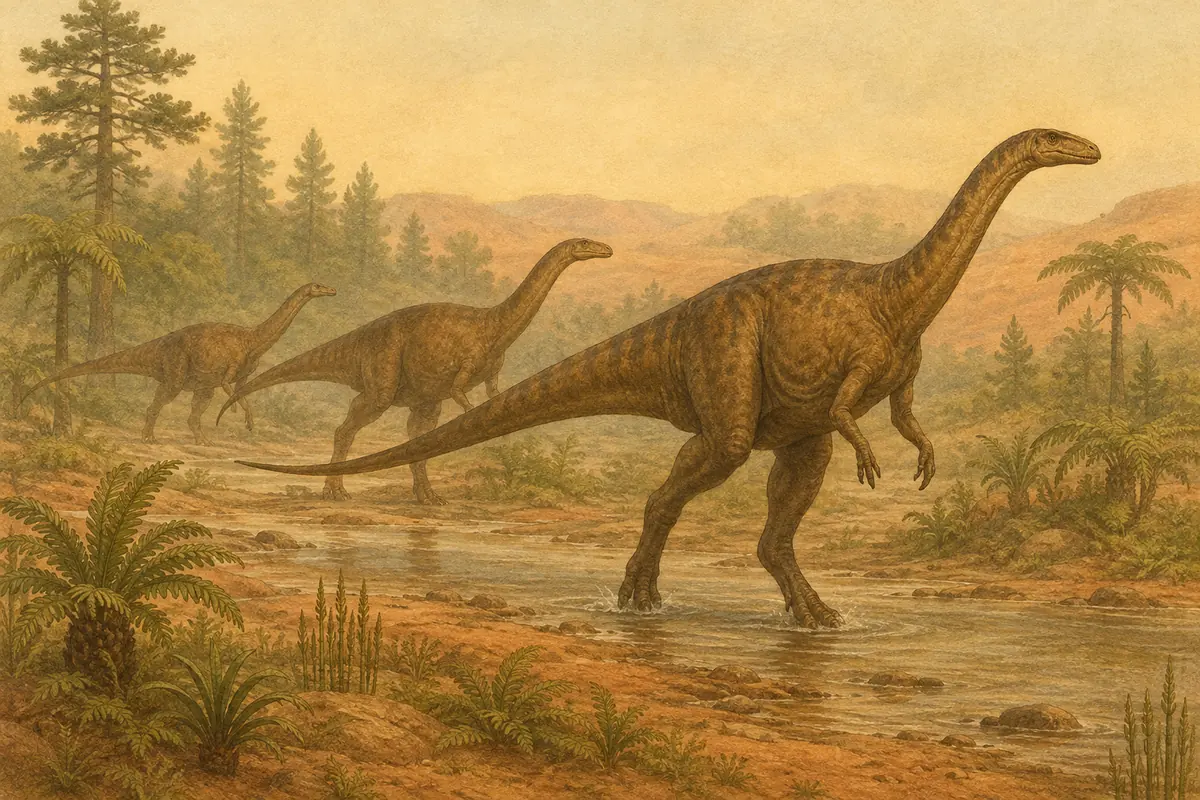
Jurassic201 to 145 million years ago
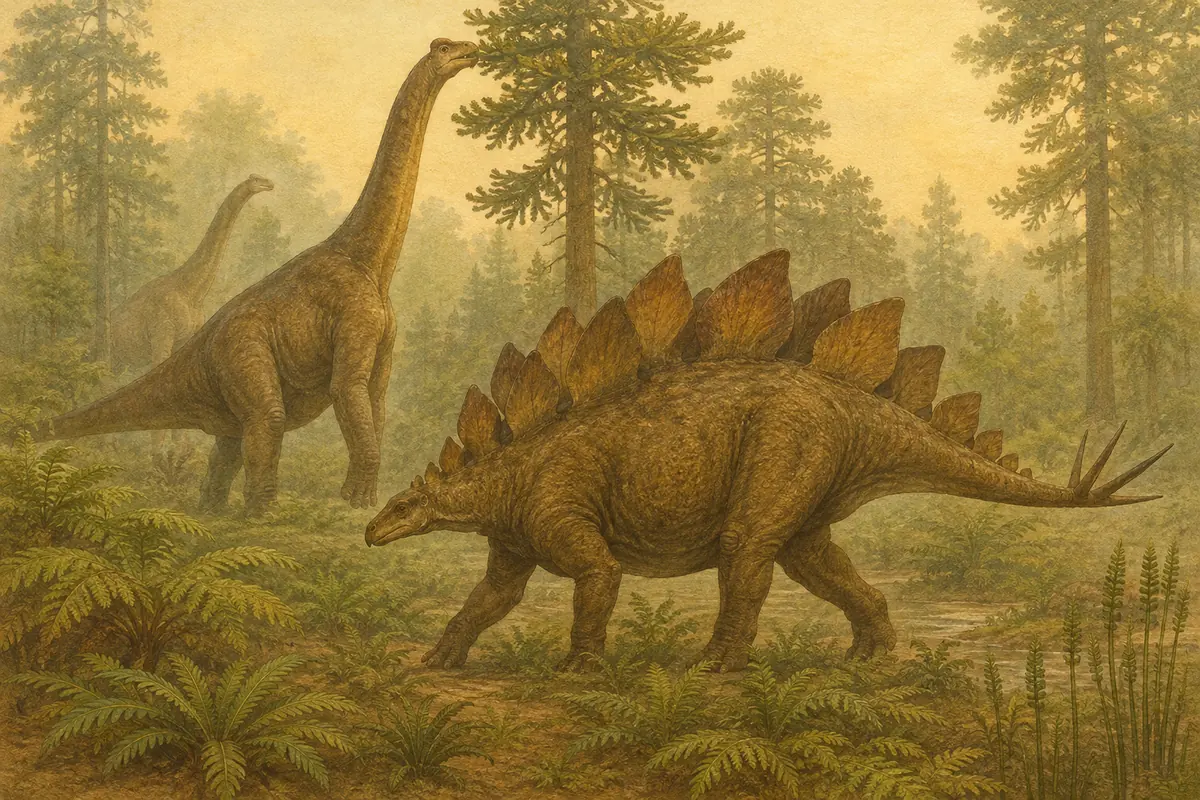
Pangaea split in two and seas poured into the gap. The air turned warm and damp, and forests spread across the land. With so much to eat, plant-eaters grew into the largest animals that have ever walked the Earth. Brachiosaurus could feed from treetops as high as a four-story building. Diplodocus was longer than a tennis court.
Among them walked Stegosaurus, with two rows of bony plates along its back, and the hunter Allosaurus. And in the trees there was something new. Archaeopteryx was the size of a crow, with feathered wings, teeth and a long bony tail. It was one of the very first birds.
Cretaceous145 to 66 million years ago
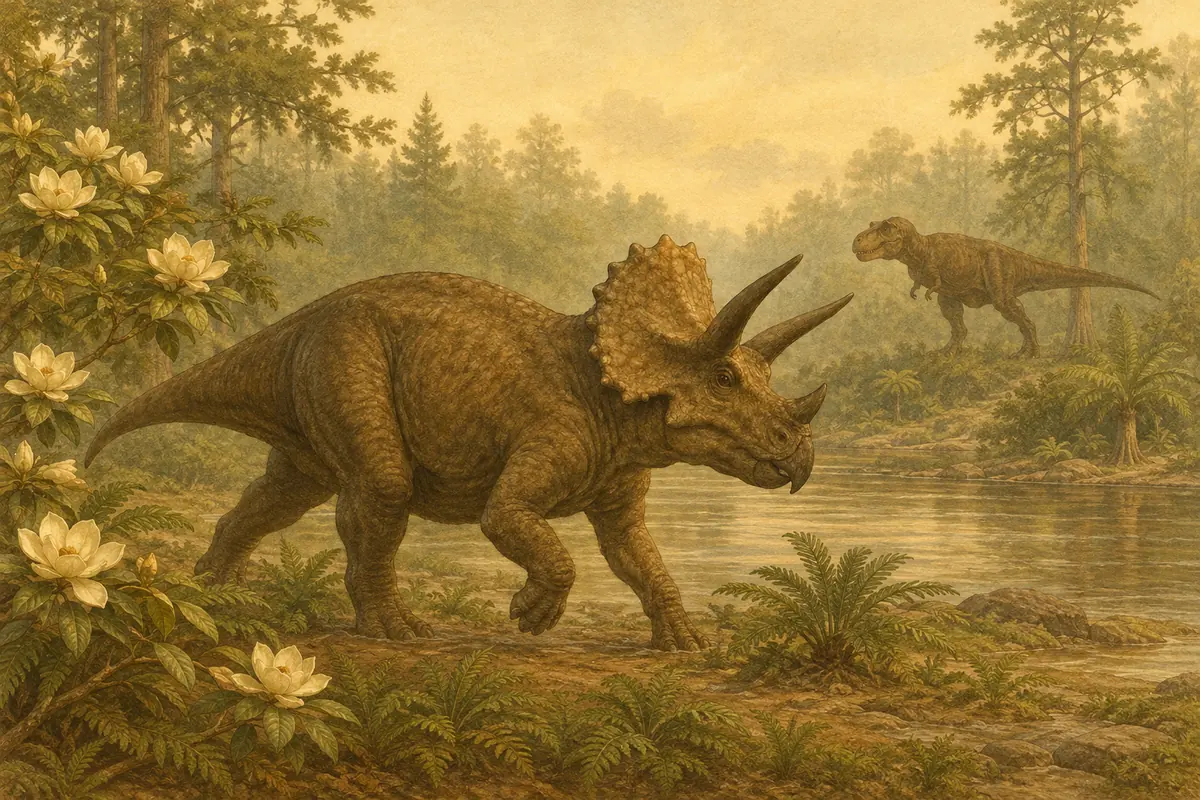
The continents drifted toward the places we know today, and each carried its own dinosaurs with it. For the first time there were flowers, and bees to visit them. This was the age of the most famous dinosaurs of all: three-horned Triceratops, armored Ankylosaurus, swift Velociraptor and the giant hunter Tyrannosaurus rex.
The seas rose so high that they flooded the low parts of the continents. Giant swimming reptiles hunted there, and pterosaurs with wings as wide as a small plane glided overhead. Those sea reptiles and pterosaurs were not dinosaurs. They were the dinosaurs’ neighbors in the same lost world.
Who lived when?
million years ago
- Triassic
- Jurassic
- Cretaceous
That chart hides a surprise. Stegosaurus and Tyrannosaurus rex never met. Stegosaurus had been gone for almost 80 million years when T. rex appeared. So T. rex lived closer in time to you than to Stegosaurus.
Closer to you than to Stegosaurus
In short: When did dinosaurs live?
The day the sky fell
Sixty-six million years ago, a rock from space came out of the sky. It was about 10 kilometers (6 miles) wide, wider than Mount Everest is tall, and it was moving at about 20 kilometers every second. It hit the shallow sea where the coast of Mexico is today.
How big was it?
Mount Everest8.8 km (5.5 miles) high
The asteroidAbout 10 km (6 miles) across
The crash blasted out a crater about 180 kilometers across. Waves taller than skyscrapers raced over the sea. Red-hot rock rained down and set forests on fire, and so much dust and soot rose into the air that the Sun went dim.
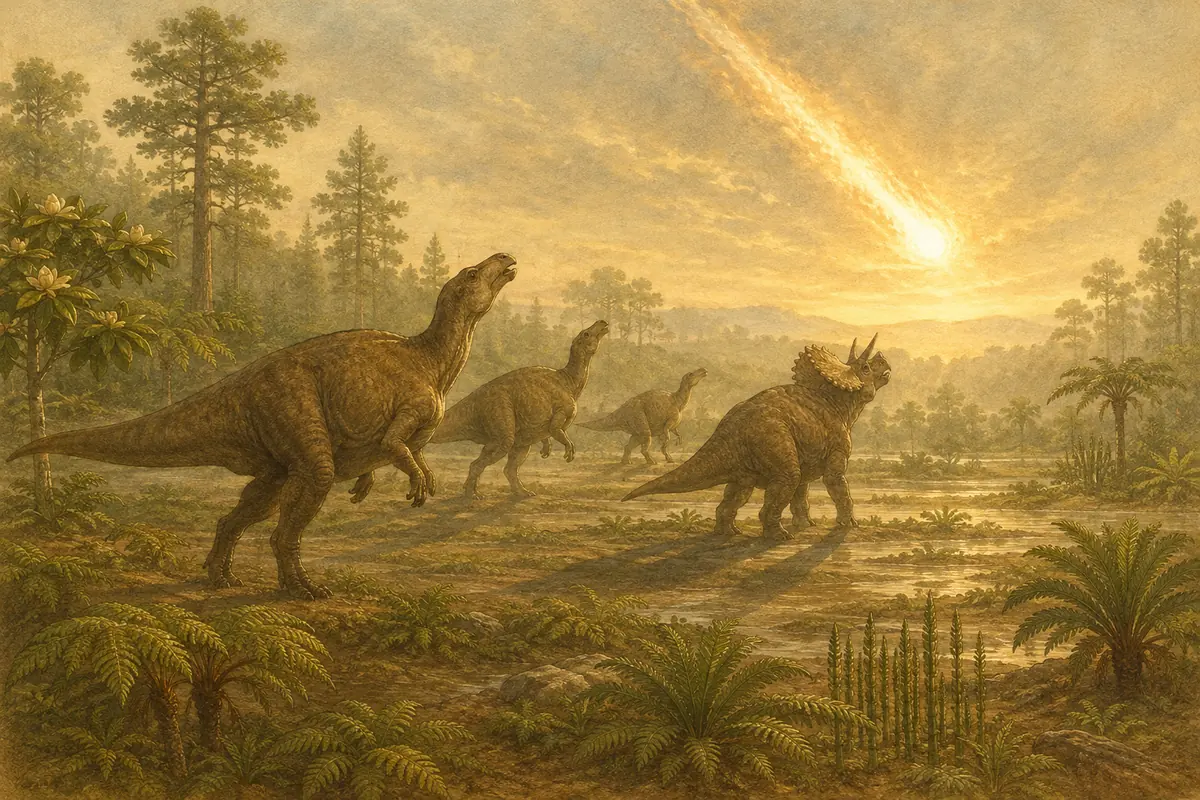
The darkness and cold lasted for months, perhaps years. Without sunlight, plants stopped growing. The plant-eaters starved, and then the meat-eaters that hunted them. In India, huge volcanoes had already been pouring gas into the air, which made a hard time harder. By the end, three out of every four kinds of plant and animal were gone. Almost no land animal heavier than a large dog survived.
For a long time nobody knew why the dinosaurs had vanished. Then, in 1980, the geologist Walter Alvarez and his father Luis, a physicist, found a clue. All around the world, in rocks of exactly the right age, lies a thin layer of clay rich in a rare metal called iridium. Iridium is scarce in the Earth’s crust but common in asteroids. Ten years later the crater itself was identified, hidden under the coast of Mexico. Geologists looking for oil had mapped its ring years earlier.
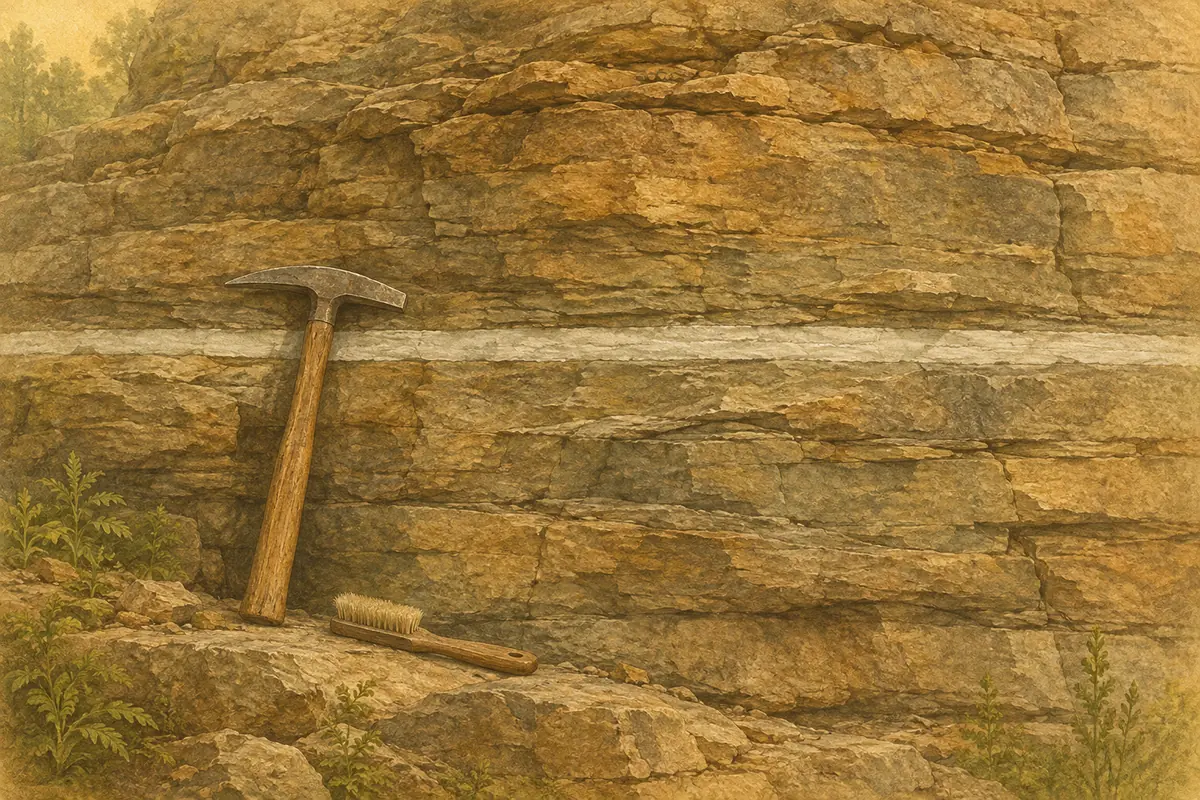
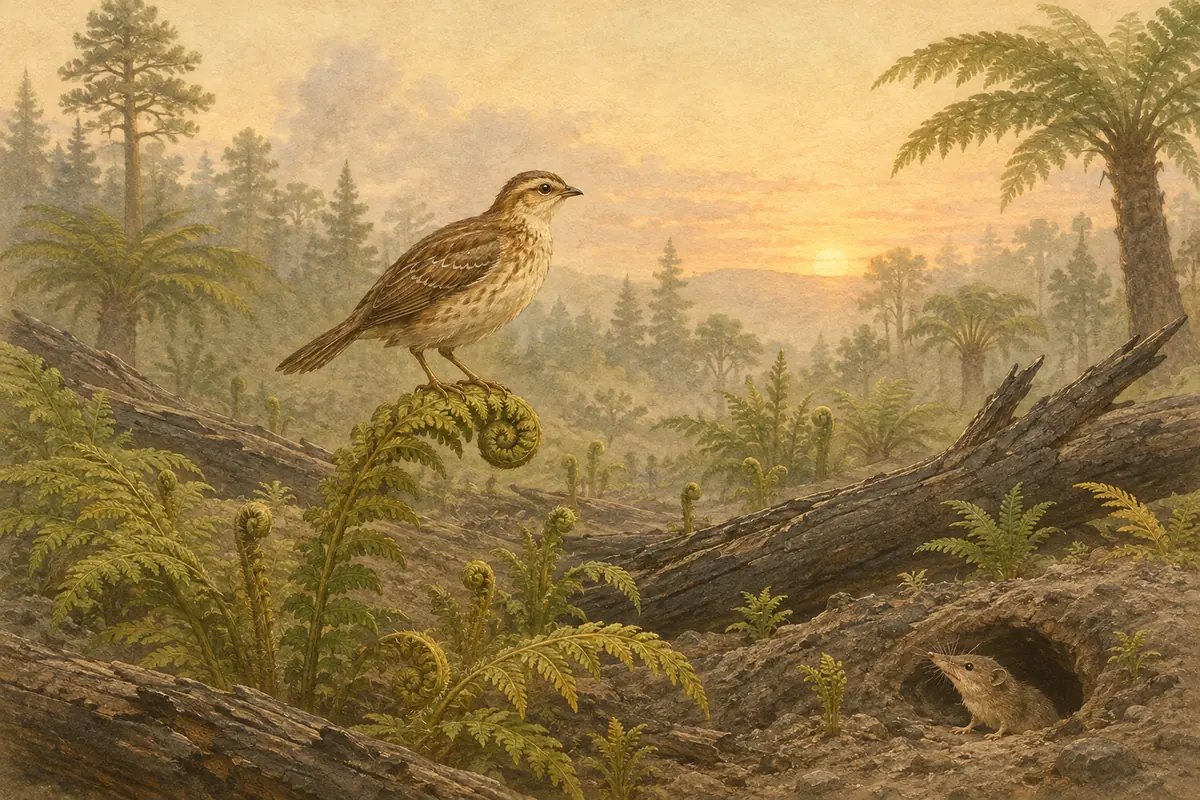
But the story does not stop there. Small animals that could shelter in burrows or under water, and live on seeds, insects and scraps, came through the disaster: little mammals, frogs, turtles, crocodiles. So did one group of small, feathered dinosaurs. We call them birds.
Every sparrow, penguin and eagle is a living dinosaur. About 11,000 kinds of bird are alive today, so in one way the Age of Dinosaurs never ended.
In short: How did dinosaurs go extinct?
Dragon bones
People were finding giant bones long before anyone had heard the word “dinosaur”. They did what people always do with a mystery: they told stories to explain it.
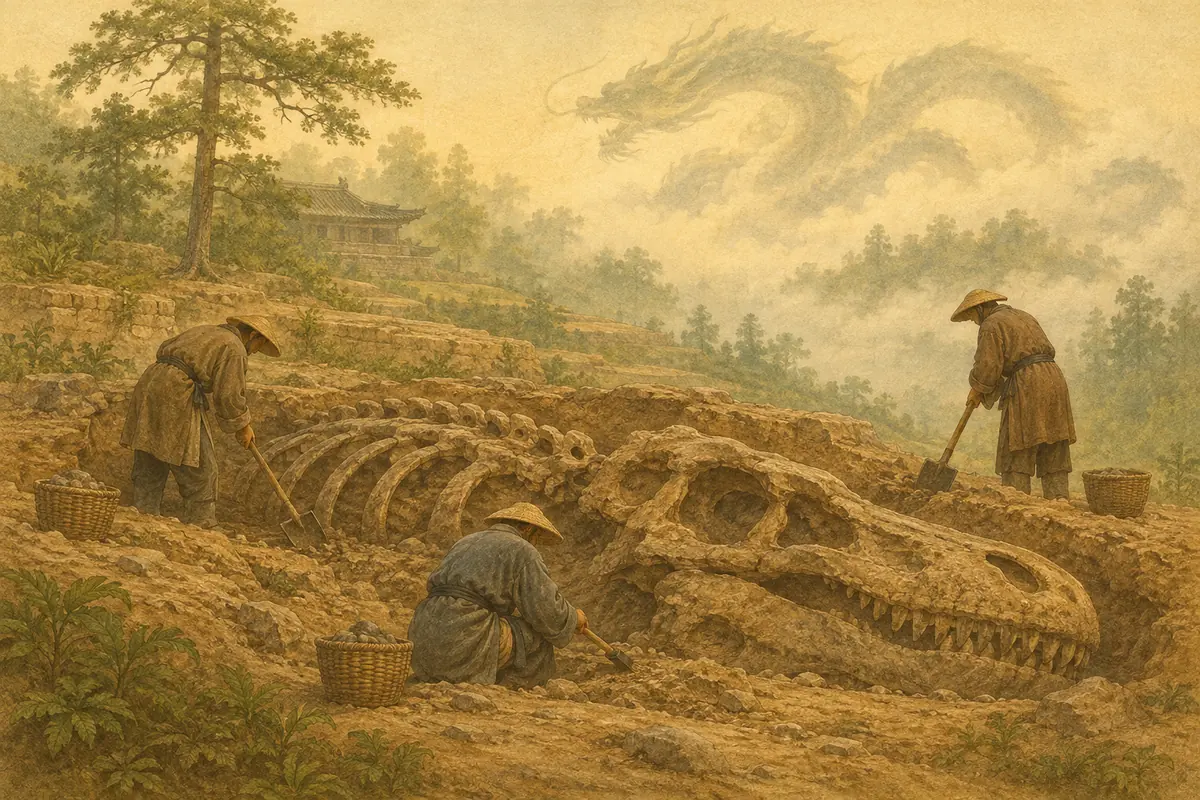
In China, farmers have dug huge bones out of the ground for many centuries. They called them dragon bones and ground them into powder for medicine. Around the year 300, the writer Chang Qu recorded dragon bones found in Sichuan, a region now famous for its dinosaurs.
The dragon bones that scientists have been able to test came from ancient mammals, such as rhinos and elephants, and not from dinosaurs. All the same, the people who named them were right about one thing. These were the remains of astonishing animals that no longer walk the Earth.
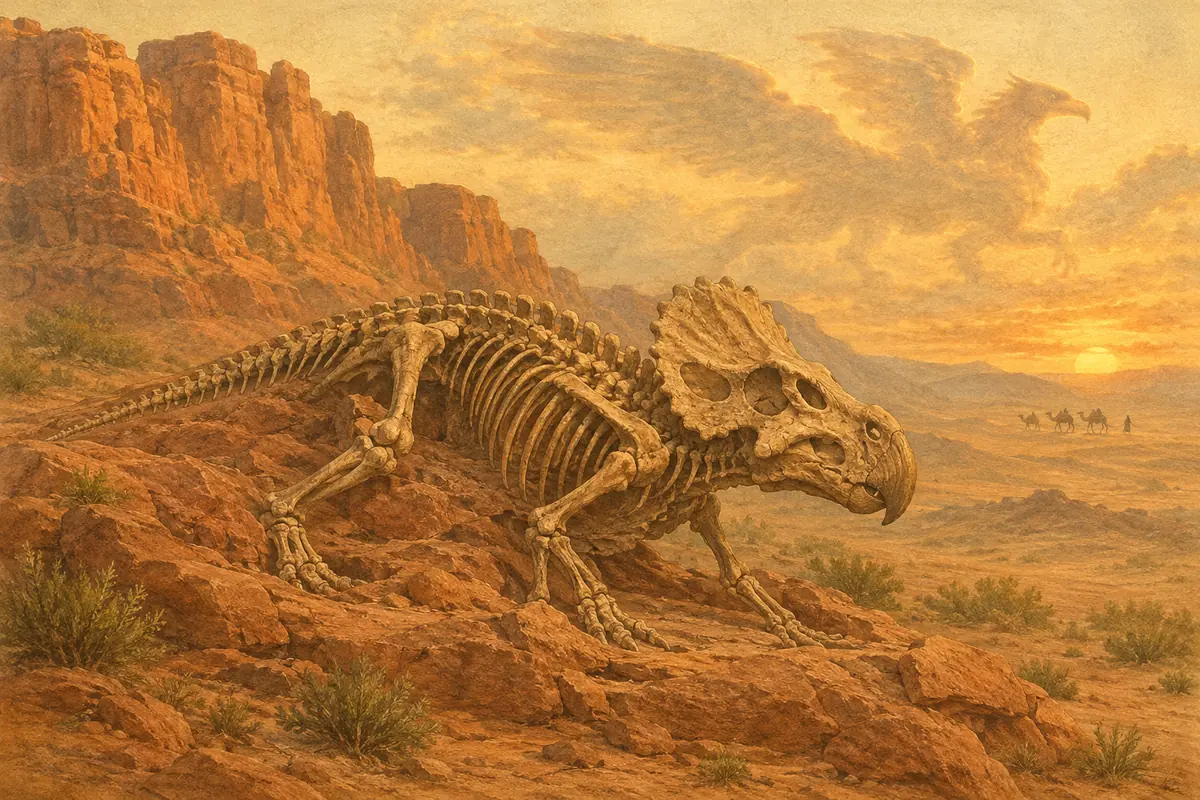
Far to the west, travelers on the old gold roads across Central Asia told of the griffin, a beast with the body of a lion and the beak of an eagle that guarded gold in the desert. In those same deserts lie the skeletons of Protoceratops, a four-legged dinosaur with a great hooked beak. Some historians think its bones started the legend. Others doubt it, because pictures of griffins are older than those journeys. It is still a good puzzle.
In Europe, big bones were said to belong to giants and dragons. In the Austrian city of Klagenfurt there is a dragon fountain carved in the 1500s. Its head is said to be modeled on a “dragon skull” found nearby in 1335, which was really the skull of a woolly rhinoceros. On the island of Sicily, the skulls of dwarf elephants have one large hole in the middle, where the trunk was attached. They may have given the ancient Greeks the idea of the Cyclops, a giant with a single eye.
In England in the 1670s, a professor named Robert Plot was given the end of an enormous thigh bone from a quarry near Oxford. He saw that it was far too big for any animal living in England. First he wondered about an elephant brought over by the Romans. In the end he decided it had belonged to a giant man or woman. It was really a piece of a dinosaur called Megalosaurus, and it was the first dinosaur bone ever described in a book. Nobody knew that for another 150 years.
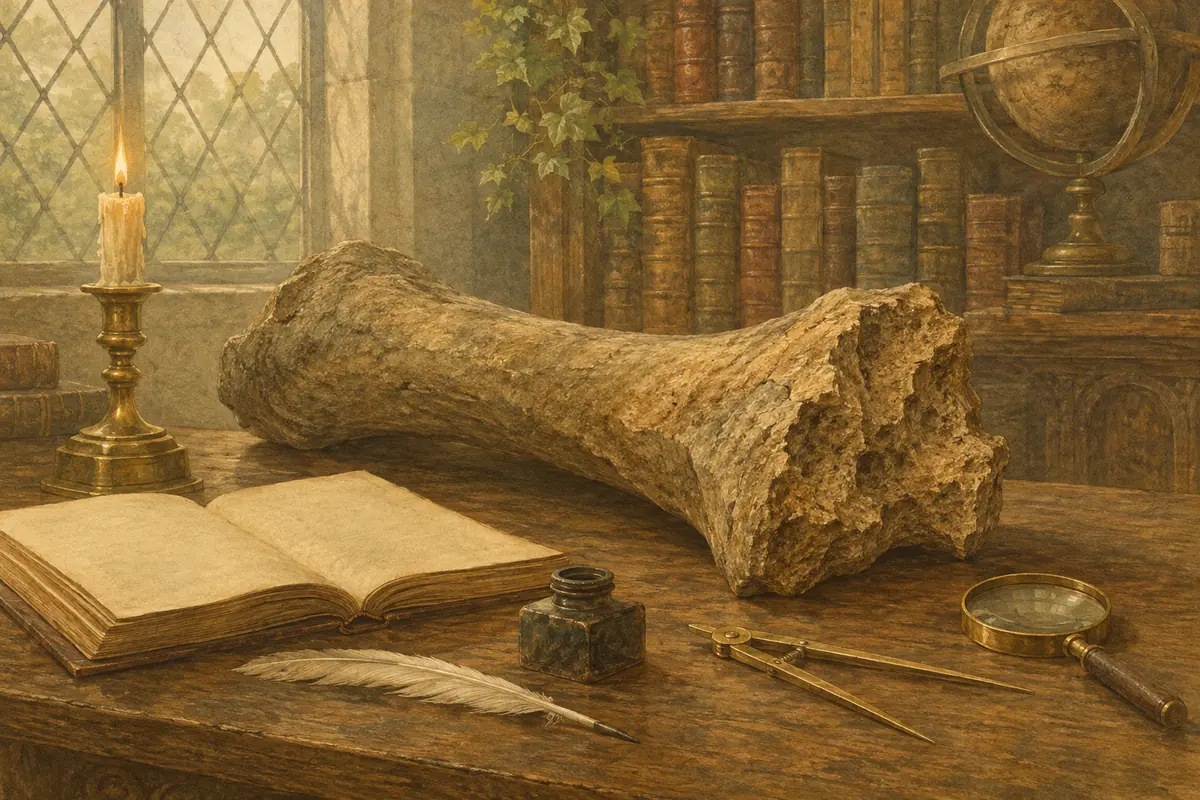
Dragons, giants, griffins: they were all good guesses. To do better, people needed a new idea, that a whole kind of animal could vanish from the world forever.
In short: Who discovered dinosaurs?
The bone hunters
That idea came from a French scientist, Georges Cuvier. In the 1790s he compared the bones of mammoths with those of living elephants and showed that they were different animals, and that the mammoths were all gone. Animals could die out. It sounds obvious now. At the time it changed everything, because it meant the Earth had a lost past, and old bones were its record.
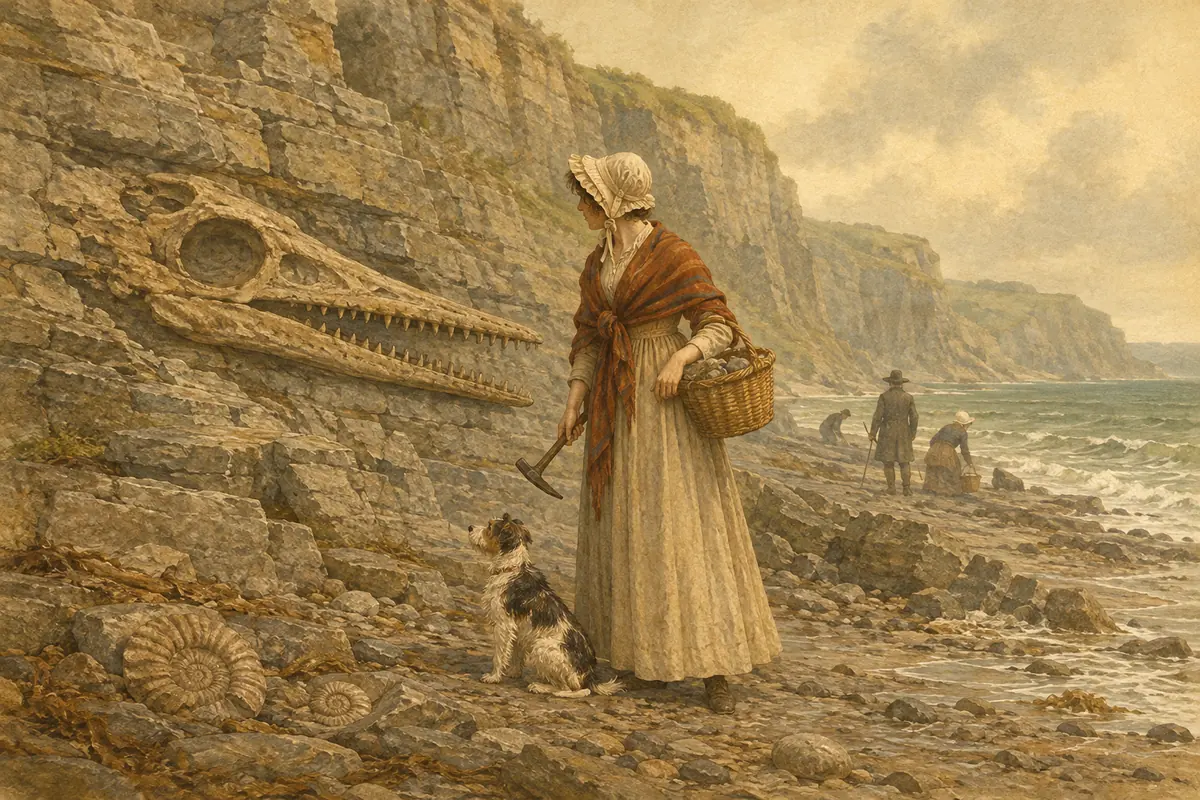
On the stormy south coast of England lived a girl who became very good at reading that record. Mary Anning’s family was poor, and she collected fossils from the sea cliffs at Lyme Regis to sell to visitors. In 1811, when she was twelve, her brother Joseph found a strange skull more than a meter long. The next year Mary dug out the rest of the skeleton. It was an ichthyosaur, a sea reptile shaped like a dolphin.
She went on to find the first complete plesiosaur and the first pterosaur discovered in Britain. Mary had little schooling, and the scientific societies of her day did not admit women. But the scientists who visited her shop knew that she understood these fossils better than most of them did.
The first dinosaur got its name in 1824. William Buckland, a professor at Oxford, described a huge jaw with teeth like knives and called its owner Megalosaurus, “great lizard”. A year later a country doctor, Gideon Mantell, named Iguanodon after its teeth, which looked like an iguana’s but were twenty times longer. Then, in 1842, the anatomist Richard Owen saw that these animals belonged in a group of their own. He named the group Dinosauria: “terrible lizards”.
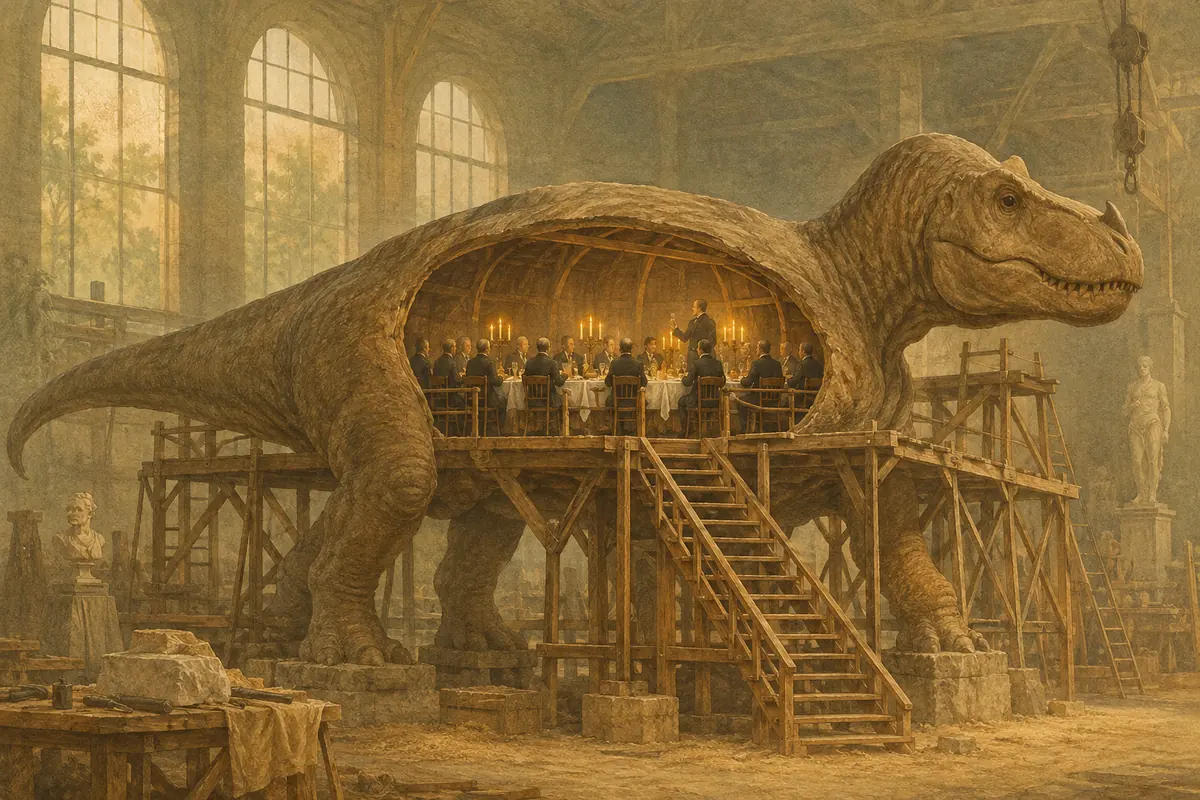
London went dinosaur-mad. In 1854 the first life-size dinosaur statues in the world were unveiled in a park in the south of the city. To celebrate, their sculptor held a New Year’s Eve dinner for scientists inside the mold of the Iguanodon. The statues got plenty wrong. The Iguanodon has a horn on its nose that was really a spike on its thumb. But they still stand in the park today.
In America the hunt became a race. From the 1870s two scientists, Othniel Charles Marsh and Edward Drinker Cope, competed to name the most dinosaurs from the fossil fields of the West. They were bitter rivals, and their feud is remembered as the Bone Wars. Their crews spied on each other, bribed each other’s workers and even smashed bones so that the other side could not have them. Between them, all the same, they named more than 130 new dinosaurs, among them Stegosaurus, Triceratops, Diplodocus and Allosaurus.
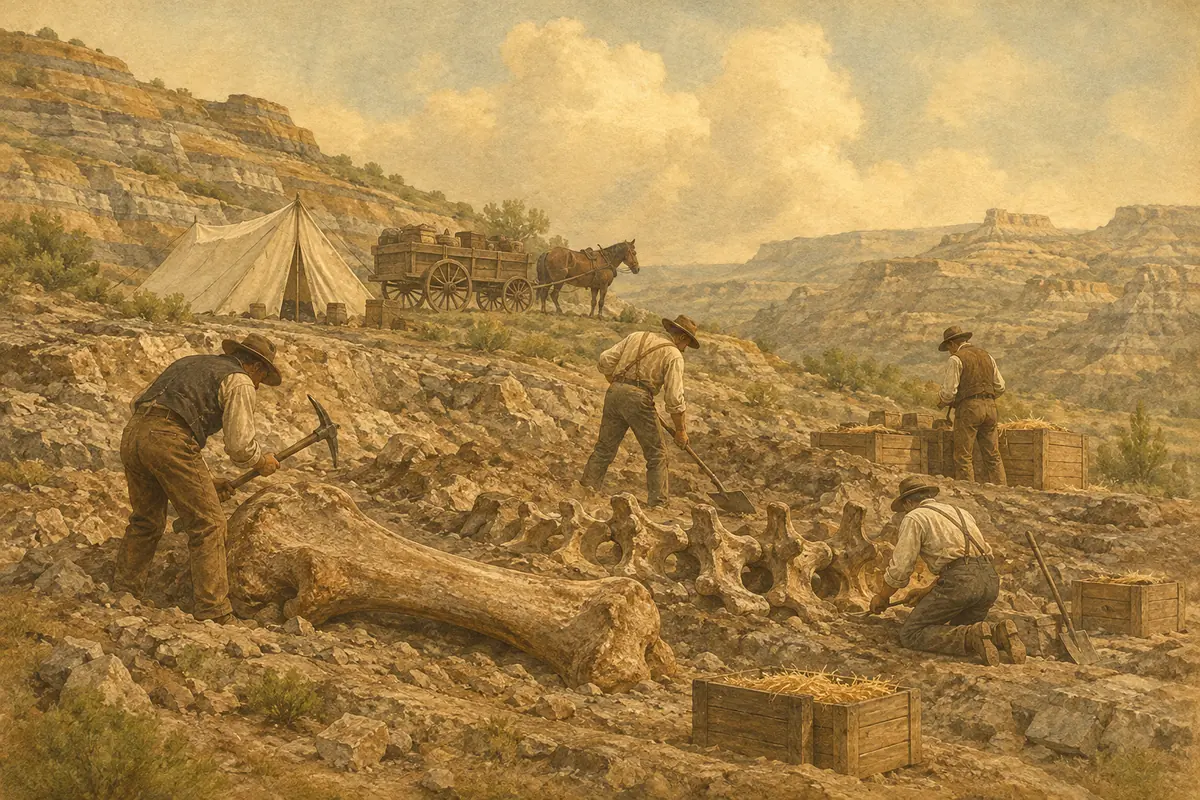
Soon museums were sending expeditions around the world. In the first years of the 1900s, Barnum Brown dug Tyrannosaurus rex out of the hills of Montana. In 1923 an expedition to the Gobi Desert in Mongolia found the first eggs that scientists recognized as dinosaur eggs, still lying in their nests.
For a long time people pictured dinosaurs as slow, cold giants that dragged their tails through swamps. That changed in the 1960s, when John Ostrom studied Deinonychus, a wolf-sized hunter with a huge curved claw on each foot. This was plainly a fast, agile animal, and its skeleton looked remarkably like a bird’s. Then, in 1996, a farmer in China found a small dinosaur covered in a coat of fuzz. It was the first dinosaur known with simple feathers, and many more have turned up since.
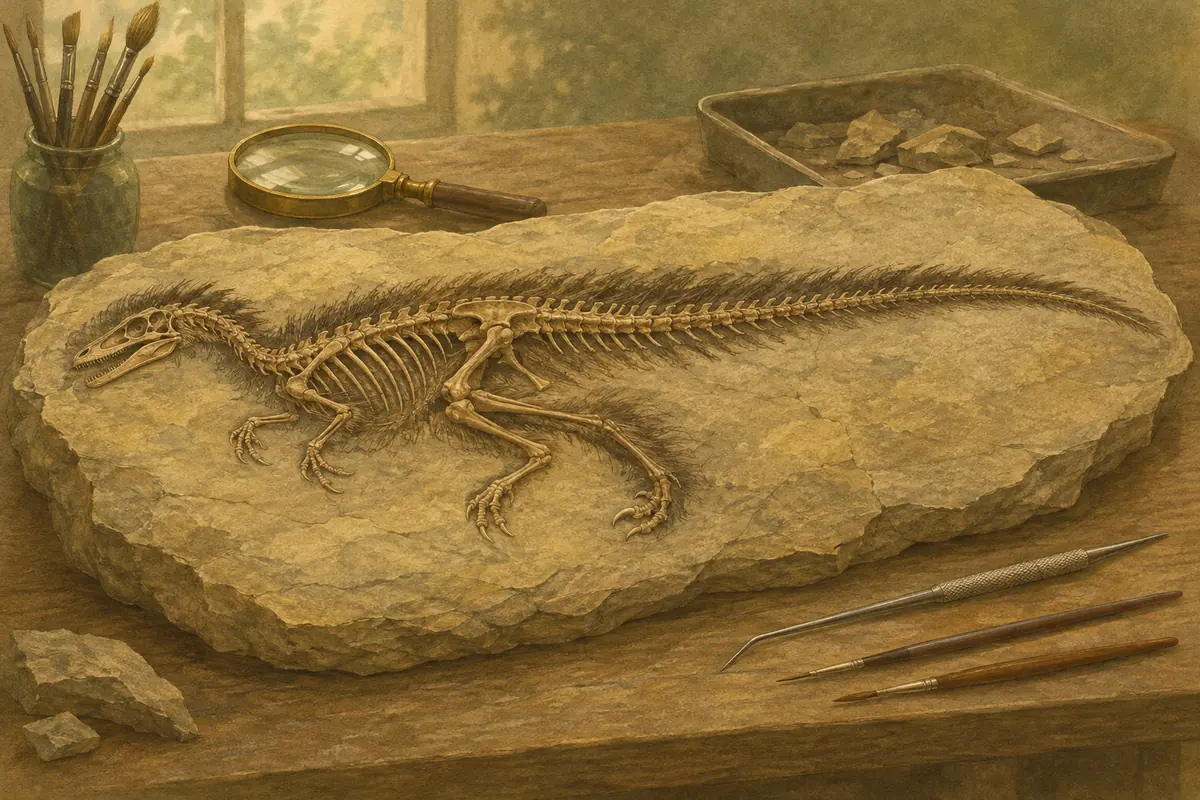
Today’s bone hunters use tools that Mary Anning could not have imagined. Scanners look inside a skull without breaking it. Microscopes pick out tiny grains of pigment in fossil feathers, so we know that one small dinosaur had a striped tail and that another shone glossy black like a starling.
And the discoveries are speeding up. More than a thousand kinds of dinosaur have been named, and about fifty new ones are added every year. That is nearly one a week. The next one may be waiting in a rock right now, for someone curious enough to look.
In short: Who discovered dinosaurs?
The whole story in order
Here is the whole story, from start to finish. First comes the deep past, measured in millions of years. Then comes the short time in which people worked it all out.
Earth’s history as one year
December
- 1
- 2
- 3
- 4
- 5
- 6
- 7
- 8
- 9
- 10
- 11
- 12
- 13
- 14
- 15
- 16
- 17
- 18
- 19
- 20
- 21
- 22
- 23
- 24
- 25
- 26
- 27
- 28
- 29
- 30
- 31
- The time of the dinosaurs: December 13 to 26
- People arrive at 11:25 PM on December 31
Deep time
- 252 million years agoThe Great Dying. Most life on Earth is wiped out, and the Triassic begins.
- 233 million years agoThe first dinosaurs appear on Pangaea.
- 201 million years agoAnother mass extinction clears the way. The Jurassic begins and dinosaurs take over.
- 150 million years agoGiant long-necked dinosaurs roam the forests. Archaeopteryx, one of the first birds, takes to the air.
- 145 million years agoThe Cretaceous begins. The continents drift apart.
- 130 million years agoThe first flowers bloom.
- 68 million years agoTyrannosaurus rex and Triceratops appear.
- 66 million years agoThe asteroid strikes. Three out of four kinds of living thing die out. Birds survive.
- 300,000 years agoThe first people like us.
The discoveries
- About 300In China, Chang Qu writes of dragon bones found in Sichuan.
- 1670sRobert Plot describes a giant thigh bone. It is later recognized as Megalosaurus.
- 1811Mary Anning and her brother find an ichthyosaur at Lyme Regis. She is twelve.
- 1824Megalosaurus becomes the first dinosaur to be given a name.
- 1842Richard Owen invents the word “dinosaur”.
- 1854The first life-size dinosaur statues go on show in London.
- 1861Archaeopteryx is found in Germany: a bird with teeth, claws and a long bony tail.
- 1877The Bone Wars begin in the American West.
- 1905Tyrannosaurus rex is named.
- 1923The first eggs recognized as dinosaur eggs are found in Mongolia.
- 1969Deinonychus shows that dinosaurs were quick and active.
- 1980A layer of iridium points to an asteroid.
- 1996The first feathered dinosaur is found in China.
- TodayAbout fifty new dinosaurs are named every year.
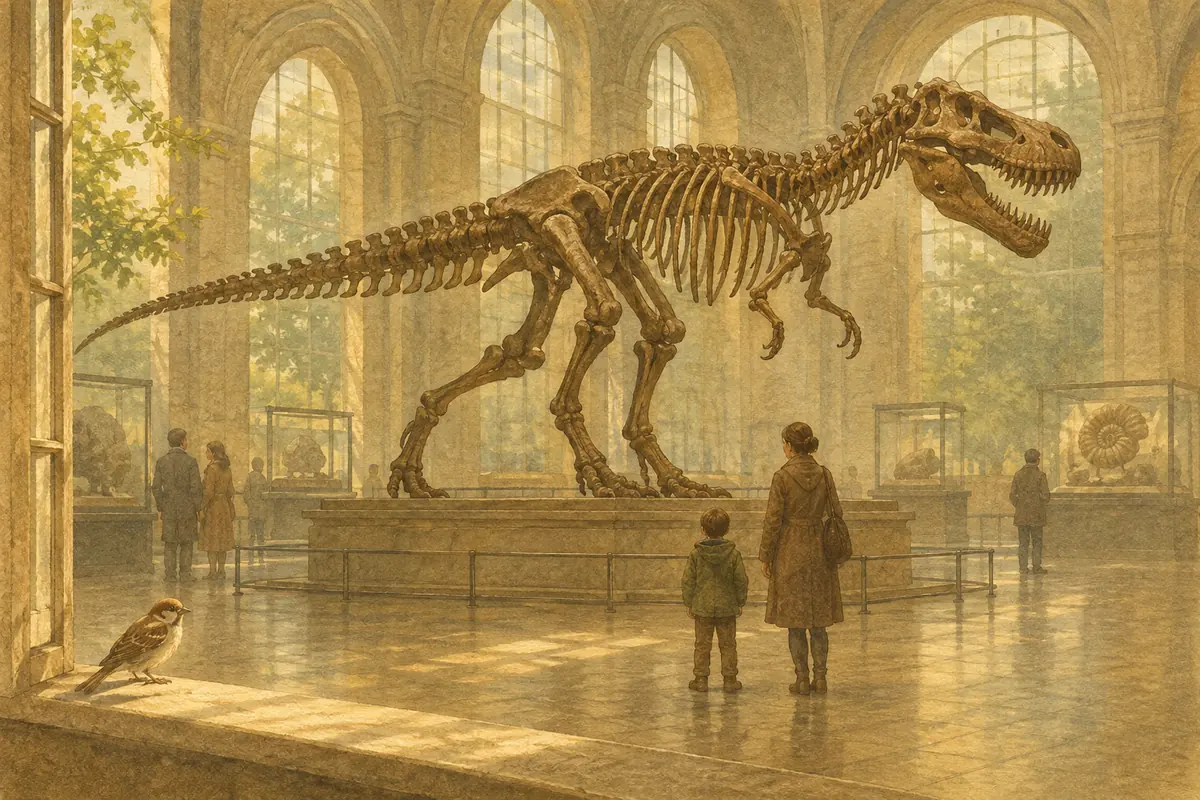
The story is not finished. Every card you restore in Fossil Deck is one small piece of it, and somewhere out there the next chapter is still buried.
In short: When did dinosaurs live?
Read it in Fossil Deck
This story is part of the encyclopedia in Fossil Deck, a calm puzzle game for iPhone and iPad where you restore dinosaur cards piece by piece.
Download on theApp Store